


Chicken math catches up with everyone.
One month you've got six layers happily sharing a feeder. The next, you've hatched a batch of chicks, adopted two pullets from a friend, and now you're standing in the feed aisle wondering which bag is supposed to cover everyone.
Here's the short answer: the right feed for every bird is the one made for their stage. Chicks eat chick starter. Pullets eat grower. Layers eat layer feed. That's the ideal, and it's worth working toward.
When that's not possible — and sometimes it genuinely isn't — there's a practical workaround. But that comes second, because the workaround only makes sense once you understand why the stages exist in the first place.
Why Every Stage Needs Its Own Feed
Each stage of a chicken's life is doing something different nutritionally, and the feed reflects that.
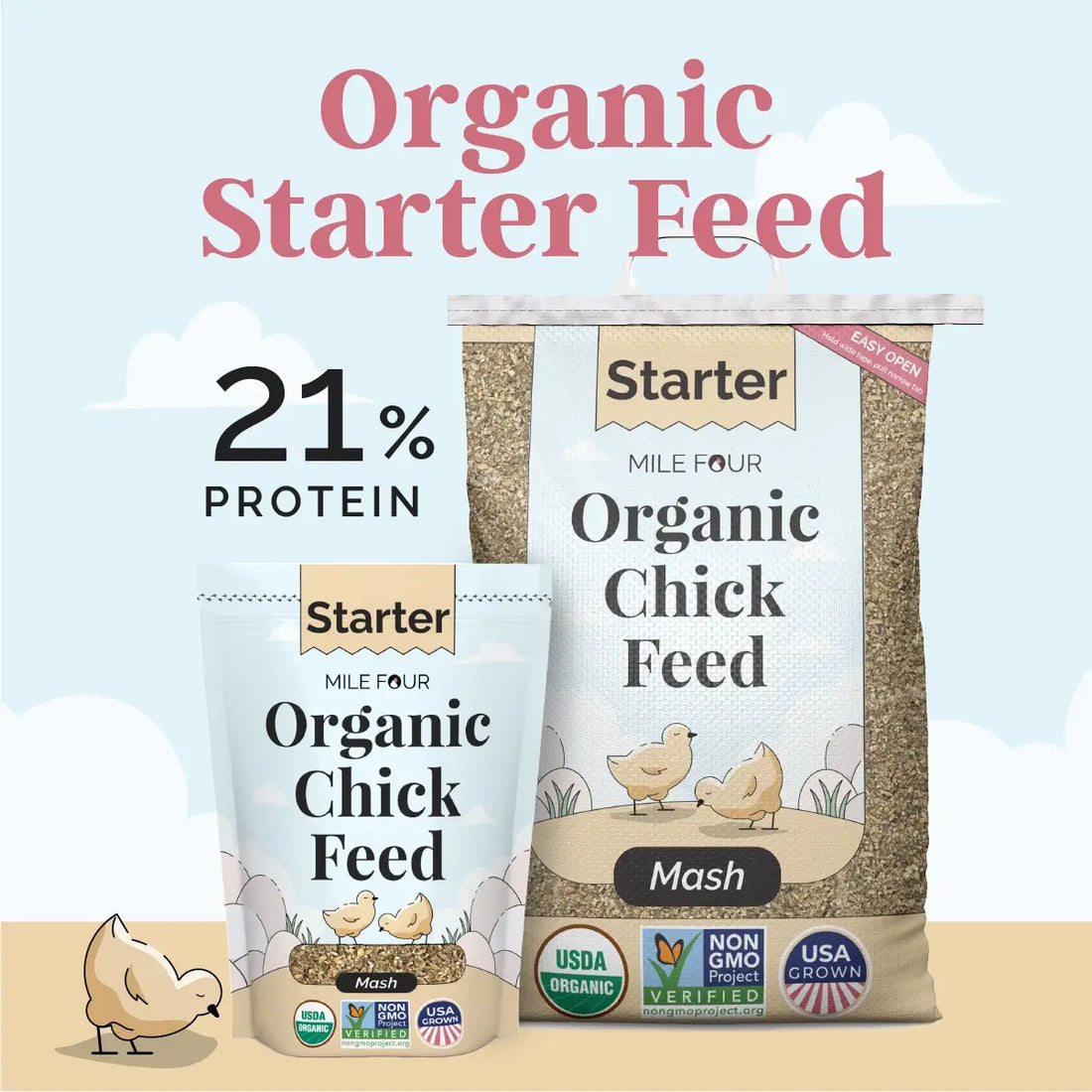
Chicks (0–8 weeks) are building fast — muscle, feathers, skeletal frame. A chick starter runs around 20–21% protein to support that rapid early growth. Calcium is kept low, under 1.5%, because a chick's kidneys can't yet process the amounts a laying hen requires.
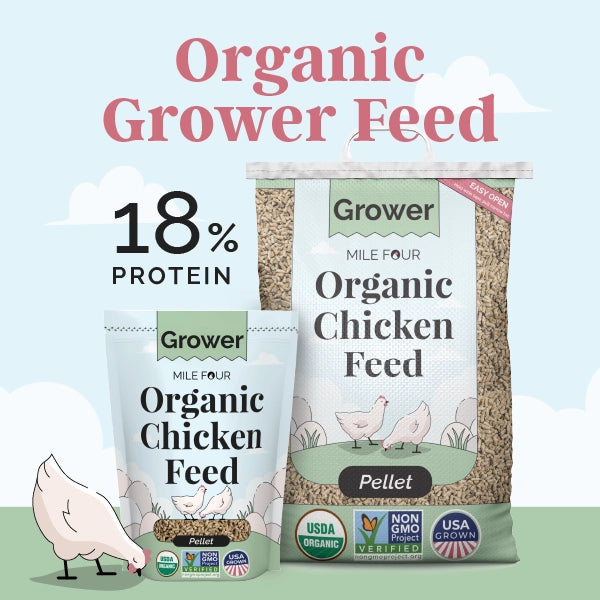
Pullets (8–20 weeks) are slowing down from that initial sprint and building the systems they'll need for a laying life — bone density, organs, reproductive development. A grower feed drops to around 18% protein and keeps calcium under 1.5%.
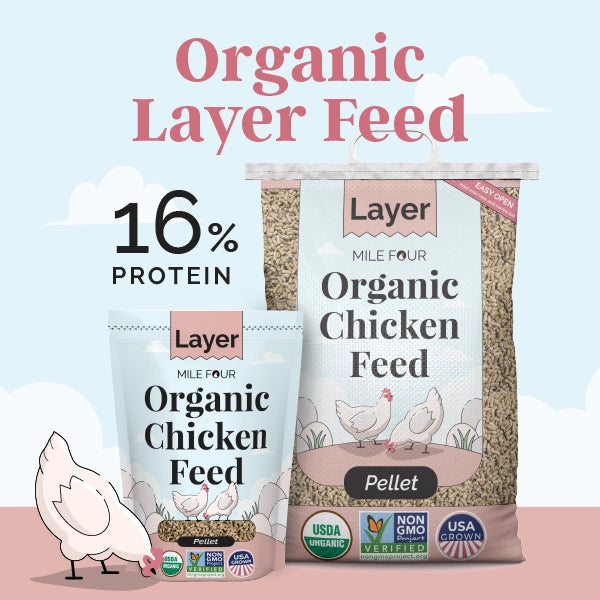
Layers (20+ weeks) are rebuilding an eggshell almost every single day. A layer feed sits around 16% protein and carries between 3% and 4.5% calcium to cover that daily demand. That calcium range is the number that matters most — check the guaranteed analysis on your bag before you buy.
The gap between grower calcium (under 1.5%) and layer calcium (3–4.5%) is what makes mixed flock feeding worth getting right. A chick or pullet eating layer-level calcium has no way to process or excrete the excess. It builds up. Research has consistently shown that the high calcium levels in layer feed fed to non-laying birds cause kidney damage, visceral gout, and calcium deposits in the ureters. In severe cases, mortality.
That's not a theoretical risk. It's the single most important thing to understand before any feeder goes into a mixed flock.
The Ideal Setup: Separate Feeders for Every Age
The cleanest solution — for nutrition and for your peace of mind — is to feed each group the product made for their stage. Chicks eat starter. Pullets eat grower. Layers eat layer feed. Nobody eats what they shouldn't.
In practice, that means physically separating access to feeders. A few approaches that work well:

Raise the layer feeder. Young birds don't jump well. A feeder hung or mounted higher than chicks can reach is often enough to keep the wrong birds out.
Use a divider or creep gate. A small opening that chicks can pass through but adult hens can't gives younger birds access to their own feeder while keeping layers on theirs.
Feed in shifts. Chicks and pullets eat first with their feed down, then layers get their turn. More hands-on, but workable in smaller setups.
It doesn't need to be complicated. The goal is simply making sure chicks can't reach layer feed, and that layers have consistent access to the calcium they need from their own feeder — not just from oyster shell.
When each group eats the feed made for them, every bird gets what their body actually needs at that stage. Mile Four's Starter, Grower, and Layer are each formulated specifically for that window of a chicken's life — protein, calcium, and amino acid profiles dialed in for the stage, not averaged across all of them.
When You Can't Separate: The One-Feeder Fallback
Not every setup allows full separation. Free-range flocks, small runs, and certain flock dynamics make it genuinely difficult to keep birds from accessing each other's feeders. If that's where you are, this approach keeps everyone safe.
The rule: feed for the youngest bird in the flock, and supplement what the older birds need separately.
Youngest birds are chicks (0–8 weeks): Feed the entire flock an unmedicated chick starter — look for one with calcium under 1.5% on the guaranteed analysis and protein around 20–21%. Mash format is best for young birds; it's easier to eat than pellets or whole grain at that age.
Youngest birds are pullets (8–20 weeks): Feed the entire flock a grower feed — look for around 18% protein and calcium under 1.5% on the guaranteed analysis. That calcium ceiling is what keeps non-laying birds safe.
Then put out a separate dish of oyster shell for your laying hens. Laying hens experience a spike in calcium appetite during eggshell formation, which happens mostly overnight. Non-laying birds don't have that drive. So when oyster shell is available free-choice — separate from the feed, never stirred in — layers eat what they need and younger birds walk past it. Biology handles the sorting.
This is a bridge, not a permanent setup. Layers on starter or grower aren't getting the calcium their bodies need from feed alone, and oyster shell only partly covers that gap. Transition back to stage-specific feeding as soon as your flock is all one age.
Oyster Shell & Grit: What Every Setup Needs
Whether running separate feeders or one shared feeder, these two stay constant for every flock.
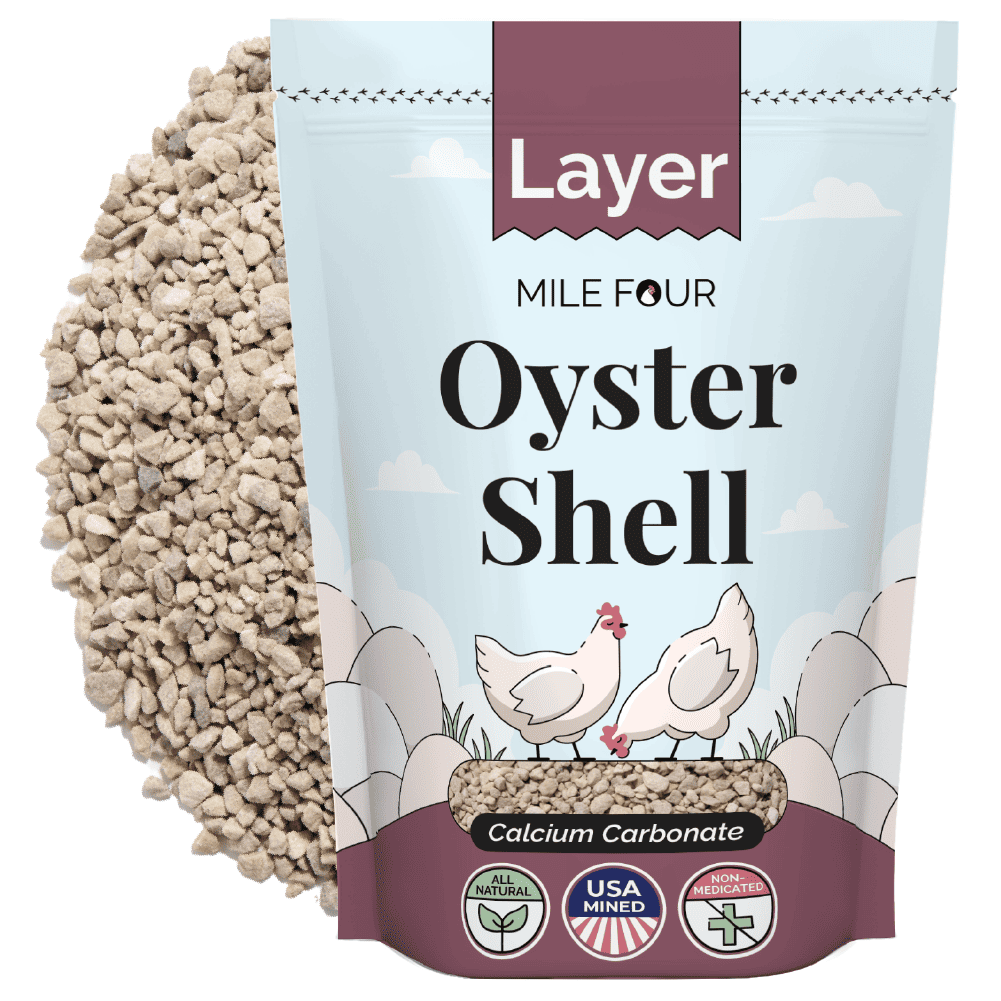
Oyster shell is soluble calcium carbonate. It dissolves, gets absorbed, and supplements the calcium a laying hen needs for eggshell production. Keep it in its own dish — free-choice, always available, never mixed into feed.
Grit is insoluble granite that sits in the gizzard and physically grinds food. Every chicken needs it, at every age. It does a completely different job from oyster shell, which is why they always go in separate containers. Oyster shell is not a substitute for grit, and grit is not a substitute for oyster shell.
Where Protein Fits In
Protein matters at every stage. It's just not the emergency that calcium is.
| Age | Target Protein | What They're Building |
|---|---|---|
| Chicks (0–8 weeks) | ~20–21% | Muscle, feathers, skeletal frame |
| Pullets (8–20 weeks) | ~18% | Bone density, organs, reproductive system |
| Layers (20+ weeks) | ~16% | Eggs, maintenance, feather regrowth |
These are the protein targets to look for on the guaranteed analysis of any chick starter, grower, or layer feed. Numbers vary slightly by brand and format — what matters most is that calcium stays low until birds are actively laying.
When running the one-feeder fallback, some birds will get slightly more or less protein than their stage calls for. In a backyard flock, that difference is manageable — it won't cause the kind of damage that calcium imbalances do.
A laying hen getting 18% protein instead of 16% is getting a little extra. Some keepers prefer it, especially during molt when feather regrowth demands more. A pullet on a higher-protein chick starter for a few weeks won't have skeletal issues in standard laying breeds.
The one combination to avoid long-term: adult hens on chick starter for months. It's more protein than they need for maintenance, and starter isn't formulated with the calcium a layer requires. Short-term, fine. Long-term, transition back when you can.
For a week-by-week breakdown of which feed matches each stage, see The 21-Week Feed Plan.
What to Do in Your Specific Situation
Every mixed flock looks a little different. Here's how each common scenario plays out — ideal setup first, fallback second.
Chicks + Layers
Ideal: Separate feeders. Starter for chicks. Layer feed for hens, with oyster shell & grit on the side.
Can't separate: Whole flock on unmedicated Starter. Oyster shell free-choice for the layers — the mama hen if she hatched the chicks will seek it out on her own. Grit in a separate dish for everyone.
Pullets + Layers
Ideal: Separate feeders. Grower for pullets. Layer feed for hens, with oyster shell & grit on the side.
Can't separate: Whole flock on Grower. Oyster shell free-choice for layers, grit in a separate dish for everyone. This is the most common mixed flock scenario, and the easiest to manage in either setup.
Roosters + Layers
Ideal: Separate feeders. Grower for the rooster. Layer feed for the hens, with oyster shell & grit on the side. Roosters don't need the extra calcium in layer feed, and it isn't great for them long-term.
Can't separate: Whole flock on Grower. Oyster shell free-choice for the hens, grit in a separate dish for everyone. The rooster won't seek out the oyster shell on his own.
All Ages at Once
Ideal: Separate feeders for each group — Starter for chicks, Grower for pullets, Layer for laying hens, oyster shell & grit on the side.
Can't separate: Feed for the youngest bird present. Chicks under 8 weeks means unmedicated Starter for everyone. Oyster shell free-choice for layers, grit in a separate dish for everyone. Switch everyone to Grower once the youngest hit 8 weeks. Switch to Layer once all birds are laying.
When to Transition Back to Stage-Specific Feed
Whether running separate feeders or the one-feeder fallback, the milestones are the same.
All birds are 8+ weeks: Move everyone to a grower feed — around 18% protein, calcium under 1.5% on the label. Mile Four's Grower fits that profile across every format.
All birds are laying: Move to a layer feed — look for 3–4.5% calcium on the guaranteed analysis. Mile Four's Layer runs 3.10–4.50% depending on format, which is exactly where it needs to be for daily shell production.
Transition gradually over 5–7 days by mixing the new feed with the old in increasing amounts. A slow shift lets the gut adjust naturally. For the full stage-by-stage timeline, The 21-Week Feed Plan maps it out in detail.
If you're always adding new birds — chicken math never stops — you might stay on grower feed plus oyster shell for a long stretch. That's fine. But every time the flock stabilizes at one age, it's worth switching back to the feed made for that stage.
Frequently Asked Questions (FAQs)
Can I use chicken feed for quail or gamebirds?
Quail and gamebirds have significantly higher protein requirements than chickens, typically 24–28% for quail depending on the stage. A chicken starter at 21% protein is the closest match, but it still falls short of what quail need long-term. If you're keeping quail or gamebirds alongside chickens, they need a feed formulated specifically for their species. Mile Four's feeds are formulated for chickens only.
What about ducks? Can they eat the same feed as chickens?
Ducks can eat chicken feed in a pinch, but they have one specific requirement chickens don't: niacin. Ducks need significantly more niacin than chickens, and a deficiency causes leg problems and developmental issues. If you're keeping ducks alongside chickens, supplement their diet with niacin (brewer's yeast works well, about a tablespoon per cup of feed) throughout their life. Also note that ducks should never eat medicated chicken feed.
Should I use medicated or unmedicated starter feed for chicks?
Medicated starter contains amprolium, which helps prevent coccidiosis in young chicks. It's appropriate if your chicks haven't been vaccinated for coccidiosis and are being raised in conditions where exposure is likely. Unmedicated starter is the right choice for vaccinated chicks, because giving medicated feed to a vaccinated chick can interfere with how the vaccine works. Mile Four's Starter is unmedicated, which is why it appears throughout this guide as safe for the whole flock including adult hens.
The Short Version
Right feed for every bird. That's the goal — and it's achievable with a little feeder management.
Separate feeders when the setup allows it. Starter for chicks, Grower for pullets, Layer for hens. Oyster shell & grit in separate dishes for everyone.
When separation genuinely isn't possible: feed for the youngest, oyster shell free-choice for the layers, and transition back to stage-specific feed as soon as the flock stabilizes.
New to backyard chickens? The Mile Four Beginner's Guide covers everything from coop setup to feed. For a deeper look at feed ingredients and what to check on the label, The Ultimate Chicken Feed Guide has you covered.
Chick starter, grower & layer each do a specific job — mixing ages in one coop doesn't change what each bird actually needs. See the full Mile Four feed lineup, Starter through Layer → Discover Organic Starter, Grower & Layer Feed.
Sources:
Farm Health Online. Calcium and Phosphorus Deficiency in Poultry. Animal Health and Welfare Knowledge Hub. farmhealthonline.com
Clarke, S. Calcium and Grit for Laying Hens. Our Way of Life (February 2021). ourwayoflife.co.nz
Backyard Poultry. Avoiding Kidney Damage in Laying Hens. (2022). backyardpoultry.iamcountryside.com
The Chicken Chick. Feeding Chickens at Different Ages. (2023). the-chicken-chick.com
Jacob, J. Feeding Chickens for Egg Production in Small and Backyard Flocks. University of Kentucky Cooperative Extension Service. poultry.extension.org
Merck Veterinary Manual. Urate Deposition (Gout) in Poultry. merckvetmanual.com (updated 2024)
The Poultry Site. Avian Urolithiasis (Visceral Gout): An Overview. thepoultrysite.com
Disclaimer: This content is for educational purposes only and is not a substitute for professional veterinary advice. Always consult with a qualified poultry veterinarian or local agricultural extension before making significant changes to your flock's diet.


1 comment
I found your article very informative. Do keep posting such articles! Thank You.