
Sourdough starter. Kimchi. Yogurt. Kombucha. There's a whole category of foods that got dramatically more useful once bacteria got involved.
Chicken feed is one of them.
Fermented feed has been a word-of-mouth practice in backyard flocks for years. Lately it's getting more scientific attention, and the results hold up. This isn't wellness hype. The benefits are real, they're measurable, and the process is simpler than most people expect.
Here's what's actually happening in that bucket, why it matters for the hens in your backyard, and exactly how to do it.

What Fermented Feed Actually Is
Fermentation is the process of bacteria and wild yeasts breaking down the sugars and starches in feed before a hen ever eats it. The result is feed that's been partially pre-digested, lower in pH, rich in lactic acid bacteria, and significantly easier for a chicken's digestive system to use.
Think of it like this: dry feed hands a hen's gut a puzzle box. Fermented feed hands it the pieces already sorted.
The main players are lactic acid bacteria, often shortened to LAB. When feed soaks in water over two to four days, these naturally occurring microbes multiply, consume sugars, produce lactic acid, and crowd out the bacteria you don't want. The environment they create is hostile to pathogens and supportive of the gut microbiome a healthy hen needs.
What the Science Says
The research on fermented feed in poultry is consistent across several areas.
Gut health improves. Fermented feed lowers gut pH and stimulates the growth of lactobacilli, leading to higher lactic acid and short-chain fatty acid production. Changes in gut microbiota composition directly affect how well a chicken absorbs nutrients and how strongly her immune system functions.
Pathogens go down. Lactic acid bacteria lower the pH of a chicken's intestines enough to create an environment hostile to acid-sensitive bacteria like E. coli and Salmonella. Chickens consuming fermented feed are less likely to develop infections from either.
Hens eat less and get more. This one surprises people. Some keepers report feed consumption drops by 10 to 30% because birds fill up faster and absorb nutrients more efficiently. The feed didn't get smaller; it got more useful per bite.
Nutrient absorption increases. All grains contain phytic acid, a compound that essentially blocks mineral absorption. Fermentation breaks it down, freeing up the full range of protein, vitamins, and minerals that chickens on dry feed can't fully access. Calcium that was passing through unused now has a better shot at getting into eggshells.
Egg quality responds. Research has found that fermented feed increases egg weight, shell weight, and shell thickness. At least one study in laying hens documented improved laying rate and reduced broken egg rate alongside the gut health improvements.
B vitamins are created, not just preserved. Fermentation doesn't just protect the vitamins already in feed. It creates new ones, primarily B vitamins including folic acid, riboflavin, niacin, and thiamin.
A note on the research: most studies have been conducted on commercial broiler flocks, not backyard laying hens. The underlying biology is the same, but numbers from commercial settings won't map exactly to a small flock. The directional findings hold. The exact percentages will vary.
Which Feed Format Works Best for Fermenting
Not all feed formats ferment equally well.
| Format | How It Ferments | Notes |
|---|---|---|
| Mash | Best. Absorbs water quickly, ferments evenly, produces a thick consistency hens prefer. | Easiest to manage. Best starting point for anyone new to fermenting. |
| Whole Grain | Works well. Grains soften significantly over 48 to 72 hours. Hens typically go after fermented whole grain with noticeably more enthusiasm than dry. | Takes slightly longer than mash. Texture holds up better. |
| Pellets | Not recommended. Pellets dissolve into a dense paste. The nutritional content is still there, but the texture becomes heavy and unpleasant for most hens. | Stick with Mash or Whole Grain for best results. |
How to Ferment Feed at Home
No special equipment needed. No starter cultures required. This is one of those things that sounds involved until it isn't.
What you need:
- A BPA-free container (glass, stainless steel, or food-grade plastic)
- Non-chlorinated water (filtered, or tap water left out uncovered for 24 hours to off-gas)
- A breathable cover: loose-fitting lid, towel, or cheesecloth secured with a rubber band
- A strainer for serving
- Mash or Whole Grain feed (both work well; Mash ferments fastest)
Step 1: Fill. Add enough feed to the container for what the flock will eat in one or two days. Fill about halfway and leave room. Feed expands as it absorbs water. Add non-chlorinated water until the feed is submerged by one to two inches. Stir thoroughly to eliminate dry pockets.
Step 2: Cover and wait. Cover loosely with a breathable lid or cloth, not airtight. The process produces CO2 that needs to escape. Set somewhere that stays between 60 and 80°F. Check water levels periodically and top up if the feed is no longer submerged.
Step 3: Watch for bubbles (24 to 48 hours). Bubbles on the surface mean fermentation is active. The smell will shift from plain wet grain to something closer to sourdough or tangy bread. That's the right direction. Stir once or twice daily while it ferments.
Step 4: Strain and serve. Once bubbles are active and the batch smells pleasantly sour, it's ready. Stir before serving, then strain off excess liquid and feed only what the flock will finish in one sitting. Pick up anything uneaten promptly.
Keep it going. Save the liquid after straining. Add fresh dry feed back into the remaining liquid and it will ferment faster than the first batch. The bacteria from the previous round are already in there doing the work. No starting over needed.
A Few Things That Trip People Up
Chlorinated water kills the bacteria trying to grow. Most city tap water is chlorinated. Let it sit uncovered for 24 hours and the chlorine dissipates on its own. Filtered water works fine too. This is the most common reason a first batch shows no bubbles after 48 hours.
Mold is different from ferment. Fermented feed smells sour and tangy, similar to sourdough or yogurt. Mold smells off, rotten, or musty, and looks fuzzy. If it looks or smells wrong, discard the batch and start fresh. Don't feed anything that looks questionable.
Temperature matters more than most people realize. Warmth speeds things up; cold slows them down significantly. Below 60°F, fermentation may stall entirely. In summer heat, batches move faster and spoil faster. Watch them closely and don't let fermented feed sit uneaten.
Always stir before serving. Give the batch a good stir right before scooping out a portion. This redistributes the bacteria evenly through the feed rather than leaving it settled at the bottom.
Serve only what they'll finish in a session. Leftover fermented feed sitting in warm weather goes bad quickly. Pick up anything uneaten within a couple of hours.
First introductions can take a few days. Some hens approach fermented feed the same way they approach anything new: cautiously and with suspicion. Offer it alongside dry feed at first and let them work up to it at their own pace. Most come around quickly once they figure out what it is.
Is Fermented Feed a Replacement for Balanced Feed?
No. Fermentation improves what's already in the feed. It doesn't add protein, change the calcium-to-phosphorus ratio, or replace the nutritional formulation a complete feed provides.
Think of it as an upgrade, not a substitute. The foundation still has to be a nutritionally complete feed. What fermentation does is make more of that nutrition available and set the gut up to use it better.
Fermented feed works best as a supplement to a well-balanced diet, not a full replacement for one.
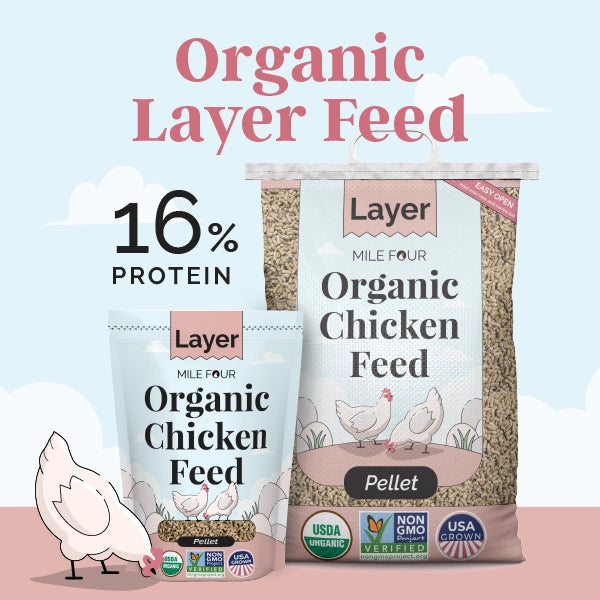
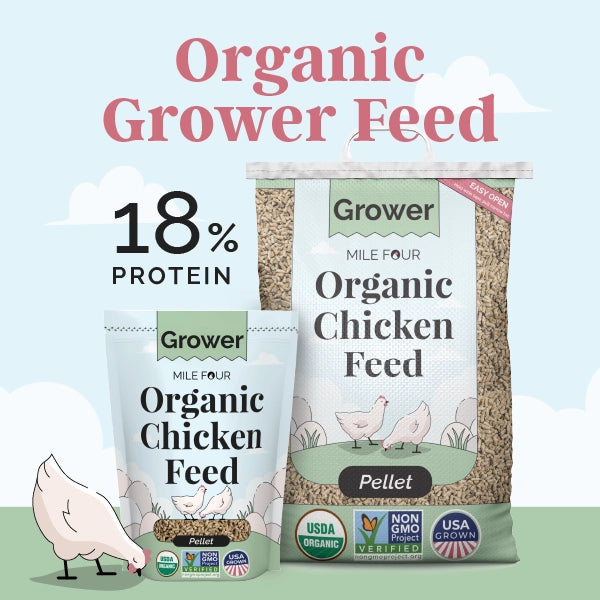
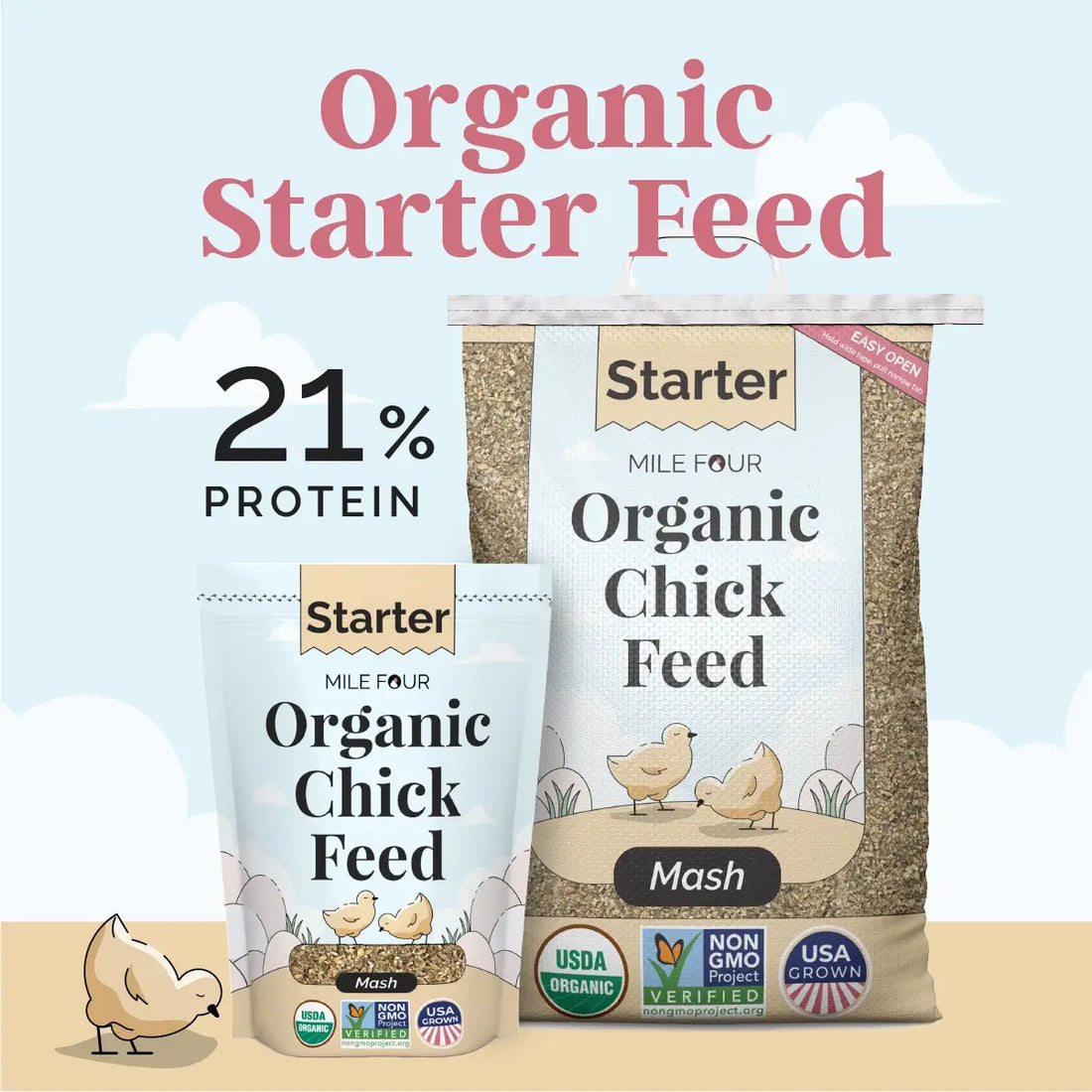
Starting with quality feed matters here. Grain that went into the bag with clean ingredients comes out of fermentation with the same clean ingredients, now more bioavailable. The Mash format of the Layer feed is milled from U.S. family farm grains without corn, soy, or fillers, and ferments particularly well given the whole-grain base. Mash is also available in Starter and Grower formulas for younger birds.
The fermented feed guide on the site includes a printable PDF version of the process if that's easier to keep near the coop.
New to the feed? Organic Feeds are available in Starter, Grower, and Layer formulas, all corn-free and soy-free, milled fresh from USA-grown grains. Shop the full feed range.
Sources
- Bao W. et al. (2022). "The impacts of fermented feed on laying performance, egg quality, immune function, intestinal morphology and microbiota of laying hens in the late laying cycle." Animal, 16(11). - Laying hen study; egg quality, immune function, and gut microbiota findings.
- Chen W. et al. (2021). "Effects of Different Fermented Feeds on Production Performance, Cecal Microorganisms, and Intestinal Immunity of Laying Hens." Animals, 11(10):2799. - Phytic acid reduction, FCR improvement, and egg quality in laying hens.
- Gupta R.K. et al. (2015). "Reduction of phytic acid and enhancement of bioavailable micronutrients in food grains." Journal of Food Science and Technology, 52(2):676–684. - Anti-nutrient reduction mechanism and mineral bioavailability.
- Svanyi B. et al. (2025). "Effect of Fermented Feed on Growth Performance and Gut Health of Broilers: A Review." Animals, 15(13):1957. - Comprehensive review; nutrient bioavailability, LAB activity, gut health, and feed conversion.
- NC State Extension, Prestage Department of Poultry Science (2025). "Fermenting Poultry Feed: Simple Steps to Healthier Birds and Higher Yields." - Process guidance for backyard keepers, fermentation mechanics.
- Chiang G. et al. (2009). "Fermented feed and its effect on broiler performance." British Poultry Science, 50(3). - Feed conversion ratio, egg quality, and pathogen reduction in fermented vs. dry feed groups.
This content is for educational purposes only and is not a substitute for veterinary advice. Consult a licensed veterinarian for health concerns related to your flock.