


You did the research. Organic. Corn & soy-free. The right protein for the right age. You felt good about that decision.
Then you got to the part where it says: Whole Grain, Mash, Pellet, or Crumbles.
And now you're standing in front of your screen like it's a pop quiz you didn't study for.
Here's the part nobody tells you upfront: all four forms can contain the exact same ingredients & the exact same nutrition. Same bag, same label, same formulation. The difference is how the feed is processed, how your chickens eat it, & how much of it ends up on the coop floor instead of in their crop.
Think of it like coffee. Whole bean, ground, instant, pods. It's all coffee. But the grind changes how you brew it, how it tastes, & how much you waste. Same idea here.
What Each Feed Form Actually Is
The names aren't super helpful on their own, so here's the quick version before we get into the details.

| Whole Grain | Mash | Pellet | Crumbles | |
|---|---|---|---|---|
| What it looks like | Granola. Visible grains, seeds & pieces in different sizes. | Fine powder. Like the dust at the bottom of a cereal box. | Small, hard cylinders. Uniform & compact. | Broken-up pellets. Coarse, irregular chunks. |
| Processing level | Least processed | Ground (base for all other forms) | Mash + steam + compression | Pellets, crushed back down |
| Waste level | Low–medium (depends on feeder) | Highest (10–15%) | Lowest (under 5%) | Medium (8–10%) |
| Selective eating? | Yes. Hens will pick favorites. | No. Everything's the same size. | No. Each pellet = complete nutrition. | Minimal. Pieces are small & similar. |
| Feeder compatibility | Good in most feeders | Can clog gravity feeders | Best flow in all feeder types | Good in most feeders |
| Best for | Adult hens who forage. Keepers who want the least processed option. | Chicks. Fermenting. Keepers who want a less processed form. | Most adult flocks. Keepers who want low waste & clean feeders. | Young birds transitioning. Bantams. Smaller breeds. |
| Can you ferment it? | Yes, but takes longer to absorb. | Yes. The ideal form for fermenting. | Not well. Turns to paste. | Not ideal. Breaks down too fast. |
Now here's a bit more on each one, because the table only tells half the story.
Whole Grain is cracked grains, seeds, & whole ingredients mixed together in their near-natural state. It's the closest thing to what a chicken would find scratching around a barnyard. You can actually see what's in it, which is kind of satisfying when you're paying for quality ingredients. The downside is your hens can see what's in it too, & they will absolutely pick out the pieces they like & flick the rest across the coop like a toddler sorting vegetables.
Mash is every ingredient milled down into a fine, uniform texture. It's also the starting point for every other feed form. Pellets & crumbles both begin as mash before they're processed further. Think of mash like flour. It's the raw material. If you've ever poured feed & watched a little cloud poof up from the bag, that's mash doing its thing.
Pellet takes that mash, adds steam & pressure, & compresses it into small, hard cylinders. It's like going from loose-leaf tea to a tea bag. Everything's contained. Every single pellet has the same nutritional content because the ingredients can't separate once they're pressed together. What you grab is what your hen gets.
Crumbles are pellets that have been partially crushed back down into smaller, irregular pieces. It's like breaking a granola bar into chunks instead of eating it whole. Same nutrition as a pellet, but in a form that's easier for smaller beaks to manage. If pellets are the finished product & mash is the raw material, crumbles are somewhere in the middle.
How Chickens Actually Eat Each One

This is where the differences start to show up in your daily routine.
Chickens are picky. Not in a refined, sophisticated way. More in a "fling it across the room if it's not the piece I wanted" way. If you dump a pile of mixed-size food in front of them, they'll go after the big, interesting pieces first & scratch the rest onto the floor. It's not rude. It's instinct. They're foragers. They're wired to sort.
Whole Grain leans into that instinct. The varied textures encourage natural pecking & scratching behavior, which keeps chickens busy & active. But it also means hens can selectively eat their favorite grains & skip the smaller nutritional components. It's like putting a bowl of trail mix in front of someone who only eats the chocolate chips. If you're using a complete whole grain feed (not scratch, which is different), the formulation accounts for this.
Mash is the opposite situation. Everything is ground to the same fine texture, so there's nothing to pick through. They get a balanced diet in every bite whether they like it or not. The trade-off? The fine particles create dust, & that dust sticks to the sides of the feeder, gets blown around, & doesn't flow well in gravity feeders. Waste with mash looks different than you'd expect.
Pellets solve both problems. Uniform nutrition in every piece, no selective eating, & the hard shape means minimal dust & clean feeders. Pellets also flow well in gravity & trough-style feeders. The one thing to watch? Chickens eat pellets shockingly fast. When hens can fill up in minutes without much effort, they've got time on their hands. And a bored chicken is a chicken who starts looking at her neighbor's feathers a little too closely.
Crumbles sit in the middle of everything. They take longer to eat than pellets because the pieces are smaller & more scattered. But they're less dusty than mash & less prone to selective eating than whole grain. If feed forms were on a spectrum from "raw ingredients" to "fully engineered," crumbles would be right in the center.
Waste: The Real Cost Nobody Talks About
Feed is the single biggest ongoing expense in keeping chickens. Not the coop. Not the bedding. The feed. And the form of that feed directly impacts how much your flock actually eats versus how much ends up on the coop floor feeding the mice instead.
Mash has the highest waste rate. Most sources put it around 10–15% under typical conditions. The fine particles get blown around, scratched out, & trampled into bedding. And if it gets wet? It clumps & molds fast. You've basically got a science experiment in your feeder.
Crumbles land in the middle. Less dusty than mash, so you lose less to the air. But the smaller pieces still get scattered & stepped on. Expect roughly 8–10% waste.
Pellets have the lowest waste. The firm shape holds up in feeders, doesn't blow away, & is easier for chickens to see & pick up if it does hit the ground. Waste can drop below 5% with a decent feeder.
Whole Grain depends heavily on your setup. In a good feeder, waste stays low because the pieces are large & visible. Scattered on the ground, though, they attract rodents & get buried in bedding fast.
Here's the practical math, because this one surprises people: if you're going through a 23 lb. bag a week & losing 15% to waste with mash, that's about 3.5 lbs. per bag that never makes it into a chicken. Over a year, that's over 180 lbs. of wasted feed. Roughly 8 bags. Gone.
Switching to pellets or fixing your feeder setup doesn't change what your chickens eat. It changes how much of what you buy actually gets eaten. That's a real number on a real receipt.
Digestibility & Gut Health
Chickens don't have teeth. (You probably knew that, but it's worth saying because it explains everything about how feed form matters.) Everything they eat goes into the crop first, then moves to the gizzard, which is basically a muscular grinding machine. The gizzard uses grit — small stones your chickens swallow on purpose — to crush food into digestible pieces. Think of it like a mortar & pestle that lives inside your chicken.
Mash is pre-ground, so the gizzard barely has to work. That makes it the easiest form to digest & the default for young chicks whose digestive systems are still figuring things out. It's also the best form for fermenting — soaking feed for 24–48 hours to boost nutrient availability & grow gut-friendly bacteria. If you're a fermenting person, mash is your format.
Whole Grain gives the gizzard a real workout. A strong, active gizzard improves overall digestive efficiency. Research suggests that birds fed whole or coarsely ground grains develop larger, more muscular gizzards & may actually extract more nutrition from their feed over time. But this only works if your chickens have access to grit. Without it, whole grains can pass through partially undigested. That's expensive & pointless.
Pellets fall somewhere between the two. The steam-compression process partially breaks down the starches, which can improve initial digestibility. But the uniform texture doesn't challenge the gizzard the way whole grains do.
Crumbles digest similarly to pellets since they're the same material in smaller pieces. The slightly smaller particle size can be marginally easier for younger or smaller birds to process.
One more thing on fermenting: whole grain can also be fermented, but it takes longer to fully absorb the water. Pellets don't ferment well at all. They were already heat-processed, so instead of culturing, they dissolve into a mushy paste. Not the same thing.
Which Form Works Best for Which Age

Not every feed form makes sense at every stage. You wouldn't hand a toddler a steak, & you wouldn't give a day-old chick a pellet. Beak size, gizzard strength, & nutritional needs all shift as your birds grow.
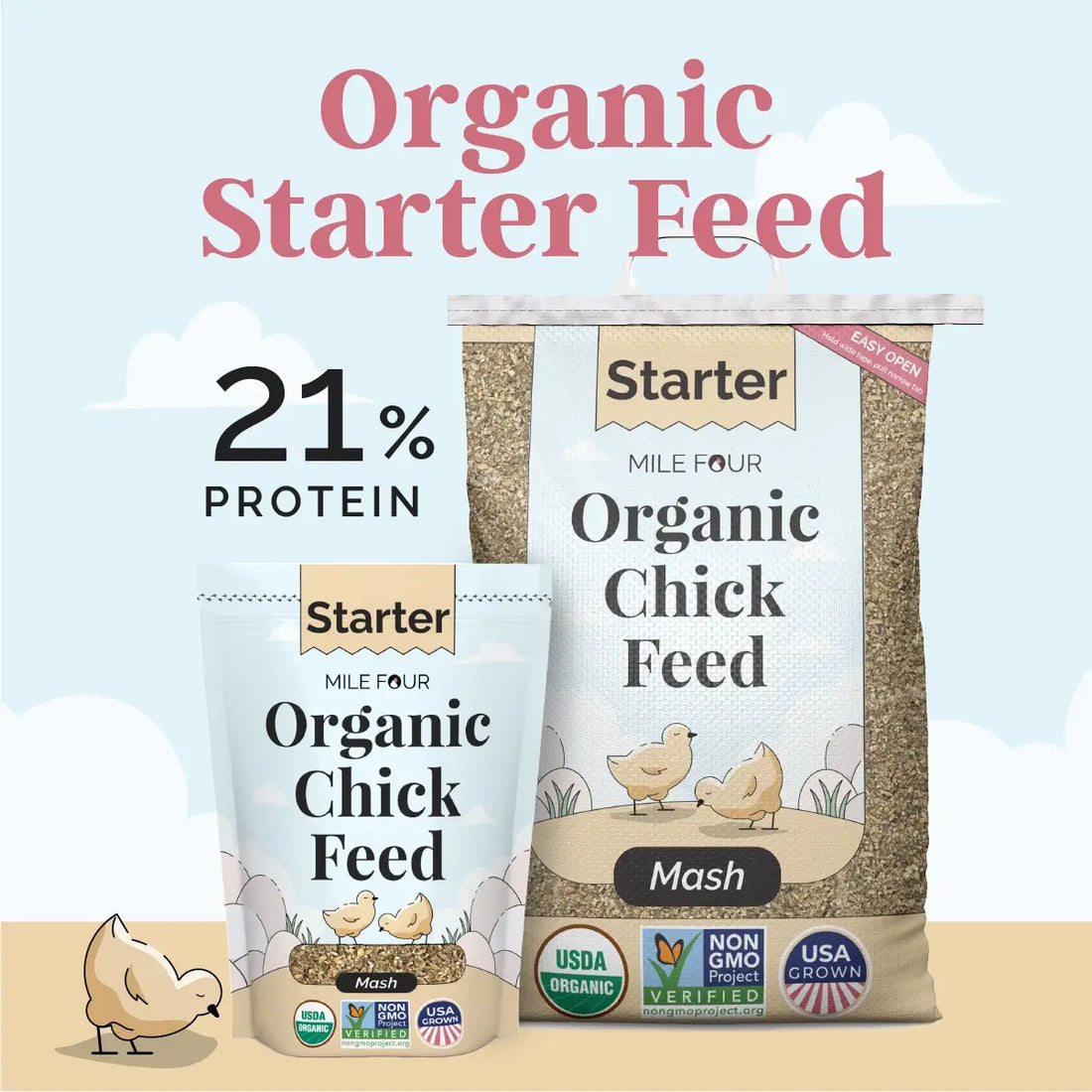
Chicks (0–8 weeks): Mash is the standard. Their beaks are tiny, their gizzards are basically brand new, & the fine grind of starter mash is the safest & easiest for them to eat. Some keepers use small crumbles as an alternative, especially once chicks are past the wobbly first few weeks & getting more coordinated (around 4–8 weeks). Whole grain & pellets are too large & too tough for this stage. Don't risk it.
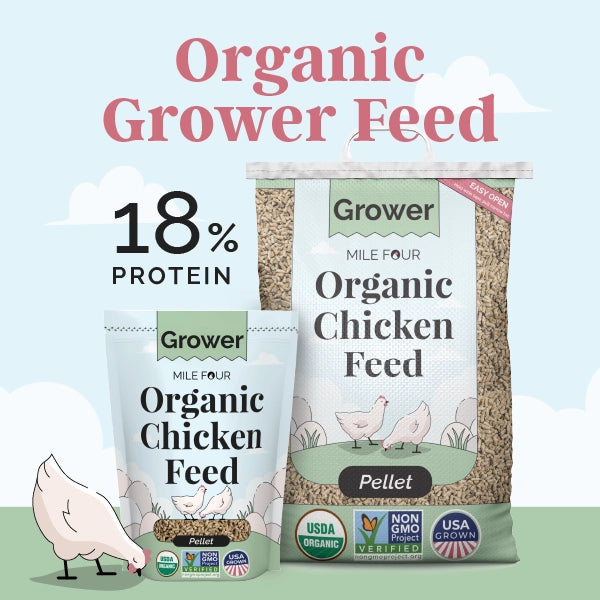
Pullets (8–20 weeks): All four forms work here. This is the "awkward teenager" phase where they're not chicks anymore but not yet laying. It's also a great time to transition toward whatever format you plan to use long-term. If you're switching from mash to pellets, crumbles make a useful bridge. If you're going the whole grain route, this is when their gizzards start getting strong enough to handle it (make sure grit is available). Grower feed is available in all three main formats.
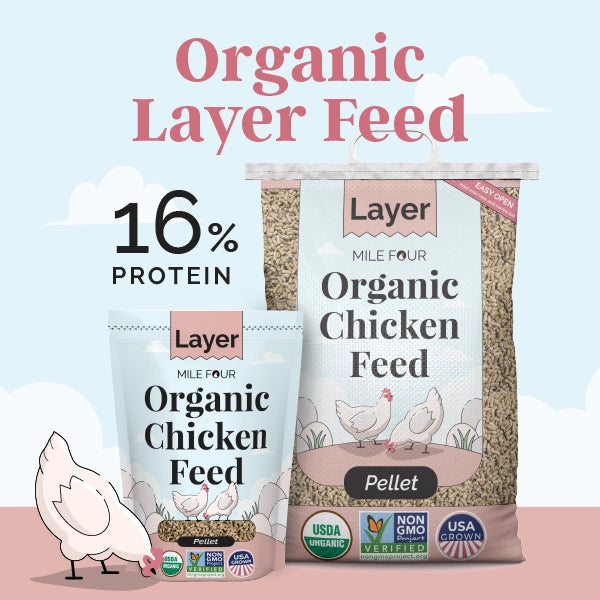
Laying hens (21+ weeks): Any form works. The choice comes down to your priorities. Want to minimize waste? Pellets. Want to encourage foraging behavior? Whole grain. Want the option to ferment? Mash. Want something in between? Crumbles. Layer feed is formulated with added calcium to support strong eggshell formation at this stage, & it's available in all three formats too.
For a full breakdown of when to switch between Starter, Grower, & Layer feed at each age (including the transition ratios week by week), check out The 21-Week Feed Plan.

So Which One Should You Choose?
There's no single right answer, which is probably not what you wanted to hear. But the best feed form genuinely depends on your setup, your flock's age, & what matters most to you day-to-day.
Choose Whole Grain if you value natural foraging behavior, you have a feeder that limits waste, & your hens have access to grit. It's the most engaging format for chickens & encourages the strongest gizzard development. Your hens will be entertained. Your feeder may need a little more attention.
Choose Mash if you have chicks, you want to ferment your feed, or you like the idea of a less processed form. Keep the dust & feeder compatibility in mind. A good feeder makes a big difference with mash.
Choose Pellet if you want the lowest waste, the cleanest feeders, & guaranteed balanced nutrition in every bite. Pellets are the most practical option for most backyard keepers, especially those with gravity feeders or larger flocks. It's the "set it & forget it" of feed forms.
Choose Crumbles if you're transitioning young birds from mash to adult feed, you have bantams or smaller breeds, or you want something easier to eat than pellets without the dust of mash. It's the middle child of feed forms, & sometimes that's exactly what you need.
And here's something worth knowing: you don't have to marry one format forever. Plenty of keepers switch between forms seasonally, mix formats based on what's working, or use one form for chicks & another for adults. Your chickens will adapt. They're surprisingly flexible about this stuff.
What matters most is that the feed itself is nutritionally complete for their age & stage. The form is the delivery method. The ingredients are the meal.
Sources: Alabama Cooperative Extension System (Effects of Diet Particle Size on Poultry Performance); University of Maine Cooperative Extension (Nutrition for Backyard Chicken Flocks, Bulletin #2222); University of Kentucky Cooperative Extension (How Much Will My Chickens Eat?, ASC-191); Svihus, B., 2011 (Function of the Digestive System, World's Poultry Science Journal); Abdollahi, M.R. et al., 2018 (Wheat Particle Size, Insoluble Fibre Sources & Whole Wheat Feeding Influence Gizzard Musculature & Nutrient Utilisation, Journal of Animal Physiology & Animal Nutrition); Amerah, A.M. et al., 2007 (Feed Particle Size: Implications on Digestion & Performance of Poultry, World's Poultry Science Journal). Feed waste estimates represent ranges from multiple poultry science & extension sources. Actual waste varies by feeder type, flock size, & management practices.
This content is for educational purposes only. For specific flock health concerns, consult a licensed poultry veterinarian.
New to Mile Four? Our Organic Chicken Feeds come in Whole Grain, Pellet, & Mash — milled fresh from USA-grown grains. All three formats are available for Starter, Grower, & Layer stages.


1 comment
Interesting comparison of whole grain, mash, pellets, and crumbles for chicken nutrition! Proper feed and healthy poultry care play a major role in maintaining quality and overall chicken wellbeing. Great educational content for poultry enthusiasts and chicken owners. For hygienic fresh chicken delivery in Bangalore, visit Diamond Fresh Chicken.