

If you've been raising chickens for more than a week, you've probably seen grit mentioned somewhere. Maybe in a care guide, maybe on a forum, maybe on the bag of feed itself.
The advice is everywhere. "Always have grit available." "Chickens can't digest without it." "Skip it & they'll get impacted."
Some of that is true. Some of it is overstated. & a fair amount of it depends on one thing that almost nobody mentions: what exactly the chickens are eating.
Here's the actual answer.

What Grit Actually Does
Chickens don't have teeth. Food goes straight from the beak to the crop, down to the stomach (the proventriculus), & then into the gizzard, which is the real workhorse of the digestive system.
The gizzard is a dense muscular pouch. Its job is to grind up food before it moves further along. When whole grains, seeds, plant matter, or anything with hard structure enters the gizzard, it needs something to grind against. That's grit.
Insoluble grit (quartzite or granite) stays in the gizzard & acts as a grinding medium. The gizzard contracts against it repeatedly until food is broken down enough to pass through. Think of it like a millstone: the gizzard provides the muscle, grit provides the surface.
What grit is not: a nutrient, a calcium source, a probiotic, or a supplement in any meaningful sense. It's mechanics, not nutrition.

Grit vs. Oyster Shell
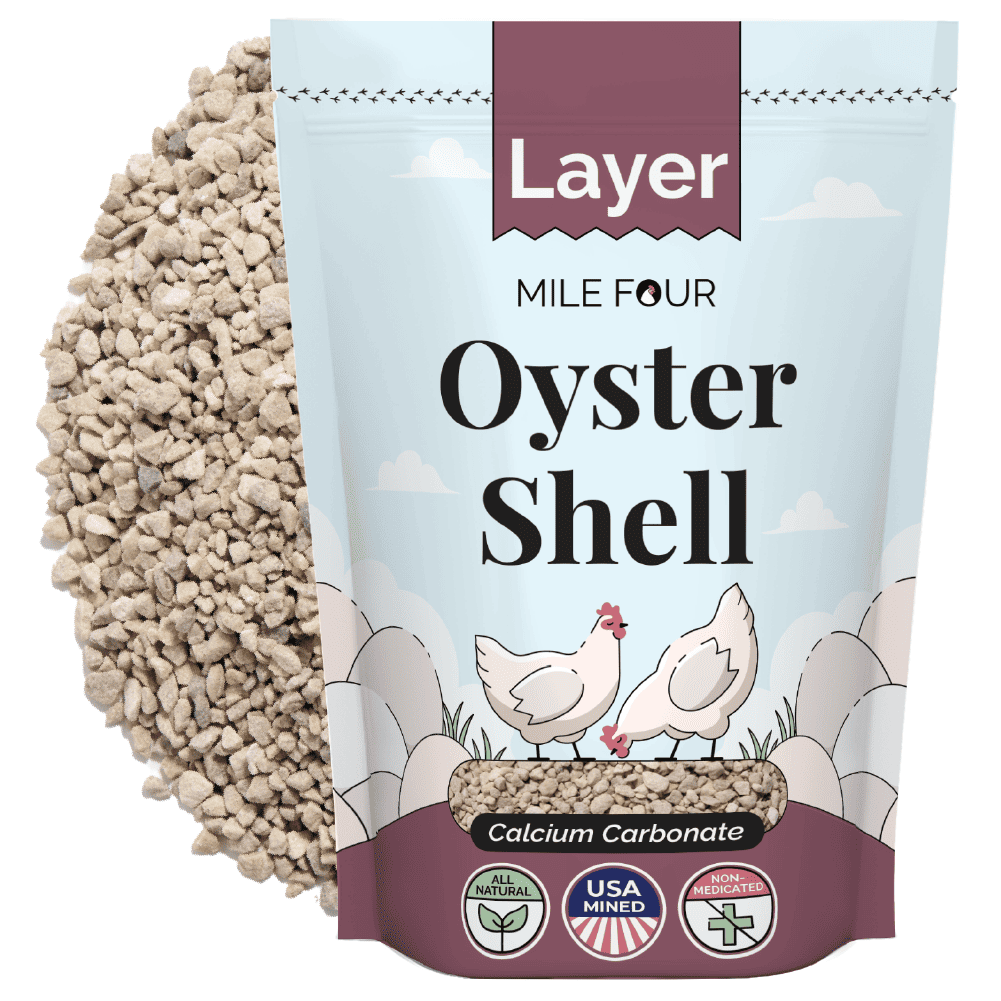
Oyster shell is soluble. It dissolves in the digestive system & provides calcium, which laying hens need for eggshell production. It does not stay in the gizzard. It does not grind food. It serves a completely different purpose.
Insoluble grit is not soluble. It does not provide calcium. It stays in the gizzard indefinitely, grinding down slowly over time as it does its job.
Feeding one does not replace the other. A hen getting oyster shell but no grit still needs grit if she's eating anything that requires grinding. A hen getting grit but no oyster shell (and on Layer feed with calcium already included) may not need oyster shell at all.
The short version: if a bag says "oyster shell," it's not grit. If a bag says "grit," it's not calcium. Keep them separate in how you think about them & how you offer them.
Do Chickens Actually Need It?
It depends on what the chickens are eating.
Mash, pellets, or crumbles only, no treats, no pasture: most extension services say supplemental grit is not strictly required. Processed feed is soft enough that the gizzard's muscular action can handle it without additional grinding media. The University of Kentucky & University of Georgia extension services both state this directly.
Whole grains: grit is necessary. Whole grain has structure that requires grinding to break down. Without grit, the gizzard can't process it efficiently & feed passes through without delivering full nutritional value. Mile Four Grower & Layer feed comes in a whole grain format. If that's what the flock is eating, grit belongs in a separate dish alongside it.
Pasture & free-range access: birds on natural ground are likely picking up small stones on their own, especially when ground isn't frozen or paved. Many free-range birds self-supplement naturally. Offering insoluble grit separately is still good practice. There's no reliable way to know how much they're picking up on their own.
Treats, kitchen scraps, insects, or greens: grit becomes relevant again even if the main diet is pellets. Anything with fiber, hull, or structure benefits from having insoluble grit in the gizzard to process it.
If there's any doubt, offer it. Grit is inexpensive & chickens regulate their own intake. They won't eat more than they need.
Two Types of Grit
There are two forms of grit. Understanding the difference saves a lot of confusion.
Insoluble grit (quartzite, granite, flint): hard, doesn't dissolve, stays in the gizzard. This is what aids digestion. Mile Four Grit is made from 100% natural quartzite, US-mined, with no additives or fillers.
Soluble grit (oyster shell, limestone, crushed shell): provides calcium. Dissolves in the digestive system. Does not function as a grinding medium because it breaks down too quickly. Useful for laying hens, not a substitute for insoluble grit.
When people say "offer grit," they almost always mean insoluble grit unless they specify otherwise. If a product is labeled as grit & it's made from limestone or shell, read carefully. It may be serving a calcium function, not a grinding one.

Starter Grit vs. Layer Grit
Chicks & adult hens need different sizes. This is anatomy, not an upsell.
A chick's gizzard is small. Grit sized for an adult hen is too large to manage effectively. Starter Grit is sized for birds 0–8 weeks. Layer & Grower Grit is sized for birds 8 weeks & older.
Chicks on starter mash don't strictly need grit for the first few days if they're eating nothing but processed feed. Once treats are introduced, even a small piece of vegetable, offering starter grit alongside becomes important. Starting them early also helps develop gizzard muscularity, which supports digestion throughout their lives.
Give chicks a few days on starter feed first to establish their routine, then offer grit in a separate small container.

How to Offer It
Offer it free-choice in a separate container from the feed. Never mix it directly into the feed. Chickens can't regulate their intake if it's mixed in & the amounts become unpredictable. A small ceramic or metal dish works fine.
Place it near the feeder, not across the coop. Convenient access means birds are more likely to eat what they need when they need it.
Refill weekly. Keep it dry. Grit that gets wet & clumps isn't doing much useful work.
Chickens self-regulate grit intake well. Offering free-choice access is the standard recommendation from extension services & there's no established evidence that birds over-consume insoluble grit when it's offered separately from feed.
Does This Flock Need Grit?
| Feeding situation | Grit needed? |
|---|---|
| Mash, pellets, or crumbles only. No treats, no pasture access. | Technically no, but offering it doesn't hurt. |
| Whole grain feed (any format) | Yes. |
| Confined flock with occasional treats or scraps | Yes. |
| Free-range or pasture access on natural ground | Probably getting it naturally. Offer separately to be sure. |
| Chicks 0–8 weeks, mash only, no treats yet | Not urgent. Introduce after a few days on feed. |
| Chicks 0–8 weeks with any treats introduced | Yes. Starter grit, separate container. |
If a flock is eating anything whole, fibrous, or foraged, grit supports the digestion of all of it. It's not a supplement in the traditional sense. It's infrastructure.
Mile Four Chicken Grit comes in two sizes: Starter Grit for chicks 0–8 weeks, & Layer & Grower Grit for birds 8 weeks & older. Made from 100% natural quartzite. Nothing added.
New to Mile Four? The Organic Feeds are milled fresh from USA-grown grains, with no corn, soy, or fillers.
Sources:
• Jacob, J. & Pescatore, T. Avian Digestive System. University of Kentucky Extension Publication ASC-203. (explains gizzard grinding function & when grit is needed based on diet type; confirms commercially prepared feed does not require supplemental grit);
• Jacob, J. (University of Georgia Extension). Avian Digestive System. poultry.extension.org (confirms whole grain & pasture birds benefit from grit; processed-feed-only birds do not strictly require it);
• Takasaki, R. & Kobayashi, Y. (2020). Effects of diet and gizzard muscularity on grit use in domestic chickens. PeerJ 10277. doi:10.7717/peerj.10277 (peer-reviewed study on how diet type & gizzard muscularity affect grit use);
• Buckner, L.L., Martin, J.M., & Edwards, H.M. (1932). The Function of Grit in the Gizzard of the Chicken. Poultry Science. doi:10.3382/ps.1932-11-0354 (foundational study confirming grit's chief function as mechanical grinding aid in the gizzard).
This content is for educational purposes only and is not a substitute for advice from a licensed poultry veterinarian. If a bird is showing signs of digestive distress, impacted crop, or other health concerns, consult a veterinarian experienced with poultry.