
You've probably seen the videos. Someone dumps a scoop of bubbly, tangy-smelling mash into a feeder and their hens lose their minds. Or they pull a tray of bright green sprouts off a windowsill and hand-feed them like it's Christmas morning.
Fermenting and sprouting are everywhere in the chicken-keeping world right now. And for good reason. Both can make a real difference for your flock.
But they don't do the same thing. They work on different timelines, through different processes, and they each have limits that most posts don't mention. There's also a popular "natural parasite control" claim making the rounds that doesn't hold up when you look at the research.
Here's what's real, what's overstated, and where to start.

What Fermenting Feed Actually Does
Fermented feed is regular chicken feed soaked in water for one to two days. During that time, naturally occurring Lactobacillus bacteria start consuming the sugars in the grain and multiplying. The byproduct is lactic acid, and that's where the benefits come from.
It breaks down phytic acid. Grains contain a compound called phytic acid. Think of it like a lock on the minerals inside the grain. It blocks the absorption of iron, zinc, calcium, and other nutrients your hens need. Fermentation breaks that lock. Same feed, more nutrition getting through.
It creates probiotics. The beneficial bacteria that grow during fermentation don't disappear when your hens eat the feed. They colonize the gut and help crowd out harmful organisms. Research has shown that lactic acid bacteria from fermented feed can lower gut pH enough to inhibit E. coli and Salmonella.
It adds B vitamins. The fermentation process creates vitamins that weren't in the original feed. Folic acid, riboflavin, thiamin, and niacin all increase during fermentation.
It reduces waste. Fermented feed is moist and cohesive. It doesn't blow out of feeders or get scratched across the ground the way dry mash can. The feed also swells as it absorbs water, so hens eat less volume while getting equal or better nutrition.
It improves egg quality. Published research found that hens on fermented feed produced eggs with greater weight, thicker shells, and increased shell stiffness compared to hens on dry feed.
One thing fermenting doesn't do: replace a balanced diet. Fermentation enhances the feed you're already using. It works best with a complete feed that already has the right protein, vitamin, and mineral profile for your flock's age and stage.
READ: How to Ferment Chicken Feed (Free Step-by-Step Guide)

What Sprouting Does (And How It's Different)
Sprouting is not fermenting. This trips people up because both start with grain and water. But the timeline is longer, the process is different, and the benefits are different.
Sprouting takes three to five days. You're not growing bacteria. You're triggering germination. The seed wakes up, cracks open its protective coating, and begins converting stored starch into a tiny plant. That conversion is what unlocks the nutrition.
Here's how they compare:
| Fermented Feed | Sprouted Grains | |
| Timeline | 1–2 days | 3–5 days |
| What's happening | Bacteria consume sugars, produce lactic acid & probiotics | Germination breaks down the seed coating, converts starch to digestible sugars |
| Primary benefit | Probiotics, gut health, reduced anti-nutrients | Increased vitamins (C, B6, folate), more digestible protein |
| Nutrients boosted | B vitamins (folic acid, riboflavin, thiamin, niacin) | Vitamin C, folate, iron, zinc, magnesium, protein |
| Texture | Wet mash, slightly tangy smell | Tiny green sprouts, fresh and crunchy |
| Best use | Daily feeding, gut health foundation | Supplemental treat, winter greens, nutrient variety |
Sprouting is especially valuable during winter when your hens don't have access to fresh greens. It's like growing a tiny patch of grass on a tray.
The feed does expand as it absorbs water and sprouts. Some sources say it "doubles in size." That's roughly accurate, though the exact amount depends on the grain type.
They complement each other. Ferment your daily feed for gut health. Sprout grains every few days as a supplement. You don't have to choose one or the other.
Oregano, Garlic & Chili Flakes: Sorting Fact from Myth
A lot of keepers add herbs and spices to their fermented feed. Oregano, garlic, and red pepper flakes are the most common mix. Two of these three have solid research behind them. One is mostly wishful thinking.
Oregano: backed by research. Oregano contains compounds called carvacrol and thymol. Both have proven antimicrobial and antifungal properties. Research found that oregano essential oil showed strong anticoccidial activity, meaning it helps fight the parasites that cause coccidiosis. That's one of the most common gut infections in chickens. Used dried and mixed into feed at one to three percent by weight, oregano is a solid addition.
Garlic: backed by research, but dose matters. Garlic's active compound, allicin, has demonstrated antimicrobial effects against Salmonella and E. coli in poultry. Combined with oregano, it shows anticoccidial activity too. The catch: too much garlic can cause hemolytic anemia in chickens. One fresh clove per five hens per week, or garlic powder mixed sparingly into feed, is the safe range. More is not better.
Chili pepper flakes: safe, but the parasite claim doesn't hold up. This is the myth worth correcting. Chickens can eat chili peppers without any issue. Birds lack the receptor that makes capsaicin burn for mammals. A hen will eat a habanero like it's a blueberry. Safety isn't the concern.
The concern is the claim that chili flakes "make the gut inhospitable for parasites." This is popular in backyard chicken circles, but parasitic worms don't respond to capsaicin the way people assume. Worms have different receptor biology. Current research is clear: spicy food is not a proven dewormer for chickens.
Capsaicin does have some antibacterial properties and may support general gut health. But if you suspect worms, call your vet. Chili flakes are not a substitute.

What All of This Means for Eggs
This is where it connects.
A hen with a healthy gut absorbs more nutrients from her feed. More nutrients means more raw material for strong shells. It also means her immune system runs efficiently, so less energy goes to fighting illness and more goes to consistent production.
Keepers who ferment regularly tend to notice firmer shells, richer yolk color, more consistent laying through seasonal changes, and less feed consumed per hen. These aren't vague promises. They're the logical outcome of better absorption, and they're consistent with published research.
Where to Start
If you're new to this, pick one thing.
Feeding dry feed right now? Start fermenting. It's the single biggest upgrade you can make to your flock's gut health. Two minutes of active work per day. Mash is the ideal format for fermenting because the ground grains absorb water evenly and ferment consistently.
Already fermenting? Try sprouting as a supplement. A tray, whole grains, water, and five days. Your hens will treat it like a delicacy.
Already doing both? Add dried oregano and a small amount of garlic to your fermented feed. Start light. Stay consistent.
The common thread: what happens after the feed goes in matters as much as what's in the bag. Take care of the gut, and everything else follows.
One More Thing Worth Thinking About
If you made it this far, you clearly care about how your flock's feed works, not just what's in it.
Fermenting and sprouting can only do so much if the feed itself is padded with fillers, low-quality grains, or ingredients sourced from places you can't verify. If you're willing to soak, stir, and wait two days for better nutrition, it's worth asking whether the feed in the bag deserves that effort.
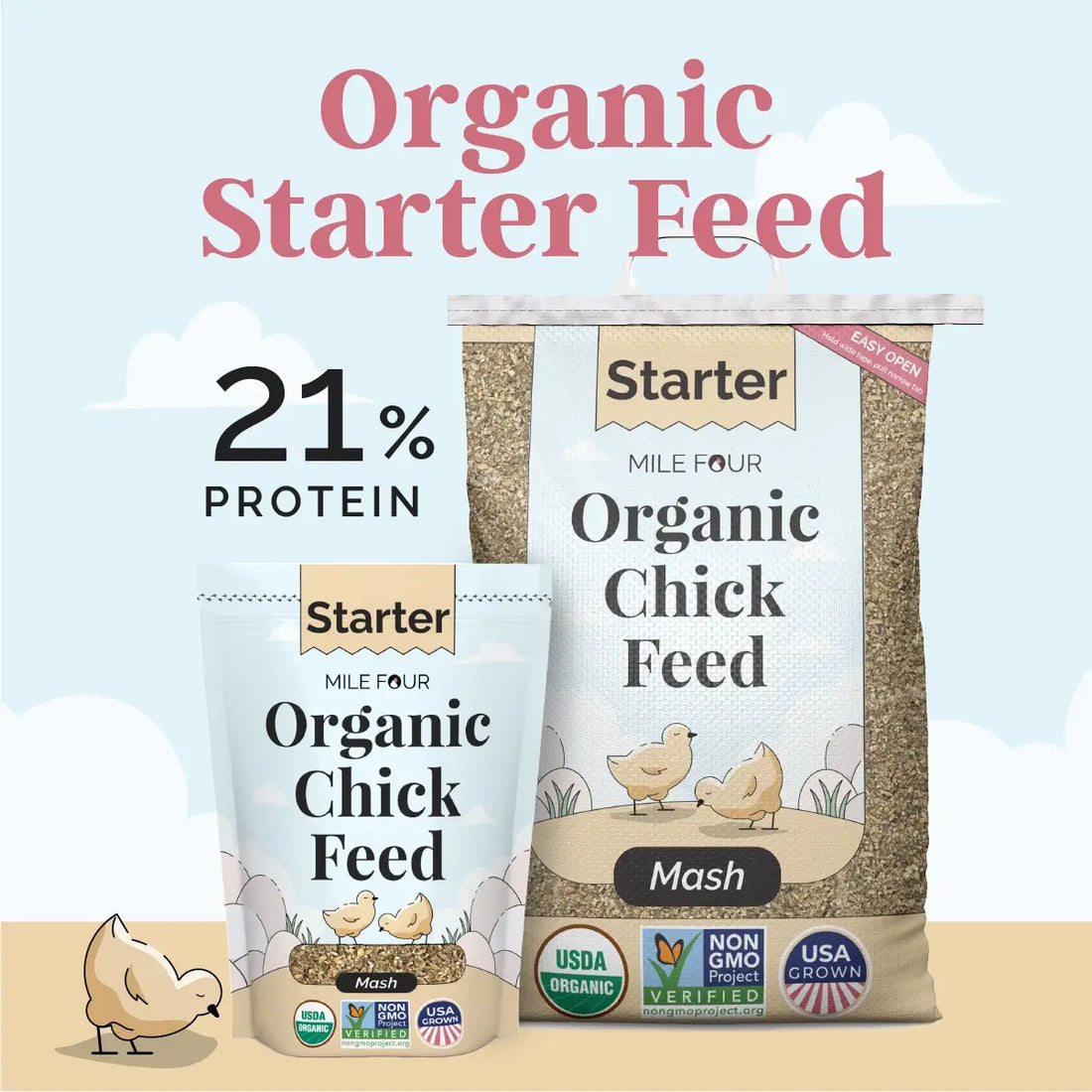
Mile Four is freshly milled, USDA-certified organic chicken feed from grains grown on family farms here in the U.S. No filler. No funny business. Just what chickens actually need. And our Mash format was built for fermenting.
READ: How to Ferment Chicken Feed (Free Guide)
SHOP: Organic Layer Feed (Mash, Pellet & Whole Grain)
READ: The Ultimate Chicken Feed Guide | What to Feed & When
Quick recap: fermented feed builds gut health through probiotics and better nutrient absorption. Sprouted grains boost vitamins and digestible protein. Oregano and garlic have real research behind them. Chili flakes are safe but won't deworm your flock. Start with one upgrade, stay consistent, and let the eggs tell the story.
-----
Sources:
Engberg, R.M., et al. Fermented feed: microbial profile and impact on intestinal microbiota in broiler chickens. British Journal of Poultry Science (2009).
Niba, A.T., et al. Effects of fermented feed on growth performance, gut morphology, and immune function in broilers. Animal Feed Science and Technology (2009).
Missotten, J.A.M., et al. Fermented liquid feed for pigs: an ancient technique for the future. Animal Feed Science and Technology (2015). Review of lactic acid fermentation and phytic acid reduction.
Giannenas, I., et al. Assessment of dietary oregano and garlic essential oils on anticoccidial and antioxidant activity in broiler chickens. Aristotle University of Thessaloniki. Poultry Science (2003).
Abouelezz, K., et al. Nutritional benefits of sprouted grains for poultry: A review. World's Poultry Science Journal (2018).
Lee, S.H., Lillehoj, H.S., et al. Allicin (from garlic) and other thiosulfinates: antimicrobial effects on poultry pathogens. USDA Agricultural Research Service (2012).
Chicken Fans. Can Chickens Eat Spicy Food? Capsaicin, TRPV1, and the Dewormer Myth. (2024).
Homestead and Chill. How to Ferment Chicken Feed for Healthier Hens and Eggs. (2025).
Disclaimer: This content is for educational purposes only and is not a substitute for professional veterinary advice. Always consult with a qualified poultry veterinarian or local agricultural extension before making changes to your flock's diet. We assume no liability for any loss, injury, or damages resulting from the use of this information.