
The first egg is a big deal. You've been waiting weeks, watching for a redder comb, a squatty posture, a hen who suddenly won't stop pacing the coop. Then one morning you find something small & slightly weird-looking in the nesting box.
Here's what nobody tells you upfront: that first egg is probably not going to look like what you buy at the grocery store. It might be tiny. It might have a soft shell. It might be the shape of a slightly deflated football. All of that is normal.
This post walks through what to expect in those first weeks of lay, including the strange-looking eggs that make new keepers panic-Google at 7am, and what it actually takes to tell normal from a real problem.
What's happening inside your pullet
Most pullets start laying around week 20, though breed makes a real difference. Production breeds like ISA Browns can start as early as 16–18 weeks. Heritage breeds often run closer to 24–28 weeks, sometimes longer. Either end of that range is normal.
If the timing feels uncertain, the 21-Week Feed Plan has the full breakdown of what to expect at each stage, including when to start transitioning feed ahead of that first egg.
When that first egg arrives, the reproductive system is brand new. It has never done this before. The shell gland, the part of the oviduct responsible for depositing calcium over about 20 hours, is still warming up. Think of it like a factory running its first shift. The machinery works. It just hasn't found its rhythm yet.
That's the main reason early eggs look off. It's not disease. It's not a feed problem. It's a system still calibrating.
Small eggs: Normal
First eggs are almost always small. Noticeably small. Sometimes comically small, like something a doll would collect.
This is expected. As a pullet matures, her yolks get larger, her oviduct stretches, & her body gets more efficient at the whole process. Egg size increases naturally over the first few weeks of lay without any intervention.
No action needed here. Wait it out.

Odd shapes: Normal (usually)
Pointy at one end. Long & narrow. Lumpy or slightly pinched in the middle. All of these show up in early lay.
The shell gland is still learning how to move an egg through at the right speed & apply calcium evenly. When the egg moves too fast or the gland has a minor hiccup, the shape suffers. Most shape irregularities in new layers sort themselves out within a few weeks as the system regulates.
One specific oddity worth knowing about: the fairy egg, sometimes called a wind egg or fart egg. These are tiny, sometimes marble-sized, & contain no yolk at all. They happen when a small bit of tissue slips into the reproductive tract & gets treated like a yolk, triggering the whole egg-wrapping process around essentially nothing. A pullet's very first attempt at laying sometimes produces one. Safe to eat, not worth worrying about.
Soft shells & shell-less eggs: usually normal in early lay
Pick up an egg from the nesting box & it feels rubbery or gives slightly under your fingers. That's a soft-shelled egg. Sometimes there's no shell at all, just the membrane holding the shape like a small water balloon.
This surprises a lot of new keepers. The short version: the shell gland hasn't started working at full capacity yet. It takes about 20 hours for a shell to form completely. When the timing is off or the gland is still immature, the egg exits before that process finishes.
In pullets, a soft or shell-less egg in the first week or two of lay is almost always a timing issue, not a nutrition crisis. The system is still syncing up.
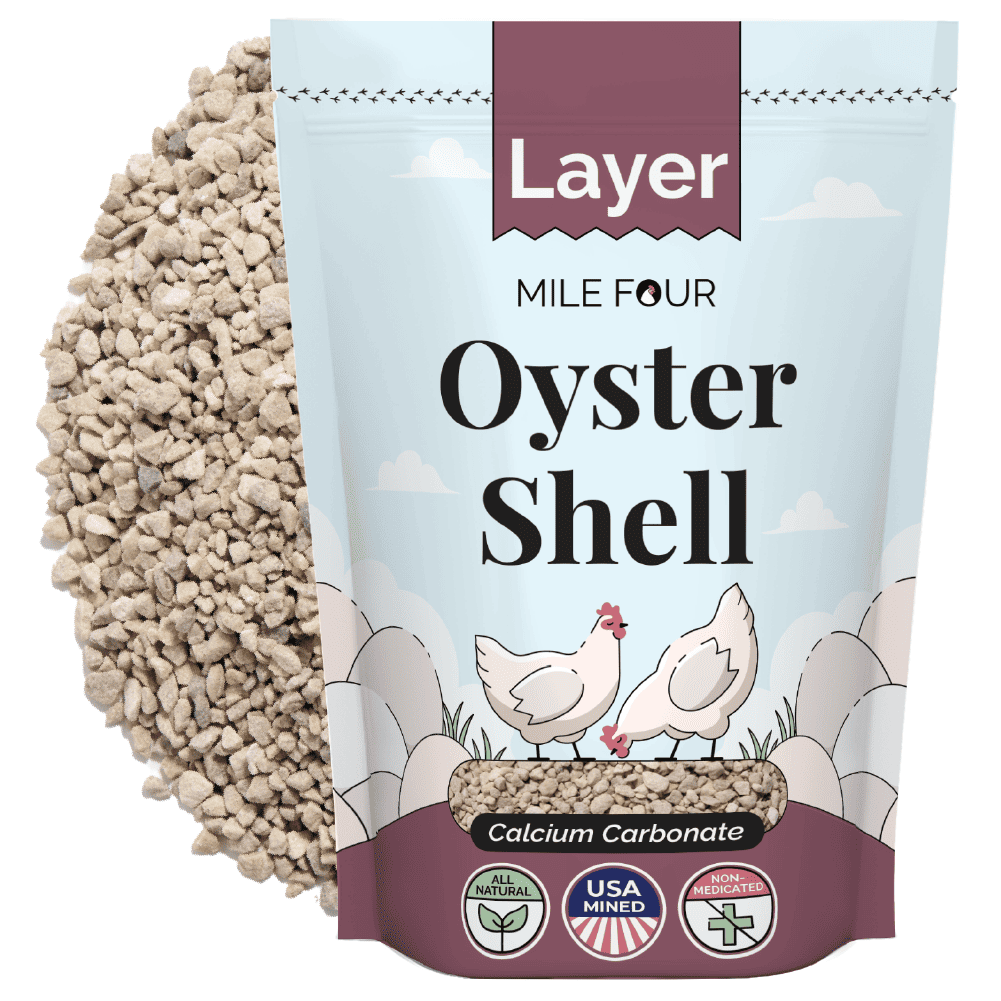
That said, calcium matters. Once a hen starts laying, her calcium needs jump significantly. Layer feed is formulated to account for that, but it's also worth making free-choice oyster shell available as a supplement. Hens self-regulate. The ones who need more will eat more. The ones who don't, won't.
If soft shells clear up within two to three weeks of first lay, no cause for concern. If they persist beyond that, it's worth looking at feed & supplementation first.

Double yolks: Normal
Crack open an egg & two yolks tumble out. Most people's reaction is delight. It's actually pretty common in young pullets.
Double yolks happen when ovulation moves too quickly. Two yolks get released in rapid succession & end up packaged together in one shell. The shell is usually larger than normal as a result. Young hens are prone to this because their reproductive cycle hasn't settled into a steady 24-hour rhythm yet.
Double-yolk eggs are perfectly safe to eat. Most hens stop producing them regularly once their laying cycle stabilizes.
Wrinkled or ridged shells
Shells that look crinkled or have raised rings around them are called "body check" eggs. They usually happen when something disrupted the egg while the shell was forming. A sudden stress, a flock disturbance, even a predator sniffing around outside at night.
The shell was damaged mid-formation, the gland repaired it, & the repair shows. Perfectly safe to eat.
Occasional wrinkled shells in a new layer are normal. They become worth watching if you see them consistently over a period of weeks.
Blood spots: usually not a concern
A small red or brown spot inside the egg, attached to the yolk or floating in the white, is a blood spot. It happens when a small blood vessel breaks during the egg-forming process.
Blood spots are more common in new layers. They're safe to eat. Remove the spot with a knife tip if it bothers you. They can occasionally indicate a vitamin A or K deficiency if persistent, but one or two in early lay is just the system starting up.
When something is actually worth watching
Most weird first eggs fall into the "wait it out" category. Here's what warrants closer attention.
Soft or shell-less eggs that persist beyond 3 weeks of laying. If shell quality doesn't improve, check whether the feed transition to layer happened, whether oyster shell is available free-choice, & whether Vitamin D is an issue. Hens need real sunlight. UV coming through a window gets blocked by the glass and doesn't count.
Multiple hens suddenly laying poor shells at the same time. When one pullet lays a weird egg, it's usually a calibration thing. When several hens start laying wrinkled, thin, or shell-less eggs around the same time, it's worth considering whether the whole flock is dealing with something, nutritional, environmental, or infectious. Infectious bronchitis affects shell quality across a flock & can cause lasting oviduct damage when pullets are exposed early.
Consistently misshapen eggs from the same bird, every time. One hen who reliably lays football-shaped eggs for months may have structural oviduct damage, sometimes from early illness exposure.
Any bird showing other symptoms. Weird eggs alone aren't usually alarming. Weird eggs combined with reduced appetite, lethargy, unusual droppings, or respiratory sounds. That's worth a call to a poultry-knowledgeable vet.
The feed transition matters here
One avoidable cause of poor shell quality in early layers: still being on grower feed when laying starts.
Grower feed has around 0.2–1.5% calcium. Layer feed has 3.1–4.5%. That's not a small difference. It's the difference between a shell that forms correctly & one that doesn't. If a pullet starts laying before the transition to layer feed has happened, the calcium just isn't there in meaningful quantities.
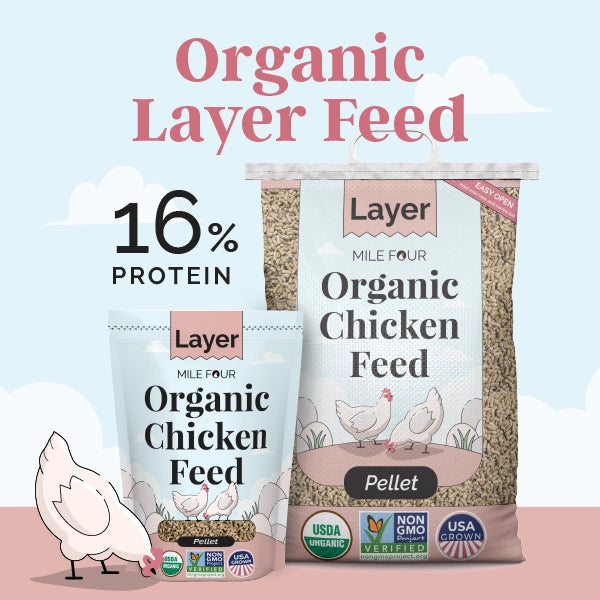
The trigger for switching is the first egg, not a specific age. Once laying starts, layer feed starts. At minimum, a gradual transition should already be underway. The 21-Week Feed Plan lays out that timing clearly if the schedule feels uncertain.
What normal actually looks like in the first month
| What you see | What's happening | What to do |
|---|---|---|
| Very small eggs | Reproductive system just starting | Nothing. Size increases naturally |
| Odd shapes, pointy or elongated | Shell gland calibrating | Wait it out |
| Fairy egg (no yolk, tiny) | Tissue fragment triggered the process | Nothing |
| Soft or shell-less egg, first few weeks | Immature shell gland | Confirm layer feed transition, offer oyster shell |
| Double yolk | Ovulation not yet synchronized | Nothing. Usually self-corrects |
| Wrinkled shell, occasional | Stress or disturbance mid-formation | Note if it continues |
| Blood spot | Vessel broke during formation | Safe to eat; watch if it persists |
The short version
Pullets are not laying machines on day one. The first few weeks of production are a calibration period, & the eggs show it.
Small, weird-shaped, soft, double-yolked: these are a system finding its stride. The bar for concern is whether it resolves on its own & whether the bird is otherwise healthy.
Most of the time, the answer to both is yes.
Sources
- University of Georgia Cooperative Extension, A Dozen Egg Abnormalities: How They Affect Egg Quality, shell abnormality types, causes, & nutritional deficiency links (extension.uga.edu)
- University of Florida IFAS Extension, Infectious Bronchitis and Its Effect on Egg Production and Egg Quality, IB impact on shell quality & oviduct damage in pullets (ask.ifas.ufl.edu/publication/VM014)
- Penn State Extension, Infectious Bronchitis in Chickens, flock-level shell quality decline & oviduct damage (extension.psu.edu)
- University of Kentucky / poultry.extension.org, Avian Reproductive System: Female, shell gland function, egg formation timeline, fairy eggs (poultry.extension.org)
- University of Kentucky / poultry.extension.org, Feeding Chickens for Egg Production in Small and Backyard Poultry Flocks, calcium requirements at point of lay (poultry.extension.org)
- Backyard Poultry Magazine, Calcium Supplements for Chickens, shell quality issues in first-year layers & feed transition timing (backyardpoultry.iamcountryside.com)
This post is for general informational purposes. If a bird shows persistent egg abnormalities alongside other symptoms, consult a poultry-knowledgeable veterinarian.