

You pick up a bag of chicken feed. You flip it over. You see "Crude Protein (min) 16%" and a list of ingredients that includes "grain products, plant protein products, processed grain by-products," followed by fourteen words ending in "-ate" and "-ide."
You put it back on the shelf, or you buy it anyway. Either way, you don't know much more than when you started.
This walkthrough fixes that. No chemistry degree required.

What the Guaranteed Analysis Section Actually Is
The Guaranteed Analysis is the small table on every bag of feed that lists nutrient percentages. The FDA requires it on all commercial feeds sold in the U.S. Think of it like a nutrition facts panel for a hen's food.
The key difference from human food labels: the numbers are promises, not exact readings. Crude protein & crude fat are listed as minimums, meaning the feed contains at least that much. Crude fiber & moisture are listed as maximums, meaning the feed contains no more than those amounts.
It's like a contractor telling you the floor will hold at least 1,000 pounds. Good to know. Not the whole picture.
What's required on every complete poultry feed label:
| Nutrient | Listed As |
|---|---|
| Crude Protein | Minimum % |
| Crude Fat | Minimum % |
| Crude Fiber | Maximum % |
| Moisture | Maximum % |
| Calcium | Min & Max % |
| Phosphorus | Minimum % |
| Lysine | Minimum % |
| Methionine | Minimum % |
What "Crude" Actually Means (& Why It Doesn't Mean What You Think)
"Crude protein" sounds industrial. It's not a judgment on quality. According to AAFCO, the word "crude" refers to the lab analysis method used to measure it, not the protein's nutritional value.
The test measures nitrogen content in the feed, then back-calculates to estimate protein. Two feeds can both show 16% crude protein on paper while being very different in practice. One might source protein from quality whole grains. Another might get there with cheaper filler ingredients. The number on the label is the same. What's behind it isn't.
Same idea applies to crude fat & crude fiber. The word "crude" means "measured by this specific method." Nothing more.
The Numbers That Actually Matter
Crude Protein
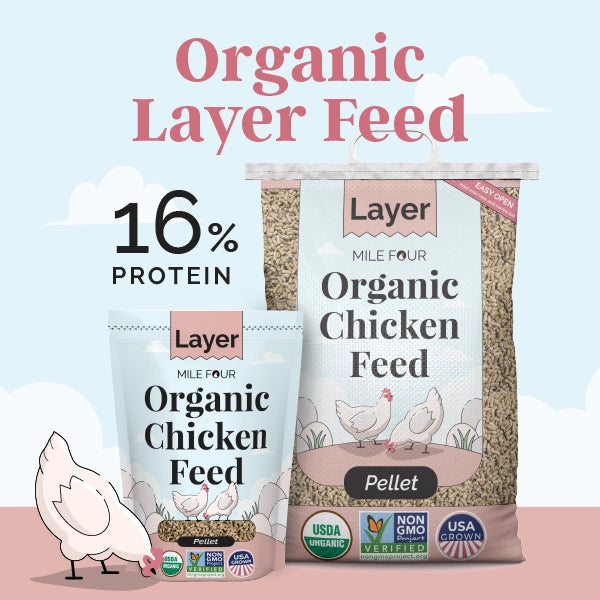
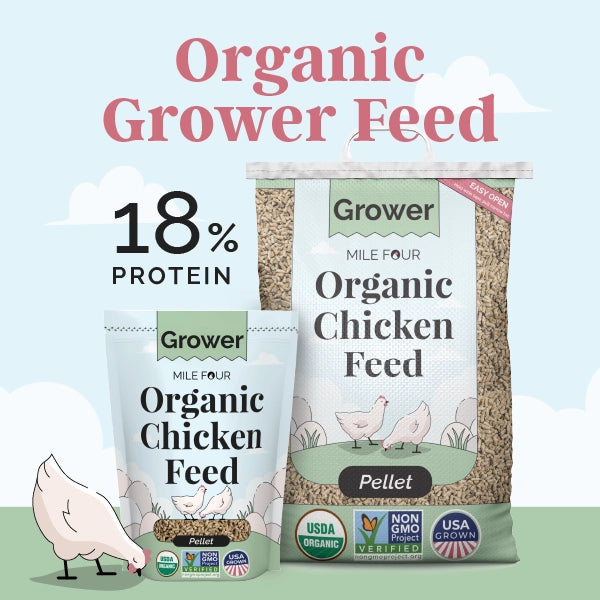
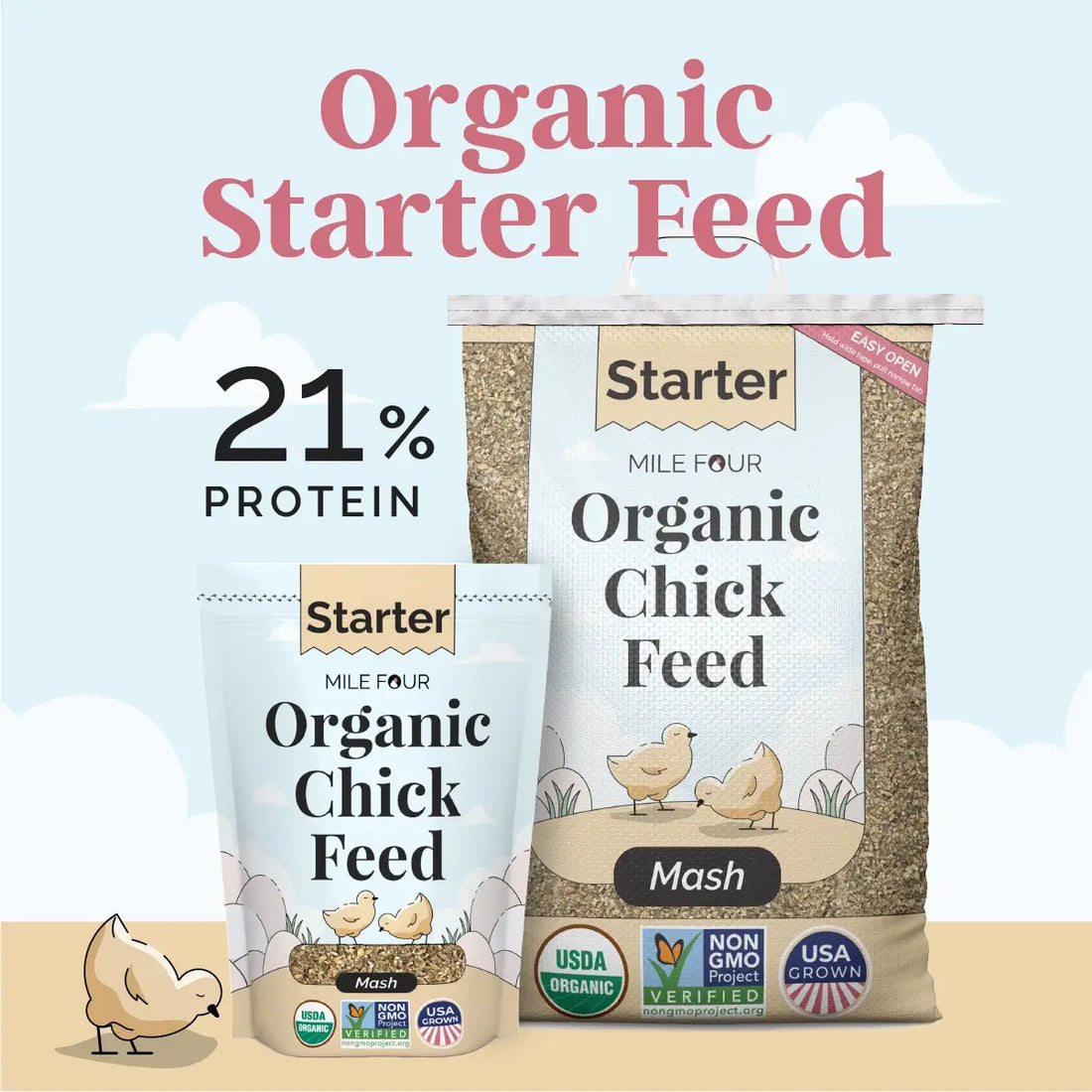
For laying hens, 16% is the standard floor. Grower feed typically runs 18%. Starter feed for chicks sits around 21%. These aren't arbitrary. They reflect what birds need at each stage of development.
Protein drives feather growth, egg production, immune function, & muscle development. Too little during molting and production slows. Too little during the growing phase and development stalls.
Calcium
This is the number most keepers miss, & it matters more than protein for layer hens.
Laying hens need 3.1–4.5% calcium to build strong eggshells. A grower or starter feed typically runs 0.2–1.1% calcium. That gap is why you can't feed layer feed to chicks & grower feed to laying hens and expect things to go well.
Too much calcium on young kidneys before lay begins can cause damage. Too little once laying starts leads to thin shells, soft eggs, & eventually hens pulling calcium from their own bones.
Calcium is also the number that reveals whether two bags labeled "layer feed" are actually equivalent. One at 3.1% minimum & another at 4.5% minimum are meaningfully different products. Compare the full range, not just the label category.
Phosphorus
Phosphorus works in tandem with calcium. According to the Merck Veterinary Manual, the calcium-to-available-phosphorus ratio in growing birds should stay close to 2:1. As hens age through their laying cycle, that ratio shifts considerably.
A bag that shows strong calcium but low phosphorus is worth a closer look. The balance matters more than either number in isolation.
Crude Fat
Fat is an energy carrier. Most complete feeds fall in the 3–5% range. Lower fat means denser, drier feed. Higher fat can affect palatability & shelf life. It's not a red or green flag on its own. It's context.
Crude Fiber
Fiber supports gut motility. High fiber (above 7–8%) in a complete layer feed can reduce nutrient absorption. The feed moves through before the bird extracts everything from it. Most quality complete feeds target under 5–6%.
The maximum guarantee here is protective. It sets a ceiling, not a floor.
Moisture
Most pellet or mash feeds run 10–12% moisture. Lower is better for storage. High moisture is a mold risk. This one is worth a quick glance when comparing shelf stability between bags.
A Quick Comparison: What Different Feed Types Actually Look Like
The numbers change significantly across life stages. This is the chart worth bookmarking:
| Feed Type | Protein % | Calcium % | Best For |
|---|---|---|---|
| Starter | ~21% | ~1.0% | Chicks 0–8 weeks |
| Grower | ~18% | ~0.2–1.5% | Pullets 8–20 weeks |
| Layer | ~16% | ~3.1–4.5% | Hens 20+ weeks, actively laying |
The protein drop from Starter to Layer is intentional. The calcium jump from Grower to Layer is the number with the most practical consequence. Layer calcium is 3–4x higher than Grower calcium. The guaranteed analysis tells that story directly.
The Ingredient List: What It Tells You & Where It Gets Murky
Ingredients are listed in descending order by weight, like a cereal box. The first ingredient is the most abundant by weight before processing.
This is where label reading gets useful, because it's also where some feeds get genuinely vague.
Named ingredients vs. collective terms
The FDA allows feed manufacturers to use collective terms instead of naming specific ingredients. "Grain products" legally covers any combination of barley, corn, oats, wheat, rye, rice, or grain sorghum. "Plant protein products" covers soybean meal, pea protein, sunflower meal, & others.
When "grain products, plant protein products, processed grain by-products" leads the ingredient list, the bag tells you almost nothing about what's actually in it. The formulation can change from batch to batch. Swap in a cheaper grain whenever prices shift, without updating the label.
Named ingredients are a sign of formulation transparency. "Wheat, field peas, sunflower meal, barley" tells you something. "Grain products, plant protein products" tells you the manufacturer prefers flexibility.
Neither is illegal. But knowing the difference is how you compare bags with confidence.
A few ingredients worth recognizing
DL-Methionine is a synthetic amino acid commonly added to bump crude protein numbers. Nothing categorically wrong with it, but if it appears high on the ingredient list, it's doing protein-number work that whole-grain sources would otherwise handle.
Calcium carbonate is a calcium source. Limestone, essentially. Standard ingredient, widely used.
Menadione sodium bisulfite complex is a synthetic vitamin K. It's present in a lot of conventional feeds. Some keepers prefer to avoid it; others don't. Worth knowing it's there.
Reading Marketing Claims
If a bag says "High in calcium," AAFCO requires it to back that up with an actual calcium percentage in the Guaranteed Analysis. Claims with numbers attached mean something.
If a bag says "premium quality" or "for happy, healthy hens," those phrases carry zero regulatory weight. Any brand can print those words on any bag without meeting a single measurable standard. They're not lies. They're also not information.
A few terms that do carry verifiable standards:
USDA Certified Organic: ingredients grown without synthetic pesticides or fertilizers, no GMOs. Third-party verified by an accredited certifying agent.
Non-GMO Project Verified: independently tested & certified. A higher bar than just printing "non-GMO" on the front.
Corn-free / Soy-free: not a regulated claim. Look at the ingredient list to confirm it, not just the front of the bag.
Medicated: means the feed contains a coccidiostat, typically amprolium. Not for chicks already vaccinated for coccidiosis.
What to Actually Look For When Comparing Bags
Skip the front of the bag. Flip it over.
On the Guaranteed Analysis:
Check protein percentage against the flock's stage (chick, grower, layer). Compare the full calcium range: minimum & maximum, not just the minimum. Note whether phosphorus is listed at all. Check moisture if storage matters.
On the ingredient list:
Are ingredients named specifically, or hidden behind collective terms? Where does protein come from: whole grains & legumes, or synthetic amino acid supplements at the top of the list? Is calcium from a food-based source or a mineral additive?
On marketing claims:
Is there a number behind the claim? Is the certification third-party verified? Would the Guaranteed Analysis actually back it up?
Two bags can look similar on the front & tell completely different stories on the back. The guaranteed analysis & ingredient list are where the comparison actually lives.
If you're looking for a feed with a clean, named ingredient list & calcium numbers formulated for each stage of life, Organic Feeds are milled fresh from USA-grown grains, with no corn, no soy, no collective term placeholders. The Guaranteed Analysis is on every bag, & the ingredient list is specific.
New to Mile Four? Organic Feeds are milled fresh from USA-grown grains. Starter, Grower, & Layer available.
Sources
- AAFCO (Association of American Feed Control Officials). "Nutritional Labeling." aafco.org — regulatory framework for required guaranteed analysis elements on commercial feed labels.
- AAFCO. "Labeling & Labeling Requirements." aafco.org — requirements for ingredient listing order & collective term use.
- U.S. FDA. "Animal Food Labeling and Pet Food Claims." fda.gov — use of collective terms under 21 CFR 501.110; defines the six permitted AAFCO collective ingredient categories.
- U.S. Code of Federal Regulations, 21 CFR 501.110 — official list of permitted collective term categories for animal feed ingredient labeling.
- Merck Veterinary Manual. "Nutritional Requirements of Poultry." merckvetmanual.com — calcium-to-available-phosphorus ratio guidance for growing & laying birds across the production cycle.
- University of Kentucky Regulatory Services. "Labeling Poultry Grain Scratch Products." rs.uky.edu — example guaranteed analysis requirements for complete vs. non-complete poultry feeds.
This post is for educational purposes only. Consult a licensed poultry veterinarian for flock-specific health or nutrition concerns.