

You did the math on the coop. Maybe even the math on the birds. Then somebody hands you a feed bag, you glance at the price, and the question you should have asked earlier finally lands: what is this actually going to cost me every month?
Not a rough guess. The real number — feed, supplements, bedding, the works.
Here's the full breakdown, by flock size and feed type, along with what actually moves the number up or down and a few ways to keep it lower without feeding your hens worse.
Start Here: How Much Does One Hen Eat?
Every cost number in this post starts from a single fact: an adult laying hen eats about 0.30 lbs of feed per day. That's roughly 2 lbs a week, 8 lbs a month.
For a flock of six, a 46-lb bag is gone in about three weeks. For a flock of ten, you're going through roughly a bag and a half every month — before you've spent a dollar on anything else.
A few things shift that number:
- Breed size — Larger heritage breeds like Buff Orpingtons eat noticeably more than lighter birds like Leghorns. Same rule as dogs: bigger animal, bigger appetite.
- Season — Hens burn more calories staying warm in winter. Cold months run higher than warm ones.
- Free-range access — Hens with real outdoor time forage insects, seeds, & greens and pull less from the feeder. Think of it as free supplemental nutrition — every bug they find is a calorie you didn't pay for.
- Feed format — Dry mash has the highest scatter waste. Pellets and whole grain fed wet (fermented) stay where you put them.
Note: chicks at 0–8 weeks eat closer to 0.25 lbs per day (~4 lbs/month). That number climbs through the grower stage and plateaus at the layer stage. The infographic below breaks it down by age.

Want the math done for your specific flock? Use the Chicken Feed Cost Calculator to get a weekly or monthly number based on your bird count and age.
Monthly Feed Cost by Flock Size
Based on ~8 lbs per laying hen per month, here's what feed alone typically costs. Prices reflect current retail ranges for 40–50 lb bags — the most economical size for backyard flocks.
| Flock Size | Feed/Month | Conventional (~$0.55–$0.70/lb) | Organic (~$0.80–$1.00/lb) | Organic Corn & Soy-Free (~$1.00–$1.30/lb) |
|---|---|---|---|---|
| 1 hen | ~8 lbs | $4–$6 | $6–$8 | $8–$10 |
| 3 hens | ~24 lbs | $13–$17 | $19–$24 | $24–$31 |
| 6 hens | ~48 lbs | $26–$34 | $38–$48 | $48–$62 |
| 10 hens | ~80 lbs | $44–$56 | $64–$80 | $80–$104 |
| 15 hens | ~120 lbs | $66–$84 | $96–$120 | $120–$156 |
A note on bag size: smaller bags always cost more per pound. A 2-lb bag is convenient for trying a new feed, but it's not how you budget a flock long-term. If storage allows, the 23-lb or 46-lb bags bring the per-pound cost down meaningfully.
Why Organic Feed Costs More
The gap between conventional and organic feed is roughly 30–50% per pound. For a 6-hen flock, that's $10–$28 extra per month, depending on the formula. Worth knowing what you're actually paying for.
Certification. USDA certified organic means every grain in the bag was grown without synthetic pesticides, herbicides, or GMO seed. That certification costs farms more to earn — and more to maintain. That cost moves downstream to the bag price.
Ingredients. Standard conventional feed is built around corn & soy — cheap, calorie-dense, and nutritionally thin on their own. Corn-free, soy-free organic formulas substitute higher-cost grains: barley, oats, field peas, sunflower seeds. They cost more because they're less commodity.
Freshness. Large conventional brands manufacture in bulk with long shelf windows. Fresh-milled organic feed operates on a different supply chain — smaller batches, faster turnover, higher input costs per pound.
Whether the premium is worth it depends on what matters to you. If you care where the grain comes from and what went into growing it, the price difference reflects real sourcing decisions — not just a label on a bag.
Feed Format Affects Your Monthly Cost More Than You Think
Same nutrition, different form. The format you choose changes how much of what you buy actually gets eaten.
Pellets are the cleanest option for waste. Hens pick them up whole with minimal scatter. If feed waste is your biggest cost leak, pellets fix most of it.
Crumbles fall in the middle. Good palatability, moderate waste — finer particles get kicked around but not as much as dry mash.
Mash & whole grain fed dry have the highest waste potential. Hens sift through it, flinging fines into the bedding. A lot of that feed never gets eaten. The fix is fermentation — more on that below.
For a flock of 6, the difference between a treadle feeder with pellets and an open dish of dry mash can easily be a full bag per month in wasted feed. At $38–$62 a bag for organic, that's real money.
The Other Monthly Costs (Beyond Feed)
Feed is the biggest line item. It's not the only one.
Oyster Shell & Grit
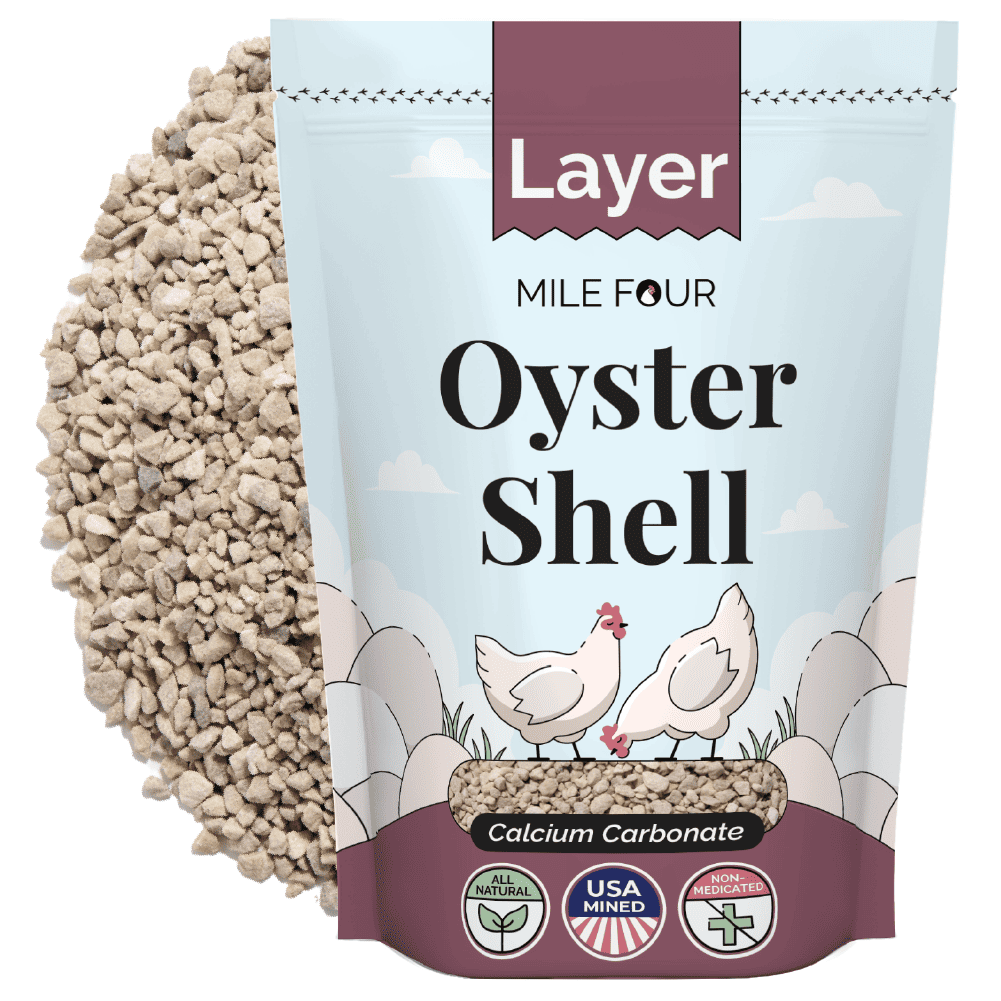
Laying hens need supplemental calcium for shell quality. If the feed already contains adequate calcium (layer feed does — Mile Four Layer runs 3.10–4.50%), additional oyster shell is optional but commonly offered free-choice. A bag lasts several months for a small flock. Think of it as a $2–$4/month line item at most.
Chicken grit is different — it's not a supplement, it's a digestive tool. Hens need insoluble grit in their gizzard to grind whole grains. Birds with consistent outdoor access often pick up enough naturally. Confined birds need it offered free-choice. One bag lasts a long time for a small flock. Budget roughly $1–$3/month.
Bedding
Coop bedding is a real monthly cost that's easy to underestimate until you're hauling bags every week. Common options:
- Pine shavings — the most common. A compressed bale runs $8–$15 and lasts 2–4 weeks for a small coop.
- Hemp bedding — absorbs more, composts faster, less dusty than pine. Higher upfront cost per bag, but often stretches longer between full changes. A 25-lb bag typically runs $25–$35.
- Coffee ground bedding — newer option, moisture-absorbing, low dust. Similar price range to hemp.
For a small coop with 4–6 birds, budget $10–$25/month depending on the bedding type and how often you do a full clean-out.
Treats & Supplements
This category varies enormously based on how you run your flock. The basics:
- Scratch grains — a treat, not a staple. Fine as a cold-weather energy boost or something to scatter during coop work. If it's replacing balanced feed, it's costing you nutrition, not saving money.
- Black soldier fly larvae (BSFL) — high protein, great for molting season support or as a treat. Not cheap, but a small amount goes a long way.
- Probiotics & hydration supplements — some keepers use these seasonally (heat stress, post-molt, after illness). Not a monthly necessity for a healthy flock, but worth knowing about.
A reasonable treats budget for a flock of 6: $5–$15/month, depending on how much you spoil them.
Occasional / Annual Costs Averaged Monthly
Some costs don't hit every month but should factor into a realistic budget:
- Health & vet — A healthy, well-fed flock on quality feed has low vet frequency. Budget $5–$15/month averaged across the year as a contingency.
- Feeder/waterer maintenance or replacement — Good equipment lasts years, but eventually a nipple clogs or a feeder cracks. $50–$150 every few years, averaged out to a few dollars a month.
What a Realistic Monthly Budget Actually Looks Like
Putting it all together for the most common backyard setup — a flock of 4–6 laying hens:
| Cost Category | Conventional Flock | Organic Flock |
|---|---|---|
| Feed (6 hens) | $26–$34 | $48–$62 |
| Oyster shell & grit | $3–$6 | $3–$6 |
| Bedding | $10–$20 | $10–$25 |
| Treats & supplements | $5–$10 | $5–$15 |
| Health contingency (averaged) | $5–$10 | $5–$10 |
| Total/Month | ~$49–$80 | ~$71–$118 |
For context: six healthy laying hens typically produce 4–5 dozen eggs per month. At current grocery prices for comparable organic eggs ($6–$9/dozen), that's $24–$45 worth of eggs at the low end of production. The home-raised math works — it's just not dramatic.
What people consistently undervalue is the quality gap. Store eggs sit in distribution for weeks. A backyard egg went from nest to kitchen in hours. That part doesn't show up in the spreadsheet.
5 Ways to Lower the Number Without Lowering the Bar
These aren't theoretical cost-cutting tips. They're practical levers that actually move the monthly number.
1. Fix the feeder before you fix the feed. Open dishes and flat trays are feed-wasting machines. A treadle feeder — the kind that only opens when a bird steps on the platform — eliminates scatter, protects from pests, and keeps feed dry. It's a one-time equipment cost that pays back in a few months of saved feed. A covered tube feeder achieves most of the same thing for less.
2. Ferment your mash or whole grain. Soaking feed in water for 24–48 hours changes how it works. The grain swells, beneficial bacteria develop, and hens eat it in slower, more controlled amounts with almost zero scatter. Less waste per feeding means less feed purchased per month. It also improves nutrient absorption — fermentation breaks down phytates in grain that would otherwise block mineral uptake. More nutrition per pound, less waste per serving. The full fermentation guide is here.
3. Let them forage when the option exists. A few hours of outdoor access per day — real outdoor access, not just a small run — lets hens supplement their diet with insects, seeds, & plant matter. In warm months especially, a flock with daily free-range time visibly pulls less from the feeder. It doesn't eliminate the need for complete feed, but it reduces how much you're buying.
4. Don't buy scratch as a feed substitute. Scratch grains are cheap per pound, which makes them tempting as a way to stretch the feed budget. The problem is that scratch is nutritionally thin — heavy on carbohydrates, low on protein, vitamins, & minerals. Hens that fill up on scratch eat less complete feed, which means they're getting less of what they actually need. You end up buying both, getting worse nutrition, and solving nothing on cost.
5. Buy in the right bag size for your flock. Small bags are expensive per pound. The 23-lb and 46-lb bags bring the cost-per-pound down significantly compared to 2-lb trial sizes. If you have a dry, pest-proof storage bin, buying the largest bag your flock will consume within a few weeks is one of the most straightforward ways to reduce the monthly number. Mile Four feed has a rolling freshness window — it's milled to order, so you're not trading freshness for bulk.
Getting the Feed Stage Right Matters More Than Price
Cost is one variable. Feeding the wrong feed for the wrong age is a different kind of expensive.
A chick eating layer feed gets calcium levels that are 3–4x what a developing bird should have — and that overload stresses developing kidneys. A laying hen eating starter feed isn't getting the calcium needed to sustain eggshell quality. Both scenarios cost more than the price difference between feeds.
The 21-Week Feed Plan maps the full transition arc from day-old chick through laying hen — when to switch, what to switch to, and how to handle the overlap if you're running a mixed-age flock.
For the full picture on what goes into each bag and why it's formulated the way it is, the Chicken Feed Guide covers it in detail.
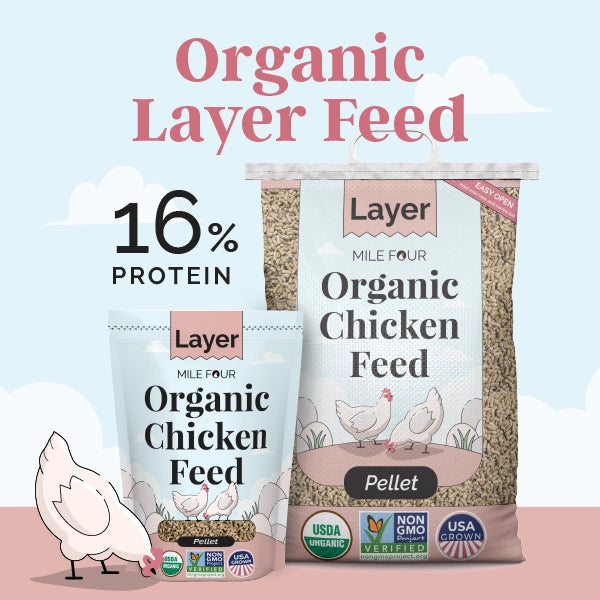
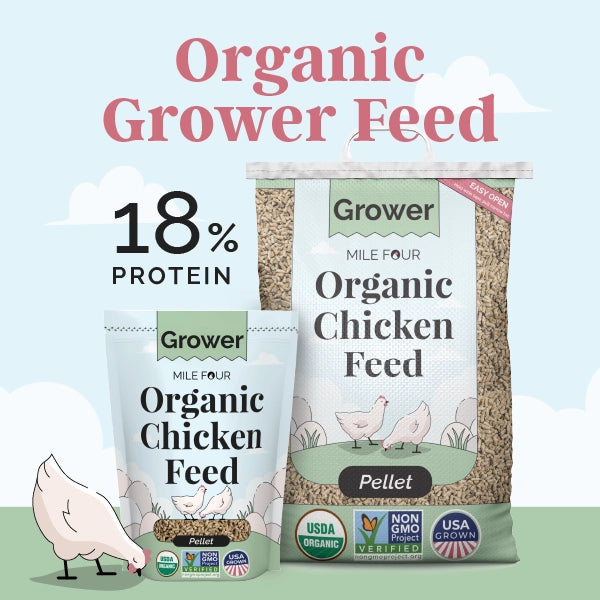
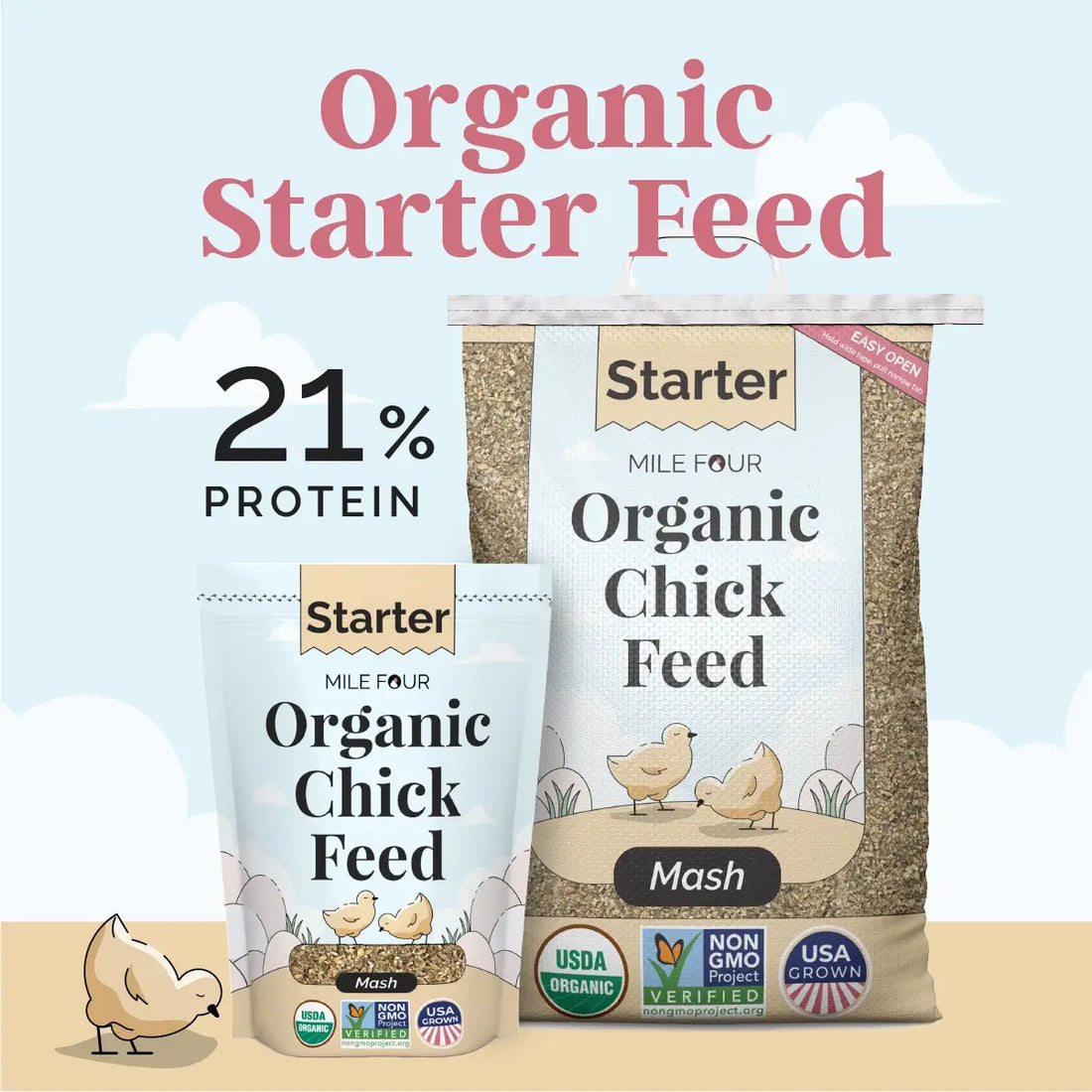
Buying in bulk and cutting waste both help, but the biggest lever is still the feed itself. Mile Four's organic feed is built on 100% US grains with no corn, no soy → Discover Organic Starter, Grower & Layer Feed.
Sources
- Alabama Cooperative Extension System, "Backyard & Small Poultry Flock Management Series: Feeding the Laying Hen" — laying hen daily consumption (100–150g / ~0.25–0.30 lb per day)
- Mississippi State University Extension Service, "Feeds and Nutrition" — laying hen consumption, full-fed feeding guidance, calcium requirements
- South Dakota State University Extension, "Tips for Feeding Poultry Wisely" — average feed intake range by breed, age, & condition
- University of Maryland Extension, "Feeding the Flock" — feed as ~70% of cost of raising chickens; small flock vs. commercial feed economics
- Spectrum Care, "How Much Does Organic Chicken Feed Cost?" — organic layer feed price range by bag size & formula type
The information in this post is intended for general educational purposes. Consult a licensed poultry veterinarian for questions about feed management, nutrition, or the health of your flock.