
Somewhere around week seven, the brooder starts looking less like a nursery and more like a studio apartment with too many roommates.
The chicks that once fit in two hands are stepping into the feeder, testing their wings & growing legs faster than the rest of their bodies can keep up.
It is also around this time that many keepers start asking the same question: When should chicks switch from Starter to Grower Feed?
For most egg-laying & dual-purpose breeds, the transition begins around 6 to 8 weeks. Mile Four starts gradually mixing in Organic Grower Feed around Week 7, reaching 100% Grower by Week 9.
When Should Chicks Start Grower Feed?
Most feeding programs move egg-type pullets from Starter to Grower Feed at approximately 6 to 8 weeks old.
There is no universal birthday that applies to every bird or every formula. Feed manufacturers use slightly different nutrient profiles & feeding schedules, which is why the directions on your feed label should be your starting point.
For Mile Four-fed flocks, the transition begins around Week 7. This falls within the commonly recommended range while allowing enough time to make the change gradually.
Grower Feed then carries developing pullets through the stretch between early chick growth & point of lay. Mile Four Organic Grower Feed is formulated for approximately 8 to 20 weeks.
Why Chicks Need a Different Feed as They Grow
Starter Feed is formulated for the rapid development happening during a chick’s earliest weeks. Grower Feed is designed for the next stage, when pullets are still building their frames, muscles & reproductive systems but are no longer newly hatched chicks.
The most visible changes may be happening in their legs & feathers, but much of the important development cannot be seen from outside the bird.
That is why the transition should be based primarily on age, bird type & the directions for the feed you are using. Appearance can provide helpful context, but it cannot tell you whether a pullet’s diet is nutritionally balanced.
Starter Feed vs. Grower Feed
| Feed | Protein | Mile Four Timing | Main Role |
|---|---|---|---|
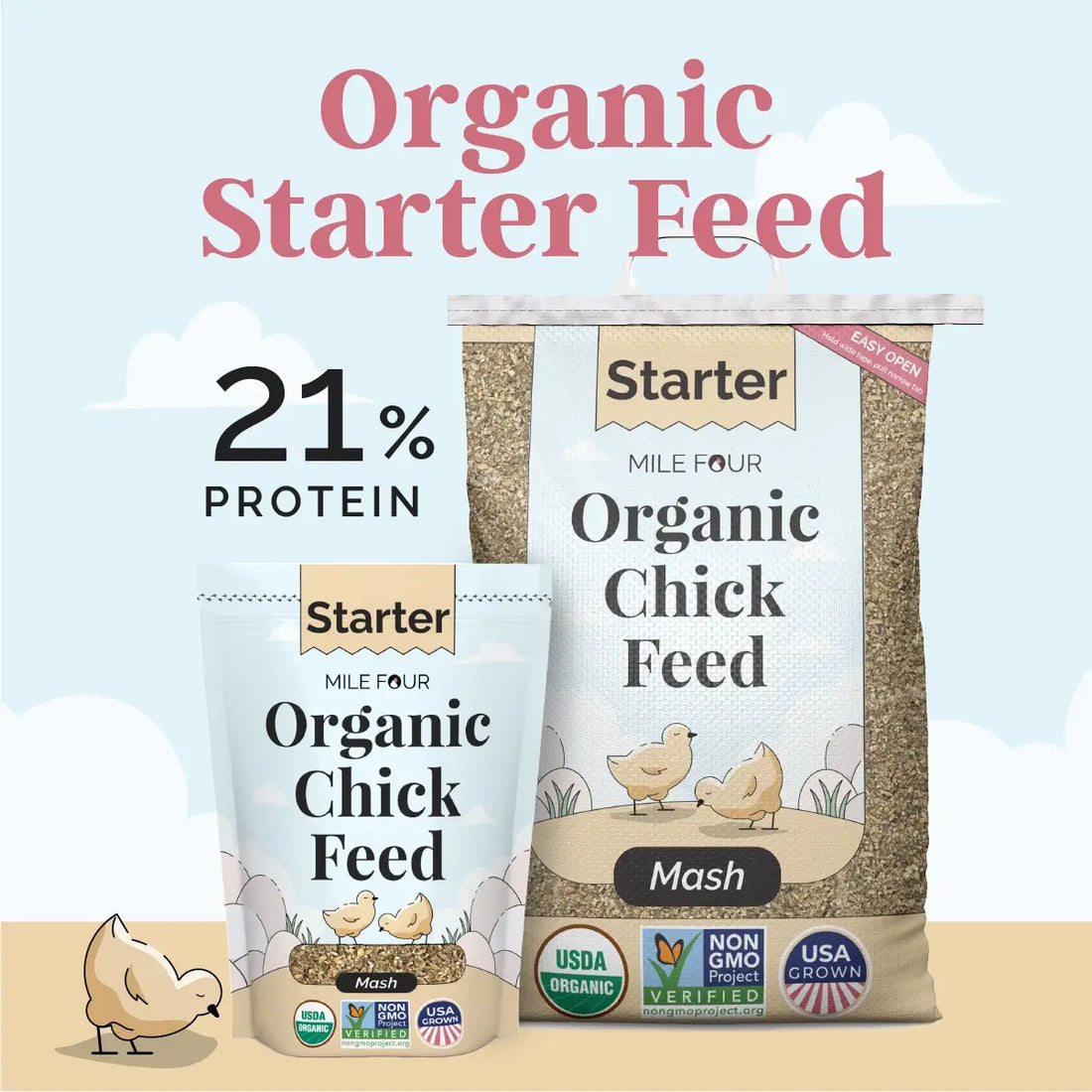
| Starter | 21% | Hatch through the early-growth stage | Supports rapid early development |
| Grower | 18% | Transition around Weeks 7 to 9, then feed until near point of lay | Supports continued pullet growth without Layer-level calcium |
These percentages describe Mile Four’s formulas. Other complete feeds may use different nutrient levels or combine Starter & Grower into one product. Always follow the feeding directions on the bag you are using.
Are Feathers a Sign That Chicks Are Ready?
By 6 to 8 weeks, many chicks have replaced most of their fluffy down with juvenile feathers. That change often happens around the same time as the move to Grower Feed, but feathering alone should not make the decision.
Breed, temperature, health & individual development can all affect how quickly a chick feathers out. One bird may look ready for a yearbook photo while another still has a little fluff sticking out in places.
Use feathering as a clue that the early chick stage is ending, not as a nutritional test. The bird’s age, type & feed-label instructions are more reliable guides.
What If Some Chicks Look Smaller Than the Others?
A flock rarely grows in perfect formation. Some chicks feather faster, gain size sooner or simply look more mature than their brooder mates.
If the birds are the same age, eating normally & otherwise healthy, a gradual group transition is usually more practical than trying to feed each chick according to appearance.
A chick that is unusually small, losing weight, eating poorly or falling behind the flock may need closer attention. Those signs should not automatically be blamed on the feeding transition. Contact a poultry veterinarian if you are concerned about a bird’s health or development.
How to Switch from Starter to Grower Feed
You do not need to wait until the Starter feeder is empty one morning & replace it with an entirely different feed by lunch.
A gradual transition gives chicks time to adjust to changes in taste, texture & ingredient balance. Mile Four recommends starting around Week 7 & reaching 100% Grower Feed by Week 9.
| Stage | Starter Feed | Grower Feed |
|---|---|---|
| Begin around Week 7 | 75% | 25% |
| Increase gradually | 50% | 50% |
| Continue the transition | 25% | 75% |
| By Week 9 | 0% | 100% |
Move through the ratios gradually rather than treating each one as a rigid appointment. Keep fresh water available & watch that the flock continues eating normally throughout the change.
For the complete Starter, Grower & Layer schedule, follow the 21-Week Chicken Feed Plan.
What Happens If You Switch Too Early?
Moving chicks to a feed intended for older pullets before the manufacturer recommends it may provide a different nutrient balance than they need during rapid early development.
That does not mean a chick will suddenly develop visible problems after one meal. It means Starter Feed is the more appropriate complete ration for that earlier life stage.
If you are unsure whether your chicks are old enough, check the feeding directions on both bags before beginning the transition.
What Happens If Chicks Stay on Starter Too Long?
Keeping pullets on Starter a little beyond the recommended transition age is generally less concerning than moving them to Layer Feed too early. It is still worth correcting because Starter is formulated for a different stage of development & may provide more protein than older pullets require.
Once the flock reaches the recommended age, begin mixing in an appropriate Grower, Developer or Starter-Grower formula rather than waiting for a physical sign from every bird.
Do Not Skip Straight to Layer Feed
Grower Feed may look like the forgettable middle bag, but it serves an important purpose.
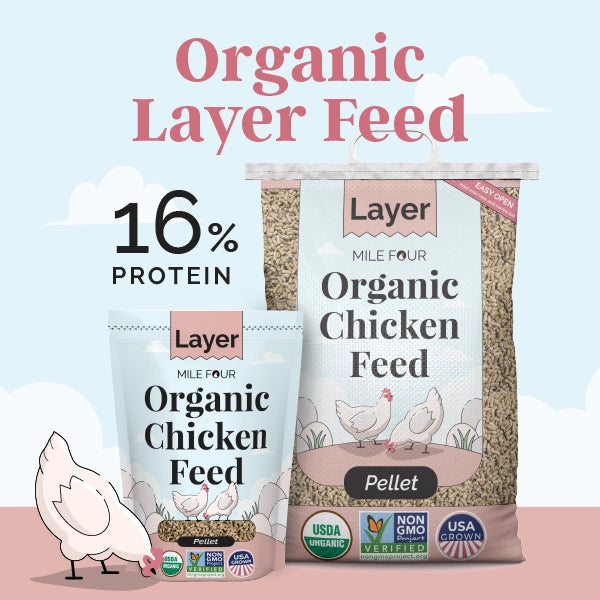
Layer Feed contains substantially more calcium because laying hens use calcium to build eggshells. Immature pullets do not need that same amount yet. Feeding a Layer ration too early can interfere with normal development & may contribute to kidney damage or other health problems.
Grower Feed provides complete nutrition for the period after early chick growth but before egg production begins. Keep pullets on it until they approach point of lay, following the directions on the feed label.
The Short Answer
Most egg-laying & dual-purpose chicks begin transitioning from Starter to Grower Feed at approximately 6 to 8 weeks.
For Mile Four-fed flocks, start mixing in Organic Grower Feed around Week 7, gradually increase its share & reach 100% Grower by Week 9.
Use age, bird type & the directions on your feed label as your main guides. Feathers, size & changing brooder behavior may tell you the chicks are growing up. They cannot replace the nutritional instructions on the bag.
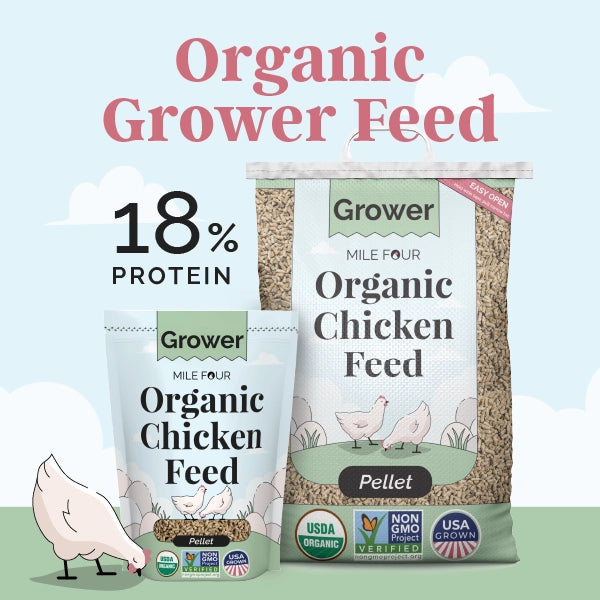
Mile Four Organic Grower Feed contains 18% protein & is formulated for developing pullets from approximately 8 to 20 weeks. It is milled fresh from USA-grown grains & is USDA Certified Organic, Non-GMO, corn-free & soy-free.
If your chicks are reaching the end of the Starter stage, explore Mile Four Organic Grower Feed.
Sources
- University of Minnesota Extension, “Raising Layer Chicks and Pullets”: Starter, Grower & Layer feeding stages for egg-type pullets.
- University of Maine Cooperative Extension, “Nutrition for Backyard Chicken Flocks”: nutrient ranges for growing pullets & guidance on feeding diets appropriate for each life stage.
This article is for general educational purposes & is not a substitute for professional veterinary advice. Follow the directions on your feed label & consult a poultry veterinarian about health concerns specific to your flock.