
Somewhere around week eight, the feed math stops being simple.
Starter made sense. It said so right on the bag. Layer Feed will make sense once eggs start showing up. Grower is the awkward middle sibling nobody talks about at the feed store, which leaves plenty of keepers wondering when to switch feeds or whether they can skip Grower altogether.
The short answer: developing pullets still need a feed formulated for the growing stage. Whether the bag says Grower, Developer or Starter-Grower matters less than what is inside it.
What Grower Feed Actually Does
Grower Feed is designed for the steady development that happens after the fastest weeks of chick growth but before egg production begins.
Formulas vary, but feeds for growing egg-type pullets commonly contain around 16% to 18% protein and less than 1% calcium. Some feeding programs divide this period between a Grower Feed and a lower-protein Developer Feed. Others use one Grower formula until the birds approach laying age.
The exact number on the label is only part of the picture. Energy, amino acids, vitamins, minerals and the balance between them all help determine whether a feed is appropriate for a pullet’s life stage.
A growing pullet is no longer developing at quite the same pace as a two-week-old chick. She still has plenty of work ahead of her, though. Her skeleton, muscles, organs and reproductive system are continuing to mature, even when the most noticeable daily change seems to be how quickly she can empty a feeder.
When Should Chickens Switch from Starter to Grower Feed?
Many backyard feeding plans transition chicks from Starter to Grower Feed at around 6 to 8 weeks. They generally remain on a Grower or Developer formula until they approach point of lay, often around 18 to 22 weeks.
Those ages are useful guides, not appointments every chicken agreed to keep.
Breed, season, nutrition and the individual bird can all affect maturity. A fast-maturing hybrid may begin laying before a slower heritage breed. A Brahma taking her time is not behind schedule. She is just being a Brahma.
The better marker is the bird’s life stage. Once chicks have moved beyond the early-growth period, they need a complete feed intended for growing pullets. Follow the age range and feeding directions provided by the feed manufacturer rather than switching on one particular birthday.
Can Chickens Skip Grower Feed?
They should not skip growing-stage nutrition, but that does not always mean buying a bag with the exact word “Grower” on it.
Some brands offer separate Starter and Grower formulas. Others sell a combined Starter-Grower or an all-flock formula with feeding directions that cover developing pullets. A feed may also be labeled Developer during the later part of this stage.
What matters: The feed should be complete, balanced and labeled for growing pullets. A bag intended only for laying hens is not an appropriate shortcut.
If the label is unclear, check the intended ages and feeding directions instead of judging the formula by its name alone.
When Should Chickens Switch from Grower to Layer Feed?
Chickens should generally move from Grower to Layer Feed when they approach point of lay. This often happens around 18 to 22 weeks, but the timing can vary by breed and individual bird.
Look for signs that laying is getting close, including reddening combs and wattles, increased interest in nesting boxes and the characteristic squat some pullets make when approached.
Age still provides a useful reference, but the transition should follow the bird’s stage of development and the directions on the feed label. A slower-maturing pullet may need Grower Feed longer than a fast-maturing hybrid.
Why Pullets Should Not Move to Layer Feed Too Early
The biggest nutritional change between Grower and Layer Feed is not protein. It is calcium.
Grower formulas for egg-type pullets commonly contain roughly 0.75% to 0.95% calcium. Layer formulas often contain around 3% to 4.5%, depending on the product and type of bird. That higher level helps laying hens replace the calcium used to form eggshells.
Before egg production begins, pullets do not need the same calcium load. Feeding a high-calcium Layer ration too early may interfere with normal development and contribute to kidney damage or other health problems.
That is why the transition is tied to point of lay. Layer Feed is built for a job the pullet has not started yet.
What If Pullets Stay on Starter Feed Too Long?
This side of the transition is less dramatic, but it is still worth correcting.
Starter feeds are typically formulated with more protein to support rapid early growth. Keeping pullets on Starter beyond the manufacturer’s recommended age does not automatically mean something will go wrong, but it may provide more protein than their next stage requires and is not the feeding program the formula was designed to support.
The better move is to transition them to a complete Grower, Developer or Starter-Grower feed appropriate for their age.
If a feed is medicated, read the label carefully. Instructions can vary depending on the medication used, whether chicks were vaccinated for coccidiosis and whether the feed is approved for birds approaching egg production.
Starter vs. Grower vs. Layer Feed
| Feed Stage | Protein | Calcium | Typical Timing |
|---|---|---|---|
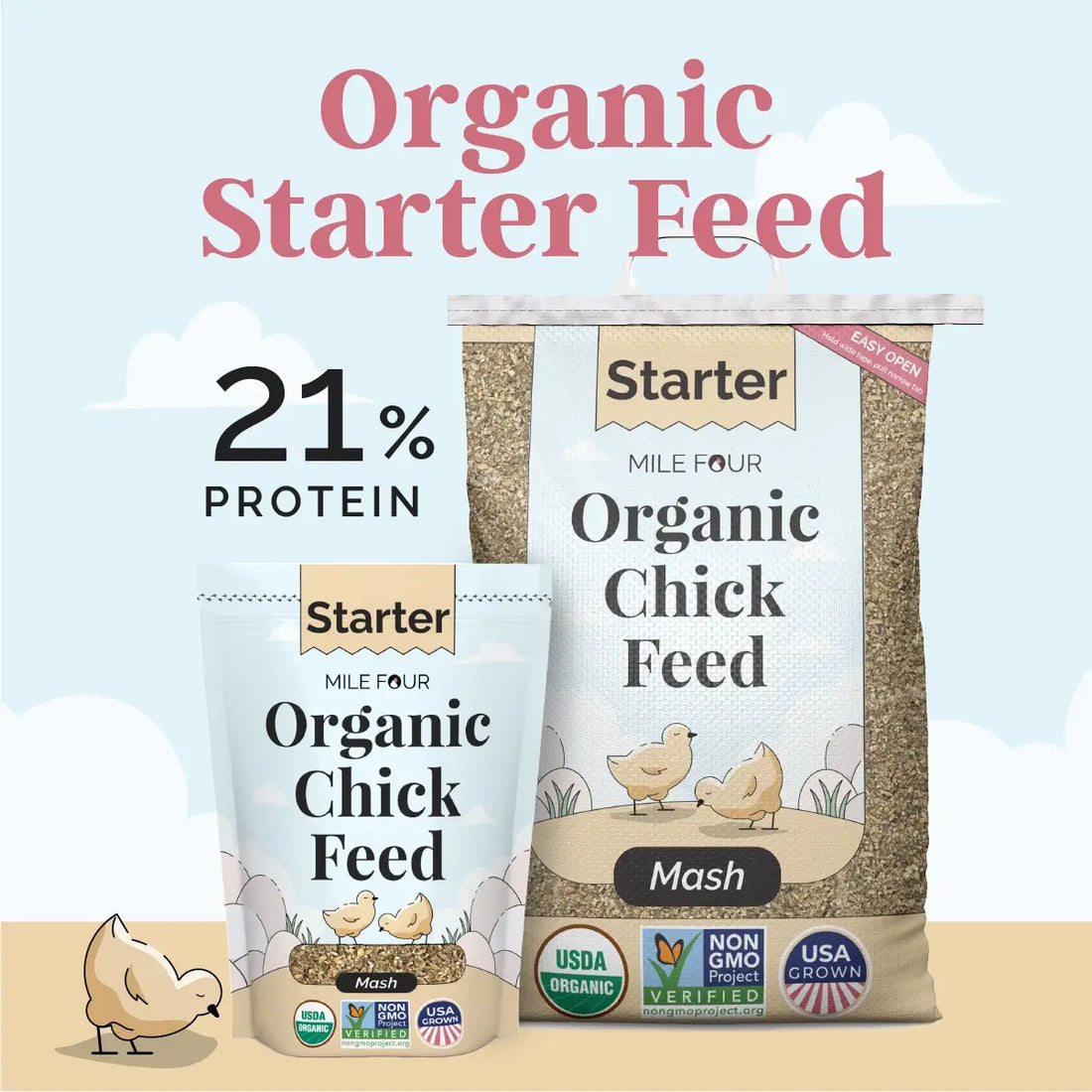
| Starter | Around 18% to 22% | Around 0.85% to 1% | Hatch to approximately 6 to 8 weeks |
| Grower | Around 16% to 18% | Around 0.75% to 0.95% | Approximately 6 to 8 weeks until near point of lay |
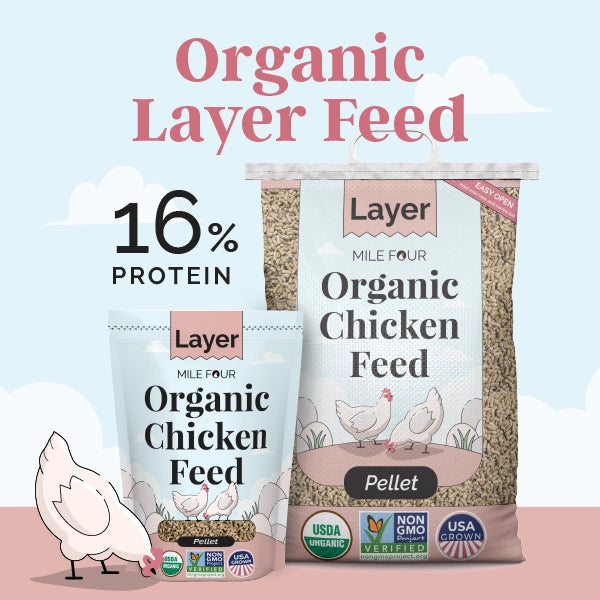
| Layer | Around 15% to 19% | Around 3% to 4.5% | Near point of lay and throughout egg production |
These are general ranges for feeds intended for egg-type chickens, not pass-or-fail numbers for every bag. Recommendations can differ by breed, feed formulation and manufacturer. Meat birds follow a different feeding program.
The clearest distinction is the job each feed is formulated to do: Starter supports early growth, Grower supports continued development and Layer Feed supplies the additional calcium needed for egg production.
How to Transition Between Chicken Feeds
A gradual change gives the flock time to adjust to a different taste, texture and ingredient balance.
Start mixing the new feed into the current feed, then increase its share over several days until it has fully replaced the previous formula. Keep fresh water available and watch that every bird continues eating normally throughout the transition.
For a week-by-week schedule covering all three stages, follow the 21-Week Chicken Feed Plan.
If the percentages on different bags are making the decision harder, learn how to read a chicken feed label and what those numbers can and cannot tell you.
The Middle Bag Earns Its Place
Grower Feed does not get much of a highlight reel. There are no fluffy first-week chick photos and no first eggs waiting at the end of the morning chores.
It covers the quieter stretch when pullets are becoming full-sized chickens. The name on the bag may vary, but the goal stays the same: give developing birds complete nutrition without introducing a laying hen’s calcium levels before they need them.
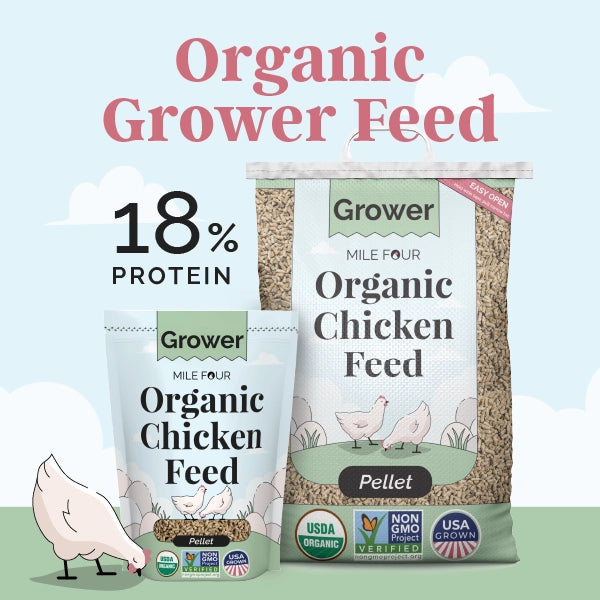
Mile Four Organic Grower Feed contains 18% protein and is formulated for developing pullets from approximately 8 to 20 weeks. It is milled fresh from USA-grown grains and is USDA Certified Organic, Non-GMO, corn-free & soy-free.
If your chicks are beginning to outgrow Starter, explore Mile Four Organic Grower Feed.
Sources
- University of Maine Cooperative Extension, “Nutrition for Backyard Chicken Flocks”: nutrient ranges for Starter, Grower, Developer and Layer diets, feeding-stage guidance and risks associated with feeding Layer diets to immature birds.
- University of Minnesota Extension, “Raising Layer Chicks and Pullets”: Starter, Grower and Layer feeding stages for egg-type pullets.
This article is for general educational purposes and is not a substitute for professional veterinary advice. Follow the directions on your feed label and consult a poultry veterinarian for health concerns specific to your flock.