
Somewhere between bringing home the chicks & realizing they have doubled in size overnight, the questions start arriving faster than the answers.
There is feed-bag fine print to decipher, a coop that already looks smaller than it did last week & at least one neighbor with a surprisingly firm opinion about grit.
Most beginner mistakes are easier to fix than they sound. These are ten that catch new chicken keepers off guard, plus what to do before a small oversight becomes a bigger headache.
1. Building the coop for the flock you have today
Six chickens sounds like six chickens. Then someone offers two more hens, spring chick season arrives & six quietly becomes eleven.
It is recommended to have a minimum of 3 to 5 square feet of indoor coop space per mature bird. Crowding can increase competition around feeders, encourage pecking & make moisture and ventilation problems harder to manage.
The fix: Build for the flock that might exist a year from now, not only the flock standing in the yard today. Leaving room for a few more birds is usually easier than explaining an emergency coop addition to the rest of the household.
2. Assuming complete feed means grit never matters
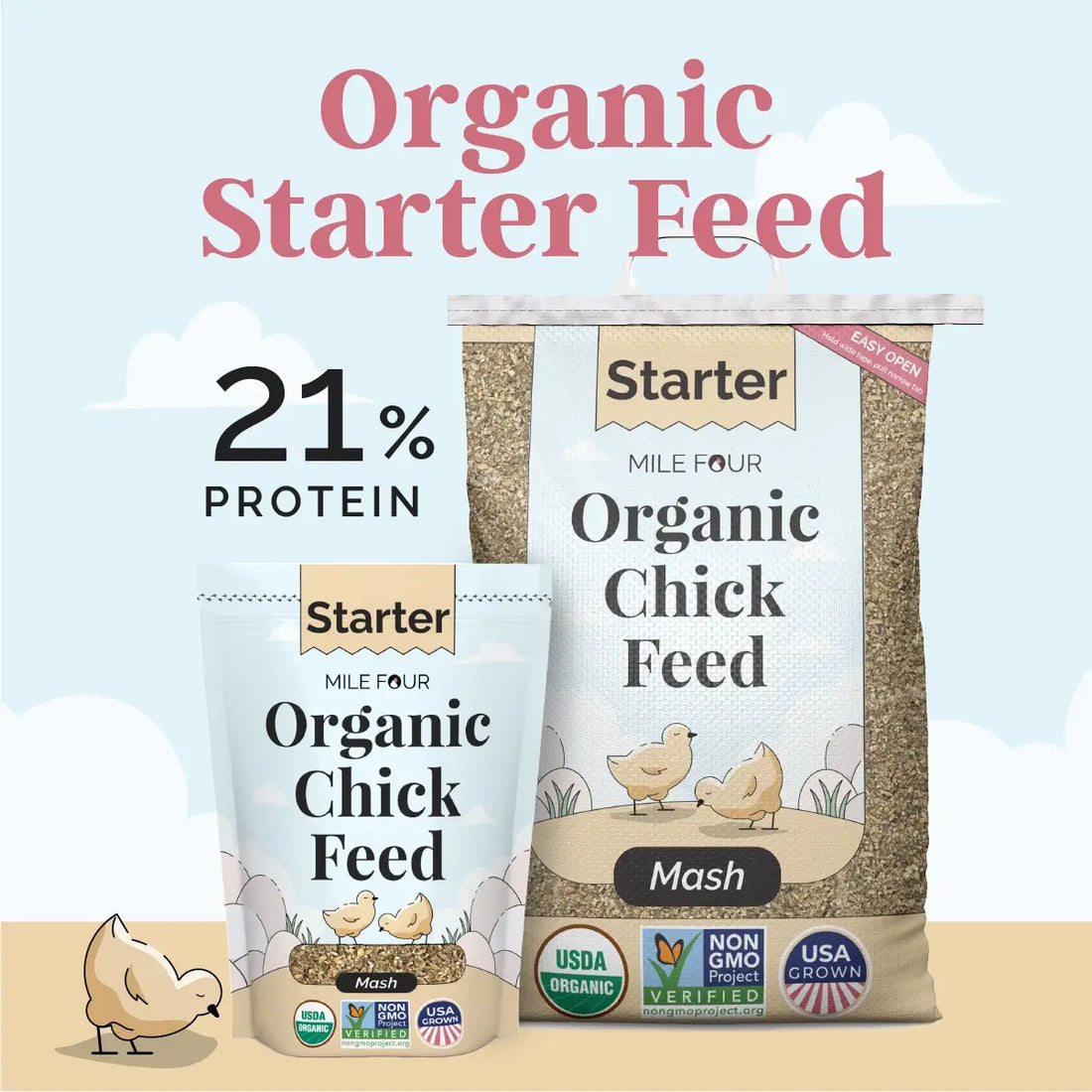
Chicks eating only Starter Mash or crumble do not usually need supplemental grit to process that feed. Once treats, forage, insects or other whole foods enter the menu, the situation changes.
Chickens do not have teeth. Insoluble grit collects in the gizzard, where it helps grind foods that cannot break down as easily as mash or crumble.
The fix: Offer appropriately sized grit free-choice in a separate container when birds begin eating anything beyond a finely ground complete feed. Use chick grit for chicks & adult-sized grit for mature birds. Do not mix it directly into the feeder.
3. Letting treats & scratch crowd out complete feed
Watermelon rinds disappear in seconds. Scratch tossed across the run can turn an ordinary morning into a small poultry sporting event.
The trouble begins when extras stop being extras. Scratch grains, kitchen scraps & treats do not provide the same balanced combination of protein, vitamins & minerals as a complete feed. The more room they take up in the diet, the less complete nutrition each bird may eat.
The fix: Keep complete feed available as the main diet & offer treats sparingly. If the flock spends more time waiting for snacks than eating from the feeder, the balance has probably shifted too far.
4. Changing feed stages without checking the bird’s life stage
The feed aisle makes the transition look like a calendar appointment. Week eight arrives, one bag leaves & another takes its place.
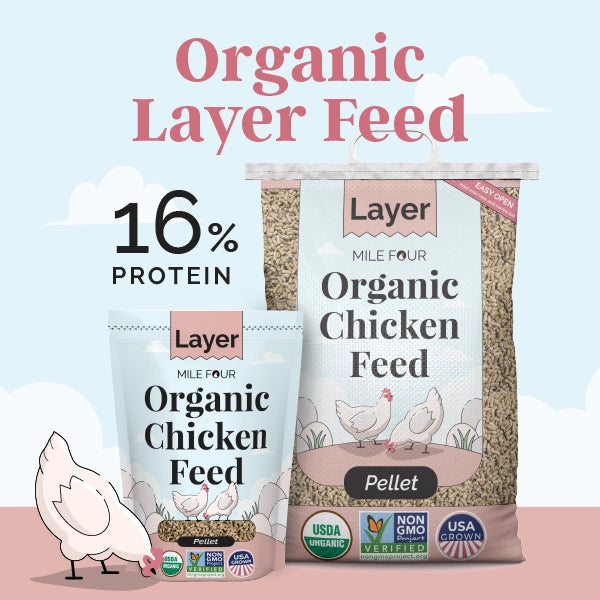
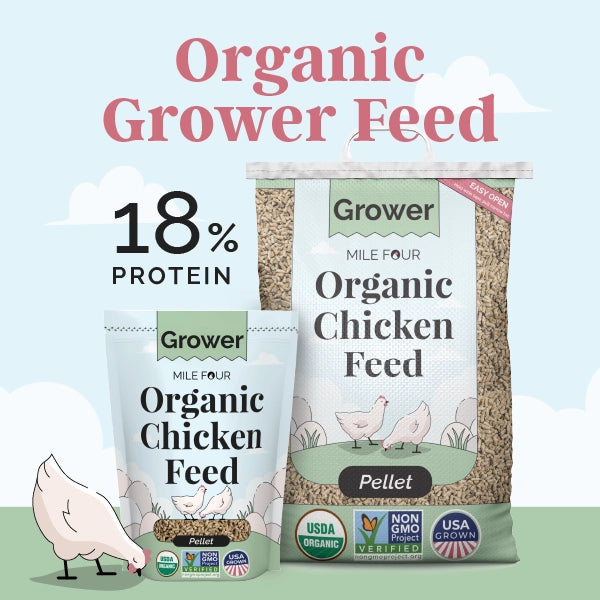
Age is a useful starting point, but protein percentages can vary between well-formulated feeds. Starter feeds commonly contain around 18% to 22% protein, Grower feeds around 16% to 19% & Layer feeds around 16% to 18%.
The more important distinction is what each formula is designed to support: early growth, steady development or egg production. Layer Feed also contains considerably more calcium, which is why the final transition should happen near point of lay rather than simply on a certain date.
That final switch belongs near point of lay. Moving to a high-calcium layer ration too early is not a shortcut to earlier eggs.
The fix: Use the age range on the feed as the starting point, then watch for the approach of lay before making the final transition. The 21-week chicken feed plan explains when to move from Starter to Grower to Layer Feed.
5. Putting oyster shell out before the first eggs
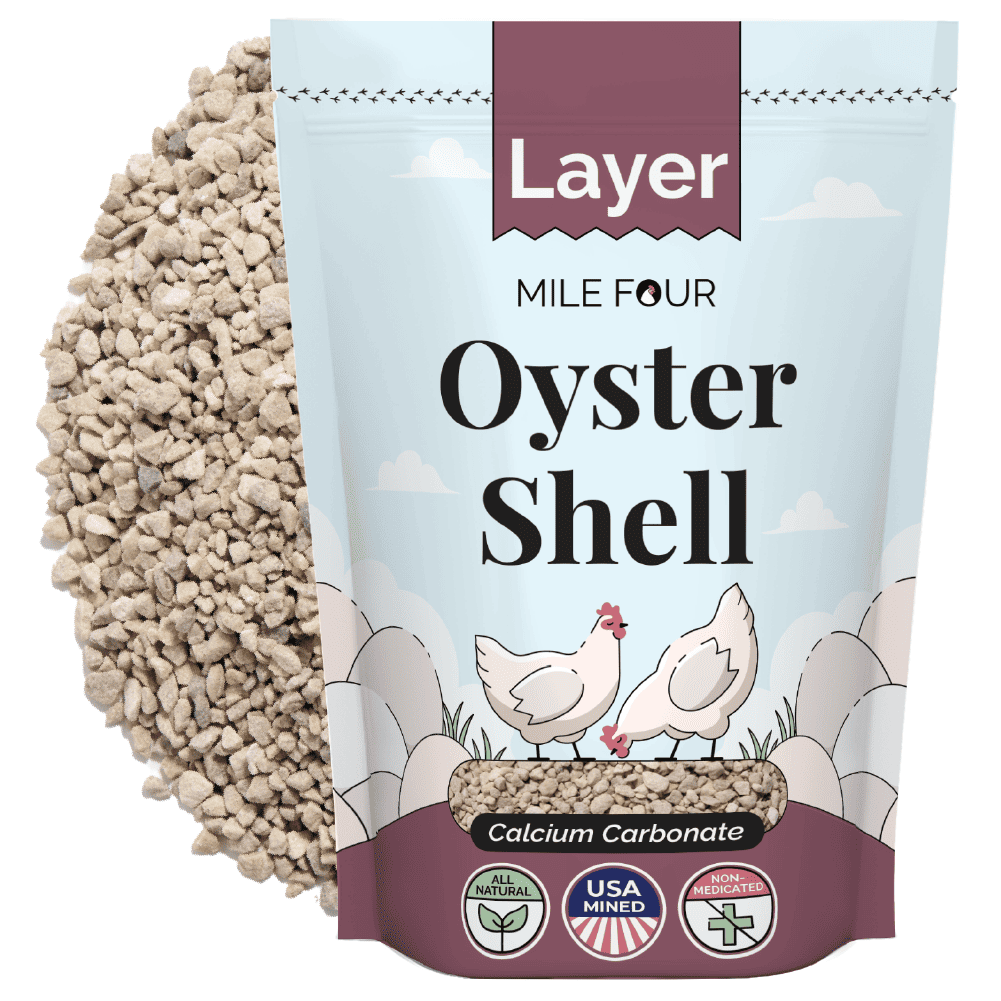
Oyster shell looks like one of those supplies a responsible chicken keeper should provide from day one. For young chicks & growing pullets, it is too early.
Calcium needs rise sharply once egg production begins because hens use it to build shells. Growing birds need a balanced grower ration without the extra calcium intended for active layers.
The fix: Wait until pullets are approaching point of lay or the first eggs begin appearing. Then offer oyster shell free-choice in a separate container. Birds can take what they need without turning every feeder visit into an extra serving of calcium.
6. Reading “organic,” “natural” & “non-GMO” as the same claim
These words often sit inches apart on the same feed-store shelf. That does not make them interchangeable.
USDA Organic is a regulated certification covering how agricultural ingredients are produced & handled. Non-GMO addresses genetic modification. “Natural” does not carry the same farm-level requirements as USDA Organic certification.
A bag can be non-GMO without being organic. A natural claim does not automatically tell anyone how the grain was grown.
The fix: Read beyond the largest word on the front of the bag. The organic vs. conventional chicken feed guide explains what the common labels cover, plus what they leave unanswered.
7. Introducing new birds without quarantine
A new hen can look healthy, eat normally & still carry an illness or parasite that has not produced obvious symptoms yet.
University of Maryland Extension recommends quarantining newly arrived birds for at least 30 days before mixing them with an established flock. Separate equipment matters too. A dedicated feeder is not much help if the same unwashed boots, scoop & waterer travel between both groups.
The fix: Prepare the quarantine area before the new birds arrive. Keep them physically separated for at least 30 days, avoid shared equipment & care for the established flock before visiting the newcomers.
8. Assuming a quiet yard is a predator-free yard
A fenced backyard can feel secure right up until a raccoon treats the coop latch like a puzzle toy.
Predators vary by location, but common threats include raccoons, hawks, owls, rats, foxes, coyotes & domestic dogs. Some climb. Some dig. Some squeeze through openings that did not look large enough to fit anything with bones.
The fix: Use sturdy hardware cloth where predators could reach the flock, close gaps, reinforce the lower perimeter against digging & secure doors with latches that cannot be flipped open easily. Lock birds inside the coop at dusk every night, including the nights that feel safe.
9. Budgeting for the coop & forgetting everything that goes inside it
The coop is the obvious expense. Feed, bedding, feeders, waterers, grit, oyster shell, cleaning supplies & occasional veterinary care tend to arrive one receipt at a time.
Feed use also changes with flock size, age, weather & access to forage. University of Minnesota Extension estimates that a six-pound laying hen eats roughly three pounds of feed per week. A few extra hens can become an extra bag sooner than expected.
The fix: Build a monthly flock budget before the chicks arrive. Include routine supplies plus a small cushion for repairs, illness & the chicken math everyone insists will not happen to them.
10. Rewriting the entire feeding plan when molt begins
Feathers cover the run, egg production slows & several perfectly healthy hens suddenly look as though they have made a series of poor decisions.
That can be a normal molt. Hens shed old feathers & grow replacements, often while laying fewer eggs or pausing production. Feathers contain a large amount of protein, but adding handful after handful of treats can dilute the balanced nutrition needed during regrowth.
The fix: Keep a nutritionally complete feed at the center of the diet, limit unbalanced extras & monitor body condition, appetite & behavior. Do not remove calcium from hens that are still laying. If feather loss falls outside a normal molting pattern or comes with illness, injuries or heavy parasite activity, consult a poultry veterinarian.
The fall chicken care guide covers molt, shorter days & the other seasonal changes that tend to arrive together.
No flock needs a flawless first week. Chicken keeping is mostly a long series of noticing something, looking it up & adjusting before the birds notice that anyone is learning on the job.
Getting these basics right early leaves more time for the better parts, like watching a chick discover a blueberry or finding the first egg after checking the nesting box twelve times that morning.
New to Mile Four? Organic Chicken Feeds are USDA Certified Organic, Non-GMO, corn-free & soy-free, milled fresh from 100% US-grown grains. Starter, Grower & Layer formulas provide complete nutrition for each stage of the flock.
Sources:
- University of Minnesota Extension, “Raising Chickens for Eggs” — indoor coop space, balanced feed, laying-hen nutrition, feed intake, predators & daily care.
- University of Minnesota Extension, “Raising Layer Chicks & Pullets” — Starter, Grower & Layer feeding stages; chick grit; housing & flock management.
- Oregon State University Extension Service, “How to Feed Your Laying Hens” — complete-feed nutrition, moderation of scratch grains & supplemental grit.
- Poultry Extension Collaborative, “Feeding Chickens for Egg Production in Small & Backyard Flocks” — complete layer diets, scratch grains, grit & oyster shell.
- University of Maryland Extension, “Biosecurity Measures to Minimize HPAI Within Poultry Populations” — 30-day quarantine recommendation & avoiding shared equipment.
- Mississippi State University Extension Service, “Molting of Laying Hens” — normal molt patterns & temporary changes in egg production.
- USDA Agricultural Marketing Service, National Organic Program — requirements governing certified organic agricultural production & handling.
This post is for educational purposes only. Consult a licensed poultry veterinarian for flock-specific health or nutrition concerns.