
Blue Orpington chickens are a visually striking color variety of the Orpington breed, known for their slate-blue plumage, gentle temperament, and steady brown egg production. While Buff Orpingtons remain the most recognizable variety, Blue Orpingtons appeal to backyard keepers looking for the classic Orpington personality with a more ornamental appearance.
As a variety within the Orpington family, they retain the breed’s broad body, fluffy feathering, and calm demeanor. In this guide, we focus specifically on Blue Orpington chickens, how their coloration differs from Lavender Orpingtons, and what makes them a reliable choice for backyard flocks.
Quick Chick(en) Facts
| Origin | England (color variety developed later) |
| Colors | Blue (slate gray) |
| Weight | Hens: ~7 lb & Roosters: ~9 lb |
| Lifespan | 6–8 years |
| Rate of Lay/yr | ~180–220 eggs |
| Egg Size | Large |
| Egg Color | Brown |
| Heat Hardy | Moderate |
| Cold Hardy | Good |
| Broodiness | Moderate |
| Disease Susceptibility | Generally hardy |
| Temperament | Very calm, friendly |
| Beginner Friendly | Yes |
Quick Jump
- Appearance of Blue Orpington Chickens
- History of Blue Orpington Chickens
- Blue Orpington Chickens for Sale
- Blue Orpington Egg Laying
- Blue Orpington Health Issues & Care
- Blue Orpington Temperament
- Feeding Blue Orpington Chickens
- Coop & Run Size for Blue Orpingtons
- Pros & Cons of Blue Orpington Chickens
- Blue Orpington FAQs
Appearance of Blue Orpington Chickens
Blue Orpingtons have slate-blue to charcoal-gray plumage produced by the blue dilution gene, which softens black pigmentation across the feathers. The result is a smoky, layered look rather than a uniform pastel tone.
Because the blue gene does not breed true, color variation is common. Some chicks may hatch black or splash, even from blue parents. Structurally, Blue Orpingtons maintain the breed’s broad frame, deep chest, and abundant feathering that gives Orpingtons their signature rounded appearance.
History of Blue Orpington Chickens
The Orpington breed was developed in England in the late 1800s by William Cook, who sought to create a practical dual-purpose chicken suitable for British climates. Original Orpington varieties included Black, Buff, and White.
Blue Orpingtons were developed later as breeders introduced the blue gene into established Orpington lines. While they were never intended to replace the Buff Orpington’s utility role, Blue Orpingtons gained popularity for their appearance combined with traditional Orpington temperament.
Blue Orpington Chickens for Sale
Blue Orpingtons are less common than Buff Orpingtons and are often offered seasonally by hatcheries or specialty breeders. Availability can vary year to year.
Because color outcomes can vary widely, birds from breeder lines may show greater consistency than hatchery stock, though both perform similarly in backyard settings.
Blue Orpington Egg Laying
Blue Orpington hens lay approximately 180–220 large brown eggs per year. Their production is steady rather than intense, which supports long-term health and longevity.
They tend to lay most consistently during spring and summer, with some continuing through winter depending on daylight and nutrition.
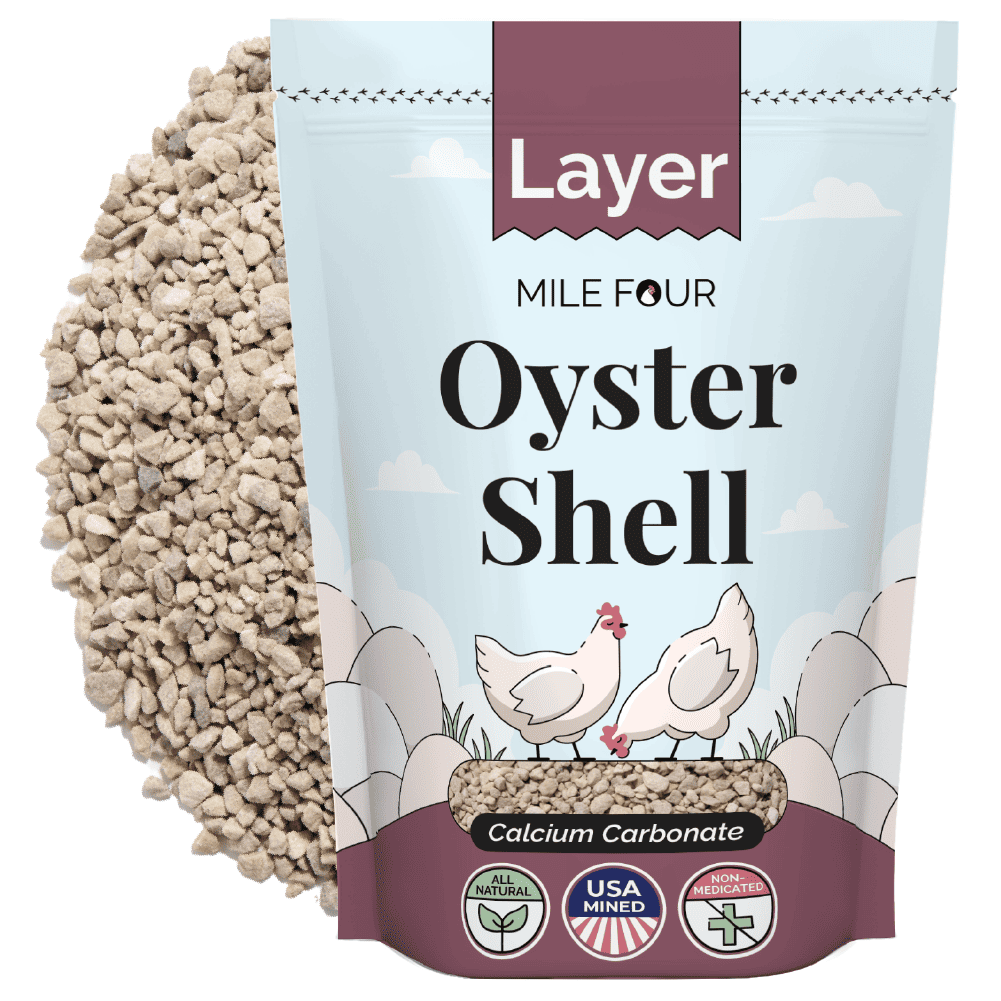
Offering oyster shell free-choice supports strong shells, particularly during peak laying periods.
Blue Orpington Health Issues & Care
Blue Orpingtons are generally hardy birds, but their heavy feathering requires attention in wet or muddy conditions. Damp feathers can break down if housing is not kept dry.
They tolerate cold weather well but can struggle in prolonged heat. Shade, ventilation, and cool water are essential during warmer months.
Blue Orpington Temperament
Blue Orpingtons are known for their gentle, people-friendly temperament. They are calm, tolerant of handling, and often become some of the most approachable birds in a flock.
They usually rank low in the pecking order and do best with other calm breeds. Their relaxed nature makes them especially suitable for families and beginner keepers.
Feeding Blue Orpington Chickens
Blue Orpingtons have a slower metabolism typical of heavier, heritage-style breeds. This means they convert feed efficiently but can gain excess weight if overfed, particularly once laying slows. Many keepers choose USDA-certified Organic, Non-GMO feed to support long-term health rather than rapid production.
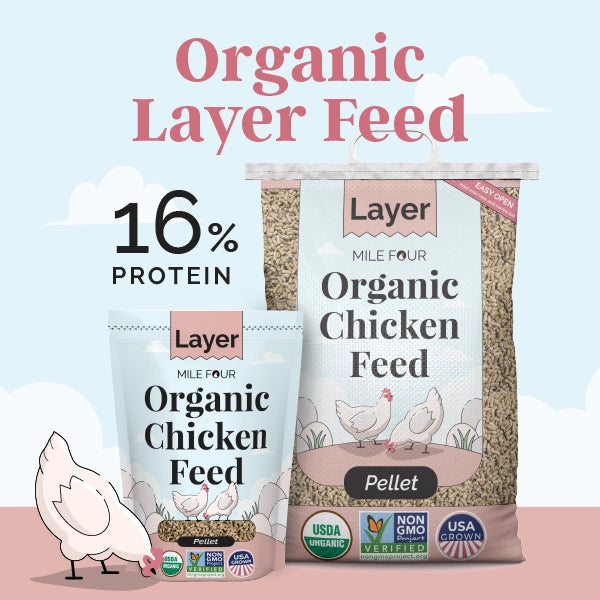
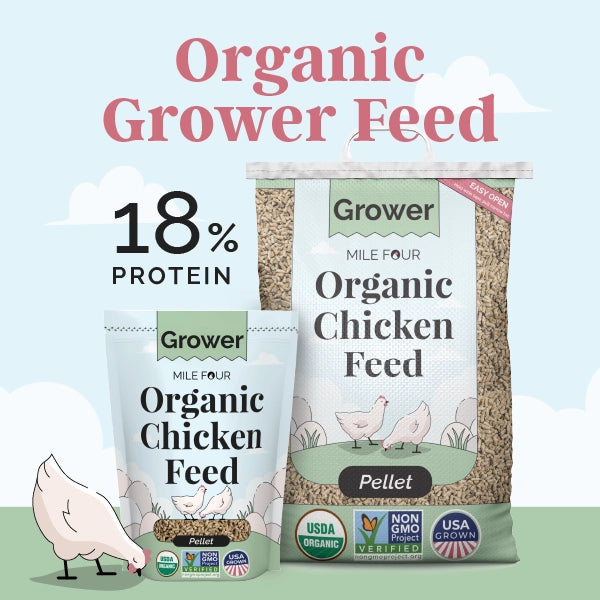
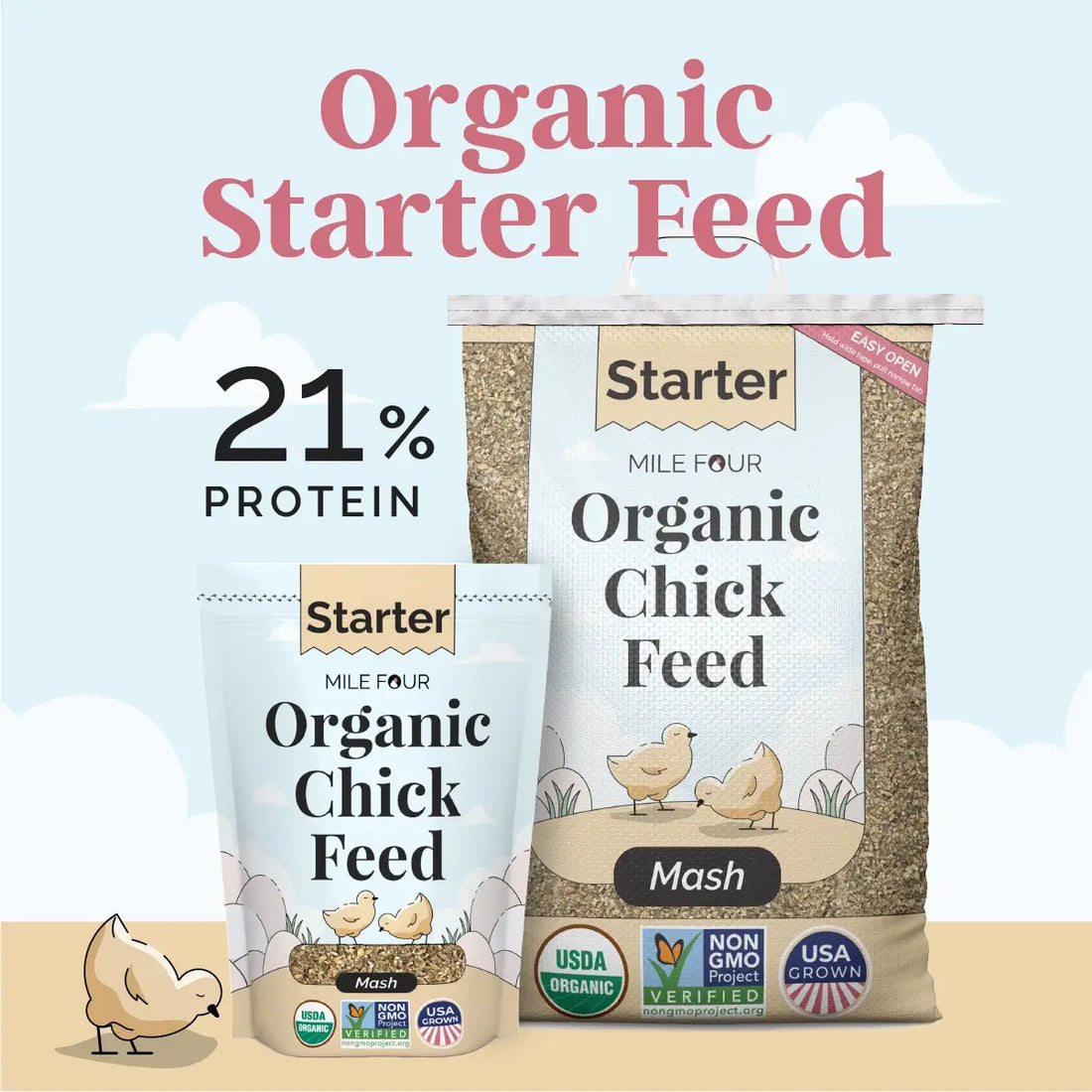
Mile Four’s Organic Chicken Feed Kits are designed to follow a chicken’s development from chick through laying age. Once hens are actively laying, the included Organic Layer Feed provides balanced nutrition that supports steady egg production without pushing birds beyond their natural pace.
Coop & Run Size for Blue Orpingtons
Blue Orpingtons benefit from extra space due to their size. Provide at least 4–5 square feet per bird inside the coop and 10–15 square feet per bird in the run.
Roosts should be sturdy and placed lower to reduce leg strain. Nesting boxes should be well cushioned to protect eggs laid by heavier hens.
Pros & Cons of Blue Orpington Chickens
| Pros | Cons |
|---|---|
| Very calm and friendly | Less heat tolerant |
| Attractive blue coloration | Color does not breed true |
| Reliable long-term layers | Slower maturity |
| Excellent family bird | Not a high-output layer |
Blue Orpington FAQs
How do Blue Orpingtons differ from Lavender Orpingtons?
Blue Orpingtons show color variation due to the blue gene, while Lavender Orpingtons have uniform coloration from a recessive gene.
Are Blue Orpingtons good for beginners?
Yes. Their calm temperament and manageable care needs make them beginner friendly.
Do Blue Orpingtons go broody?
Yes. They have a moderate tendency toward broodiness.
Are Blue Orpingtons cold hardy?
Yes. Their dense feathering provides good cold tolerance.
Why are Blue Orpingtons harder to find than Buff Orpingtons?
They are produced in smaller numbers and color outcomes are less predictable.
Orpingtons love to eat, and all that appetite is working toward one thing — a steady run of large eggs. Mile Four Layer Feed keeps that pace consistent → Discover Organic Layer Feed.
Sources
American Poultry Association, Standard of Perfection.
Orpington Club of America breed reference materials.
Penn State Extension, backyard poultry management publications.
University of Minnesota Extension, poultry breed and egg production resources.