

Every fall, the same thing happens. You walk out to the coop, see feathers scattered everywhere, & spend the next ten minutes convinced something got in overnight.
Nothing got in. Nothing's wrong.
Your hens are molting. It's the one time of year their bodies are completely focused on growing a new coat instead of making eggs. Once you know what that means for their feed, the whole thing is a lot less alarming.

What Molt Actually Is
Once a year, hens shed their old feathers & grow in a completely fresh set. Think of it like swapping out a worn-out winter coat for a new one, except the hen is building the coat from scratch, from the inside out, using a significant chunk of her body's protein reserves to do it.
It's triggered by shorter days. As the light decreases in late summer, something shifts hormonally & the body essentially says: stop making eggs, start making feathers. Both jobs require the same raw material (protein), & the body can only do one at a time.
The new feathers that emerge are called pin feathers. They're basically tiny quills filled with blood to fuel growth. That's why you shouldn't pick up a molting hen unless you have to. Those pin feathers are sensitive in the same way a bruise is sensitive. Pressure hurts.
Most hens go through their first adult molt around 18 months. After that, it's once a year, every year.
Hard Molt vs. Soft Molt
Two hens in the same flock can look completely different during molt, & that's normal. There's no single version of this.
A hard molt is fast & dramatic. A hen can drop the majority of her feathers in a matter of days & look nearly bald, like something took a lint roller to her. It's alarming the first time you see it. Hard molts tend to wrap up in 4 to 6 weeks & are most common in high-production breeds that have been laying heavily all year.
A soft molt is slower & easy to miss. The hen sheds a few feathers here & there over weeks or even months. Egg production may slow without stopping completely. You might not even notice it's happening until you realize the feeder count is off.
Here's a good rule of thumb: good layers molt hard & fast, poor layers molt early & slow. So if your best hen shows up looking rough one morning, that's actually a compliment to how hard she's been working.

What Happens to Eggs During Molt
Egg production slows significantly, or stops completely. That's expected & it's not a problem.
Here's the plain version of why: feathers are made almost entirely of protein. So is the white of an egg. The body doesn't have enough to build both at the same time, so it picks the one that keeps the bird alive through winter. It picks feathers, & puts eggs on hold.
Think of it like a factory that makes two products from the same raw material. When supply runs low, the factory picks one line & pauses the other. That's molt.
Hens also need about 14 to 16 hours of daylight to keep laying. Fall days are shorter, so egg production was already winding down regardless of molt. The two just tend to happen together.
Eggs come back. Most hens return to laying within 4 to 8 weeks after molt finishes. The ones that take longest are usually the ones that weren't fed well during the process.
Why Feed Matters More During Molt Than at Any Other Time
This is the part most people skip, & it's the part that actually determines how fast molt goes.
If a hen isn't getting enough protein during molt, her body starts pulling it from somewhere else. That somewhere else is her own muscle tissue. You'll see it as weight loss, patchy regrowth, & a flock that stays featherless longer than it should.
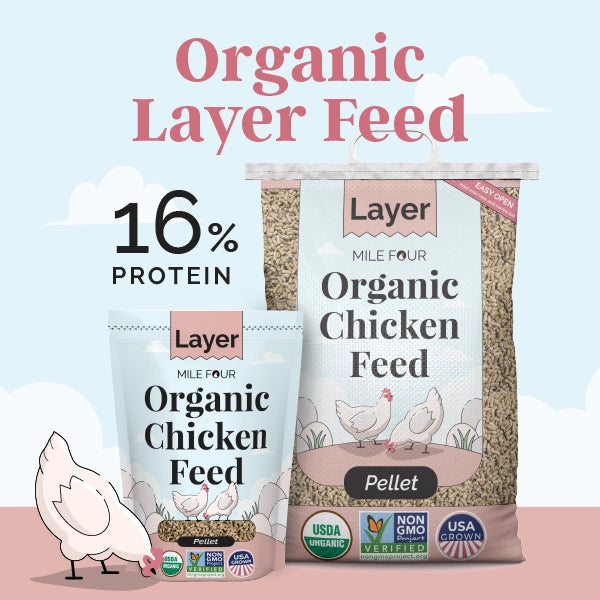
The protein target during molt is 18 to 20%. Most layer feeds run around 16%, which is the right amount when hens are actively laying, but not enough when the body is trying to regrow an entire coat.
There's also the calcium side of things. Layer Feed is built for laying hens, so it carries calcium levels (3.10 to 4.50%) designed for daily eggshell production. During molt, when hens aren't making shells, that much calcium isn't necessary. It's a bit like fueling up a car that isn't running. The fuel has nowhere useful to go.
Switching to a higher-protein, lower-calcium feed during molt is the single most useful thing you can do for the process.
What to Feed During Molt
The switch is straightforward: move molting hens to a higher-protein feed until molt wraps up, then transition back to Layer Feed once feathers are in & laying resumes.
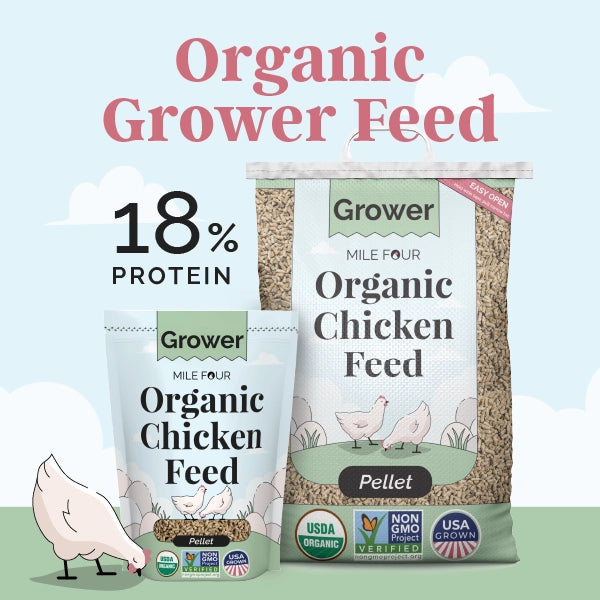
Mile Four's Organic Grower Feed works well here. At 18% protein & a calcium level suited for non-laying birds (0.20 to 1.50%), it gives the body what it needs to rebuild feathers without the extra calcium load that comes with Layer Feed.
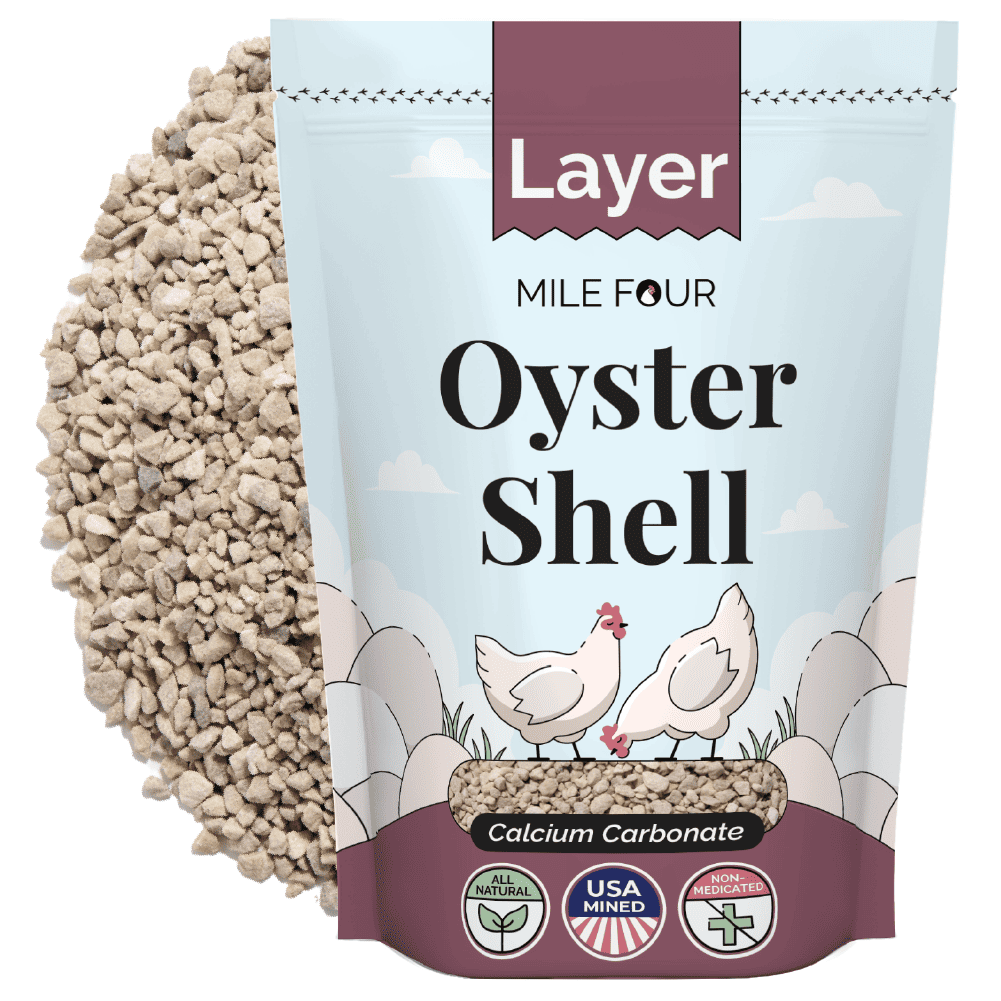
Keep Oyster Shell in a separate dish free-choice the whole time. Any bird in the flock that's still laying will take what she needs. Never mix it into the feed directly.
A few other things worth knowing:
Cut scratch grains back during molt. Scratch is basically chicken candy. They love it, but it waters down protein intake & stretches out the molt timeline. Less scratch means faster feathers.
Black oil sunflower seeds are a solid addition. They contain methionine, an amino acid the body specifically needs to build feathers. Think of them as a targeted top-up. A small handful a few times a week is plenty.
Fermented feed is worth considering. Fermentation makes protein easier for the body to absorb, like the difference between eating a whole grain vs. one that's already been broken down a bit. It's especially useful when demand is high. The fermented vs. sprouted feed guide has the full details.
Keep things quiet. Molt is already physically taxing. Adding new birds to the flock, rearranging the coop, or handling hens more than usual just piles stress on top of a body that's already working overtime. Leave them to it.
When Does Molt End?
Most hens take 7 to 8 weeks. The full range is 4 to 16 weeks depending on the bird, the breed, & how well they were fed. Hard molters finish faster. Soft molters drag it out. Older hens tend to take longer than younger ones.
The signal to watch for: the pin feathers are gone, the coat looks full again, & the hen has stopped looking like a bad pillow. Once you're there, start transitioning back to Layer Feed gradually. About a week of mixing the two, slowly shifting the ratio until you're back to 100% Layer.
If molt is happening while you've also got pullets or mixed-age birds sharing the same space, the mixed-age flock guide covers how to manage one feeder for birds at different stages.
The Short Version
Molt is normal. Eggs pausing is normal. A hen that looks like she went through a ceiling fan is, unfortunately, also normal.
What makes the difference is protein. Get it right during molt & hens come out the other side with a strong new coat & a faster return to laying. Get it wrong & the whole process drags.
Feed for feathers right now. Eggs come later.
Molting pulls a lot of protein into regrowing feathers, and that's exactly what an 18% protein feed is built to support. Mile Four Grower Feed fits that stage → Discover Organic Grower Feed.
Sources:
- Hobby Farms. "5 Protein Sources You Can Offer Molting Chickens." Texas A&M College of Veterinary Medicine citation on 20% protein requirement during molt. hobbyfarms.com
- Nutrena. "Molting: The Naked Truth." Molt duration 4–16 weeks; hard vs. soft molt overview. nutrenaworld.com
- Tractor Supply Co. "Molting Chickens: What to Know." Molt timeline, handling guidance, protein requirements 20–22%. tractorsupply.com
- Chickens & More. "Chicken Molting." Hard vs. soft molt; average 7–8 week duration; illness susceptibility during molt. chickensandmore.com
- Homestead & Chill. "Molting Chickens 101." Methionine in black oil sunflower seeds; free-choice calcium during molt. homesteadandchill.com
- Grubbly Farms. "Five Tips to Help Your Molting Chickens." Fermentation & protein digestibility; daylight hormone trigger. grubblyfarms.com
- Timber Creek Farmer. "Help! My Chickens Are Molting." Scratch grain dilution of protein intake during molt. timbercreekfarmer.com
- Buff Clucks. "When Do Chickens Molt: When & Why?" Production breed molt speed; protein intake & molt completion timeline. buffclucks.com
Mile Four is not a veterinary resource. This content is for informational purposes only. Consult a licensed poultry veterinarian for flock health concerns.