

A mixed flock makes sharing look easy.
Everyone uses the same yard. Everyone investigates the same patch of dirt. Everyone drinks from whichever water container the ducks have not climbed into yet.
So it seems reasonable to ask whether chickens, ducks & quail can share the same feed too.
Not as their everyday diet.
They may steal bites from one another without an immediate problem, but chickens, ducks & quail have different nutritional needs. Age, growth rate & laying status add another layer.
The goal is not to prevent every stolen mouthful.
It is to make sure each bird spends most of the day eating a complete feed made for that species & stage of life.
Why One Feed Does Not Fit Every Bird
A feed bag is not labeled for one species simply to make the feed aisle more complicated.
Different birds grow at different rates, mature at different ages & need different balances of protein, amino acids, vitamins & minerals.
Life stage matters just as much as species.
A newly hatched chick does not need the same ration as a laying hen. A growing duckling does not have the same requirements as an adult duck. Young quail grow quickly & generally need a more protein-dense game bird starter than ordinary chicken feed provides.
That is why one bag rarely makes sense for every chicken, duck & quail at every age.
| Bird | Best everyday feed | Main concern |
|---|---|---|
| Chickens | Chicken feed matched to age & laying stage | Protein & calcium needs change as chickens mature |
| Ducks | Complete waterfowl feed matched to life stage | Niacin needs are higher, especially during growth |
| Quail | Game bird or quail feed matched to age & purpose | Young quail generally need more protein than growing chickens |
Chicken Feed Still Changes With the Chicken
Even within one species, the right feed changes over time.
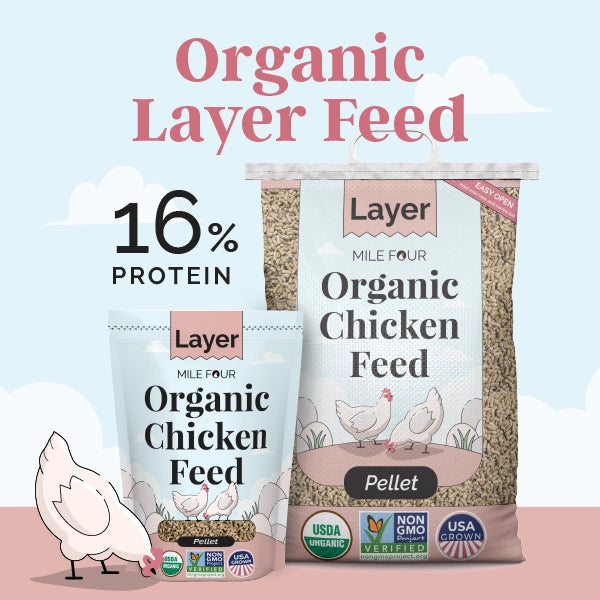
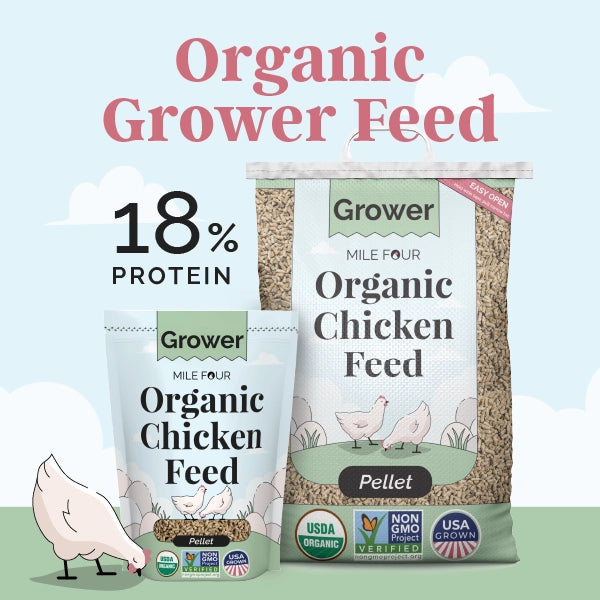
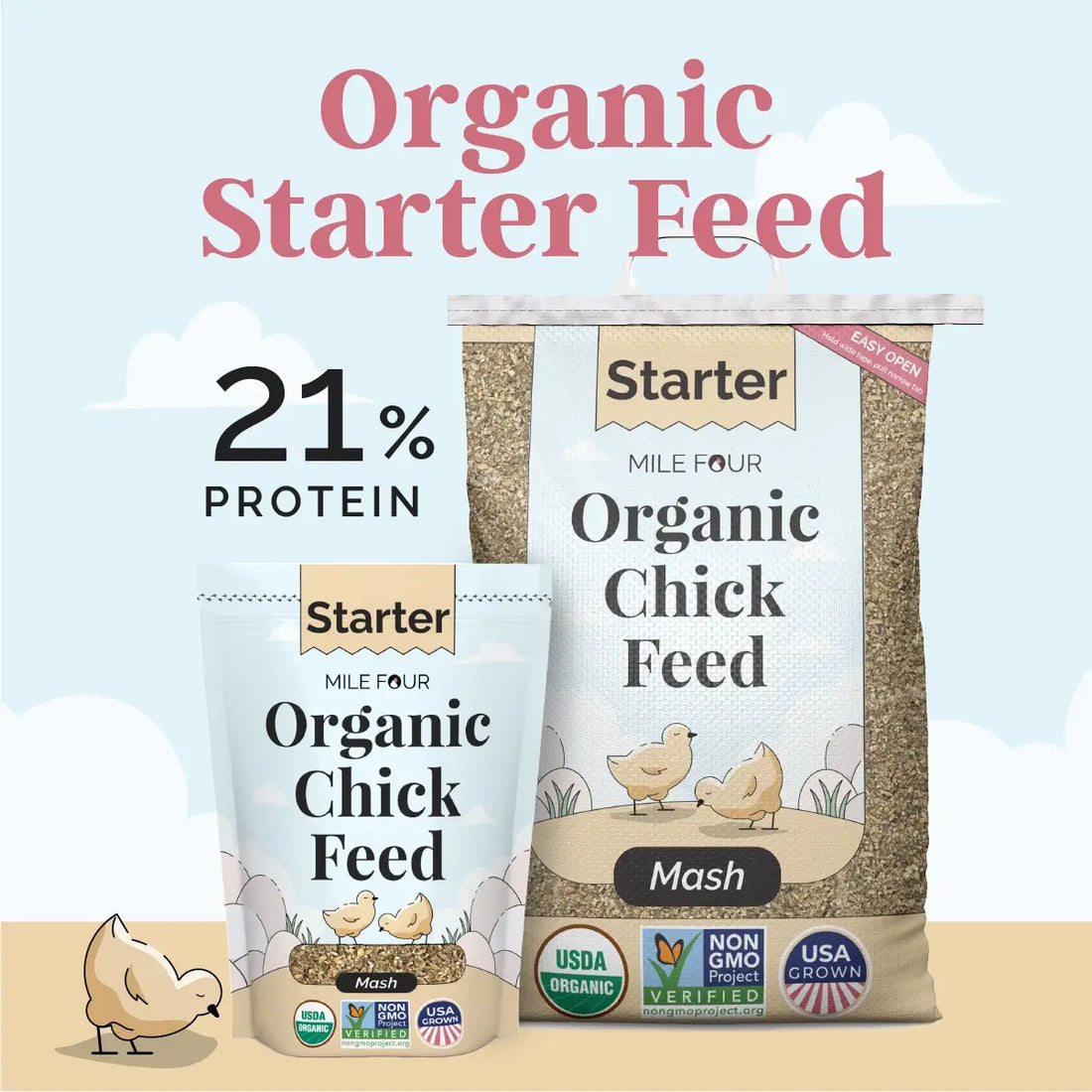
Chicks begin with Starter Feed for early growth. Pullets move to Grower Feed as they develop. Once hens are mature & actively laying, Layer Feed provides the higher calcium needed for shell production.
That calcium difference matters.
A ration made for active layers is not the ideal everyday feed for young chicks or pullets whose bodies are still developing.
When the challenge is chickens of different ages rather than different species, the Mixed-Age Flock Feeding Guide explains separate-feeder setups & the safest one-feeder fallback.
Can Ducks Eat Chicken Feed?
Ducks will eat chicken feed.
Ducks will also eat from a container you were fairly certain they could not reach.
The better question is whether that feed supplies what they need every day.
Ducks, especially growing ducklings, need more niacin than chickens. Niacin supports normal growth & leg development, while a deficiency can contribute to bowed legs, enlarged hock joints, weakness & difficulty walking.
A complete waterfowl feed is the clearest long-term choice because those differences have already been considered in the formula.
An unmedicated chicken ration may sometimes be used within a carefully planned duck-feeding program, but the word unmedicated does not make it automatically complete for ducks. Protein, niacin, calcium & life stage still need to match the birds eating it.
Medicated feed deserves extra caution.
Do not assume a medicated chicken feed is suitable for ducks because both species happen to live in the same yard. Read the target-species directions, approved use & warnings on the label before feeding it.
If ducklings develop weakness, bowed legs, enlarged joints or trouble walking, review the complete diet promptly rather than simply adding random supplements to the feeder.
Can Quail Eat Chicken Feed?
Quail are small.
Their nutritional needs are not simply a smaller version of a chicken’s.
Young quail grow quickly & commonly need a higher-protein starter ration than growing chickens. Their feeding program may then change again depending on whether the birds are being maintained, bred, raised for eggs or raised for another purpose.
For example, a Bobwhite quail starter may contain considerably more protein than a typical chick starter. That difference is one reason ordinary chicken feed is not a dependable long-term substitute.
Chicken Layer Feed can create another mismatch. It is formulated around the needs of laying hens, including their calcium requirements, rather than the specific protein & mineral needs of quail at every stage.
A quail or game bird ration labeled for the birds’ current age & purpose is the better starting point.
The picture on the front of the bag is not enough. Check the intended species, feeding stage, protein, calcium, directions & whether the feed is complete.
The Feed Label Guide explains how to read the guaranteed analysis & identify what a bag is actually formulated to do.
A Stolen Bite Is Not the Same as Sharing a Diet
Mixed flocks are not known for respecting assigned seating.
A chicken will investigate the duck feeder. A duck will investigate everything. If quail can reach a larger bird’s food, they may try it too.
An occasional mouthful is different from spending most of the day eating the wrong ration.
Watch for one species camping beside another feeder, pushing smaller birds away or filling up before reaching its own food.
The feed that supplies most of the bird’s nutrition should still match its species & life stage.
How to Manage Separate Feeders Without Running a Restaurant
You do not need tiny menus or assigned tables.
You do need to make the correct feeder easier for each group to use.
Use size differences where they help
A feeder positioned above quail height may remain easy for adult chickens to use while limiting access for smaller birds.
A covered feeding area or smaller entry may give quail somewhere to eat without larger poultry barging in.
Quail are usually safest in separate housing from chickens & ducks for reasons beyond feed. Their smaller size leaves them more vulnerable to crowding, competition & injury.
Spread feeders far enough apart
Place feeders where one dominant bird cannot guard every option at once.
Separate areas also make it easier to notice which group is eating the wrong ration or whether one feeder empties much faster than expected.
Watch the first meals
A full feeder does not prove the right birds are using it.
Spend a few minutes watching who eats, who gets pushed aside & which species immediately abandons its own ration for somebody else’s.
Birds have a reliable talent for finding the weak point in a feeding setup before you do.
Label every storage container
Three open bags can look surprisingly similar in a dim shed.
Label containers clearly & keep the original feed tag. The tag identifies the intended species, life stage, guaranteed analysis, feeding directions & medication warnings.
Multiple open bags also make rotation more important.
The Feed Storage Guide covers moisture, containers, pests & preventing one forgotten bag from becoming an expensive mouse buffet.
One Yard Does Not Require One Feed
Sharing a yard does not mean sharing nutritional requirements.
Chickens need chicken feed matched to their stage of life. Ducks are better served by a complete waterfowl ration that accounts for needs such as niacin. Quail need a game bird or quail feed appropriate for their age & purpose.
A stolen bite is usually not the main problem.
Living out of the wrong feeder is.
Feed each group for what it is, then design the setup around the fact that somebody will still try to eat somebody else’s lunch.
Mile Four feeds are formulated specifically for chickens rather than ducks or quail. For the chicken side of a mixed flock, explore Mile Four Organic Chicken Feed in complete Starter, Grower & Layer formulas.
Sources
- Merck Veterinary Manual, “Vitamin Deficiencies in Poultry”: Higher niacin requirements in ducks, signs of niacin deficiency & differences between ducks & chickens.
- Merck Veterinary Manual, “Nutritional Requirements of Poultry”: Stage-specific protein, calcium, amino acid, vitamin & mineral requirements for chickens & ducks.
- Penn State Extension, “Bobwhite Quail Production”: Higher protein needs of young game birds & changing starter, grower, maintenance & breeder rations.
- U.S. Food & Drug Administration, “FDA Regulation of Medicated Feed”: Approved target species, required labeling & the importance of using medicated feed only as directed.
This article is for general educational purposes & is not a substitute for species-specific veterinary or nutritional guidance. Feed needs vary by species, age, breed, laying status, purpose & health. Follow the target-species and life-stage directions on the feed label. Promptly investigate poor growth, weakness, mobility problems, reduced appetite or other changes in flock health.