

A bag of chicken feed can look perfectly safe sitting in the corner of a shed.
Then one day the scoop comes out with a clump attached to it, something has chewed through the bottom or the feed smells noticeably less like grain & more like a basement.
Chicken feed begins changing as soon as it is exposed to heat, humidity, air, pests & everyday contamination. A good storage setup slows those changes, protects the nutrients in the feed & helps prevent mold or rodents from turning a perfectly good bag into an expensive lesson.
Fortunately, storing chicken feed properly does not require a climate-controlled grain vault.
You need a clean container with a secure lid, a cool and dry location, sensible stock rotation & a willingness to retire any feed that smells like it has started a life of its own.
What Is the Best Way to Store Chicken Feed?
The best way to store chicken feed is in its original bag inside a clean, dry, pest-resistant container with a tightly fitting lid.
Place the container in a cool, shaded & well-ventilated location protected from rain, direct sunlight, condensation and temperature extremes. Keep it raised off concrete or bare ground, away from chemicals & somewhere you can inspect it regularly.
A practical chicken feed storage setup should protect against five things:
- Moisture that can encourage mold growth
- Heat that can speed nutrient and fat degradation
- Rodents, insects & other animals
- Contamination from dirty scoops, spills or chemicals
- Old feed getting buried underneath newer bags
Getting all five under control matters more than buying the most elaborate container in the feed aisle.
Should Chicken Feed Stay in the Original Bag?
Whenever practical, yes.
The original bag protects more than the feed. It keeps the product name, feeding directions, ingredient information, lot number & best-by date connected to what is inside.
That information becomes especially important if the manufacturer announces a recall or you need to report a possible quality problem. Without the lot number, identifying exactly when and where the feed was produced becomes much harder.
The U.S. Food and Drug Administration recommends placing the entire original bag inside a separate storage container rather than pouring dry animal food directly into the bin.
Keeping the bag also makes cleaning easier because fats, crumbs & fine particles are less likely to build up directly on the container walls.
If the entire bag will not fit or you prefer to pour the feed into a bin, save the label or photograph it clearly. Record:
- The feed name & life stage
- The lot number
- The best-by or expiration date
- The date the bag was opened
- The manufacturer’s contact information
Attach that information to the container & replace it when you open a new bag.
What Kind of Container Is Best for Chicken Feed?
A good chicken feed container needs a secure lid, solid construction & enough room to hold the feed without forcing the bag against a damp or dirty surface.
Food-grade plastic bins & galvanized metal cans are the most common choices for backyard flocks. Neither is automatically right for every storage area.
| Container | Advantages | What to Watch |
|---|---|---|
| Galvanized metal can | Difficult for rodents to chew through & usually durable | Loose lids, rust, sharp edges & condensation |
| Food-grade plastic bin | Lightweight, easy to clean & available with gasketed lids | Thin plastic can be chewed, cracked or damaged by sunlight |
| Food-grade bucket | Useful for smaller quantities & easy to label | One bag may require several buckets & lids must seal properly |
| Original paper bag only | Keeps all product information attached | Offers little protection from moisture, insects or rodents on its own |
A container does not need to be completely airtight to be useful, but the lid should fit tightly enough to keep out pests, leaks & humid air as much as possible.
Rodent resistance deserves particular attention. Mice and rats do not only eat stored feed. They can contaminate considerably more through urine, droppings & contact with dirty surfaces.
Thin plastic totes with lids that barely click into place may organize the feed, but they should not be mistaken for serious rodent protection.
Can You Pour New Feed on Top of Old Feed?
It is better not to.
Topping off a partly empty container allows old crumbs, fines & fats to remain at the bottom while fresh feed continually lands on top. You may think the flock is receiving new feed, while the lowest layer is quietly celebrating its third birthday.
Finish the existing feed before adding a new bag. Then remove any remaining particles & wash the container according to its care instructions.
Allow it to dry completely before refilling it. Even a small amount of trapped rinse water can create the damp conditions you were trying to prevent.
If you need to open a new bag before the previous one is finished, store the two batches separately. Use the oldest acceptable feed first.
This is the same first-in, first-out system used in larger feed operations, only with fewer clipboards.
Where Should Chicken Feed Be Stored?
The ideal storage location is cool, dry, shaded, secure & separate from the birds’ living area.
A garage, enclosed feed room, dry shed or protected utility area may work when it remains free from leaks, excessive humidity & major temperature swings.
The chicken coop itself is often less suitable than it appears.
Coops can hold moisture from droppings, wet litter, spilled water & the birds’ breathing. They also attract the exact animals most interested in gaining access to a bag of grain. Storing a large feed supply beside the flock gives rodents food, shelter & water in one convenient address.
If the coop is your only available option, use a genuinely pest-resistant container, keep it away from waterers & inspect the area frequently for dampness, droppings, gnaw marks and spilled feed.
Should Chicken Feed Be Kept Off the Floor?
Yes. Store feed bags & containers on shelving, a rack, pallet or another stable raised surface.
Concrete can feel dry while still transferring moisture or developing condensation as temperatures change. Bare ground presents an even clearer moisture and pest risk.
Raising the feed also makes spills, leaks & rodent activity easier to see. Leave enough space around containers to inspect and clean behind them instead of creating a quiet hiding place where pests can work uninterrupted.
What Temperature Is Best for Storing Chicken Feed?
Cooler conditions generally help feed retain its quality longer.
The FDA advises keeping dry animal food in a cool, dry place below 80°F. Institutional animal-care guidelines often use more conservative storage targets, such as temperatures below 70°F with controlled humidity, when conditions can be monitored closely.
Most backyard keepers do not have a dedicated climate-controlled feed room. The practical goal is therefore to choose the coolest dependable location available & avoid prolonged exposure to high heat.
Do not place feed:
- In direct sunlight
- Against a hot metal wall
- Beside a heater, boiler or motor
- Inside a vehicle or outdoor box that becomes very hot
- Anywhere with large daily temperature swings and visible condensation
Heat does not always make feed look spoiled immediately. It can accelerate the breakdown of vulnerable fats and nutrients before there is an obvious visual warning.
Why Is Moisture So Dangerous to Chicken Feed?
Dry feed is designed to remain dry.
Once moisture enters the bag or container, it creates better conditions for mold and microbial growth. It can arrive through a roof leak, a wet scoop, condensation, humid air, flooding or a bag placed directly on a damp surface.
Mold is more serious than an unpleasant smell or an unappetizing patch of feed. Certain molds can produce mycotoxins, and those toxins are not necessarily confined to the section where visible growth appears.
Do not try to save a damp or moldy bag by scooping away the questionable portion.
If feed has visible mold, significant unexplained clumping, a musty odor or evidence that water entered the container, stop using it. When in doubt, contact the manufacturer with the product and lot information before feeding it.
How Long Does Chicken Feed Last?
There is no single shelf life that applies to every bag of chicken feed.
How long it remains suitable depends on:
- The manufacturing date
- The ingredients & feed form
- Whether the bag has been opened
- The manufacturer’s packaging
- Storage temperature & humidity
- Exposure to air, sunlight and pests
- Whether the feed has been contaminated
The best-by or use-by date on the bag should be your starting point, not a promise that the feed will stay fresh under any conditions until that day.
That date assumes appropriate handling and storage. A bag kept dry in a cool indoor area will not age the same way as one left open through a hot, humid summer.
Texas A&M University and UC Davis animal-care guidelines use six months from the milling or arrival date as a general maximum for milled or bagged dry feeds when a manufacturer has not established a different date. Both direct users to follow the manufacturer’s expiration guidance when one is provided.
For a backyard flock, the better approach is to buy an amount the chickens can finish comfortably while it is still well within the manufacturer’s stated shelf life.
A lower price per pound is not much of a bargain if the final portion spends several months absorbing heat and humidity in the shed.
Does Mash, Pellet or Whole Grain Feed Store Longer?
Feed form alone does not provide a dependable expiration date.
Mash, pellets & whole grain feeds differ in particle size and processing, but shelf life also depends on the complete formula, fat content, packaging, production date & storage environment.
Do not assume that visible whole grains make a feed suitable for indefinite storage or that pellets remain fresh simply because they still hold their shape.
Use the date and directions supplied by the manufacturer for the specific product in front of you.
If you are comparing formulas or trying to understand what the date and guaranteed analysis mean, learn how to read a chicken feed label.
How Can You Tell If Chicken Feed Has Gone Bad?
Inspect the feed every time you open the container. You do not need to conduct a formal ceremony. A quick look, smell & check with a clean scoop can reveal many problems early.
Do not feed chicken feed that shows:
- Visible white, green, blue, gray or black mold
- A musty, sour, rancid or otherwise unusual odor
- Dampness or clumps that suggest moisture entered the feed
- Webbing, larvae, beetles or a heavy insect infestation
- Rodent droppings, urine stains or gnawed packaging
- Contamination from chemicals, fuel, pesticides or cleaners
- An unexplained change in appearance that does not match the manufacturer’s description
Some normal variation can occur between batches of feed made with agricultural ingredients. Color alone does not prove that a bag has spoiled.
Look at the whole picture. A different shade with a normal grain smell and intact, dry packaging is not the same as feed that has become damp, fuzzy or sharply sour.
If a newly opened bag seems unusual, keep the packaging and lot number, take clear photographs & contact the manufacturer before using it.
What Should You Do with Moldy Chicken Feed?
Do not feed it to the flock, mix it with fresh feed or scatter it where chickens and wild animals can find it.
Discard contaminated feed in a way that prevents animals from accessing it. Follow any local disposal requirements, especially if the feed may also have been exposed to chemicals or pesticides.
After removing it, clean the storage container and the surrounding area. Identify how the contamination occurred before putting another bag in the same place.
Check for:
- Roof or wall leaks
- Condensation inside the lid
- Cracks in plastic bins
- Rust holes or damaged seams
- A wet or dirty scoop
- Contact with the floor or an exterior wall
Replacing the feed without fixing the storage problem simply gives the mold a second bag to consider.
How Do You Keep Mice & Rats Out of Chicken Feed?
Start by removing easy access to food.
Use a sturdy container with a tightly closing lid, clean up spills promptly & do not leave loose feed sitting in open bags or buckets overnight.
Inspect the storage area for holes, gnaw marks, droppings and nesting material. Mice can enter through remarkably small openings, so a storage room does not become rodent-proof simply because the door was closed.
Keep clutter, weeds & unnecessary materials away from the storage area. These create cover that allows rodent activity to continue unnoticed.
If you use traps or rodenticides, place them where chickens, pets, children & wildlife cannot reach them. Follow every label direction carefully. Rodent baits are poisons and should never be stored where they could be confused with feed.
Mississippi State University Extension recommends combining sanitation, rodent-proofing, population reduction & continued monitoring rather than relying on a single control method.
Can Chicken Feed Be Stored Outside?
Outdoor storage is possible only when the feed is fully protected from rain, ground moisture, sunlight, pests & temperature extremes.
A lidded container sitting beside the coop may look weatherproof, but small gaps around the lid can admit wind-driven rain. Sunlight can also heat a metal or plastic bin far beyond the surrounding air temperature.
If feed must be kept outdoors:
- Place it under a solid roof or weatherproof shelter
- Keep the container out of direct sunlight
- Raise it above the ground
- Use a secure, pest-resistant lid
- Inspect inside the container for condensation
- Move the feed if flooding, extreme heat or severe weather is expected
An outdoor container should be treated as a compromise that needs closer monitoring, not as a place where feed can be forgotten until the scoop reaches the bottom.
Can You Store Chicken Feed in a Garage?
A garage can work well if it stays dry, does not become excessively hot & is protected from pests.
Keep the feed away from vehicles, gasoline, paint, fertilizers, pesticides, cleaners & other chemicals. Feed can be contaminated by spills, vapors or a scoop that was borrowed for something it should not have been borrowing.
A dedicated shelf or raised corner is safer than placing the container directly beside household or lawn-care products.
Remember that garages can become much hotter than outdoor temperatures during summer. If the space regularly feels like an oven, find a cooler location or buy smaller quantities that will be used more quickly.
Should Chicken Feed Be Frozen for Storage?
Most backyard keepers do not need to freeze commercial chicken feed.
Refrigeration or freezing may extend storage life under controlled conditions, but it can also introduce condensation when cold feed is opened or moved into humid air. Moisture forming inside the package defeats the purpose of the exercise.
Freezing should not be used to make old, damp or questionable feed safe again. It also does not override the manufacturer’s date or storage directions.
If you are considering freezing feed because of a recurring insect problem, contact the manufacturer for product-specific guidance first.
How Much Chicken Feed Should You Buy at Once?
Buy enough to make feeding convenient, but not so much that multiple bags will sit through months of changing weather before your flock reaches them.
An adult hen commonly eats approximately ¼ pound of complete feed per day, although actual intake varies with breed, body size, weather, activity & the energy content of the ration.
You can estimate how quickly your flock will finish a bag with this basic formula:
Number of hens × 0.25 pound per day = approximate daily feed use
| Flock Size | Estimated Daily Use | Approximate Days per Bag |
|---|---|---|
| 4 hens | 1 lb | About 23 days |
| 6 hens | 1.5 lb | About 15 days |
| 10 hens | 2.5 lb | About 9 days |
| 20 hens | 5 lb | About 4 to 5 days |
Chicken Feed Cost Calculator
For your flock over 1 month, you'll need about
80 lb. of feed
Below is the breakdown. Choose a bag size.
Enter at least one bird above to see your feed estimate.
Estimates may vary based on conditions & breed.
Save 50% by buying in bulk here.
These are planning estimates, not prescribed servings. Your flock may eat more or less.
If you are unsure how much feed you need or which formula belongs at each stage, Mile Four’s Chicken Feed Guide covers feed types, life stages & everyday feeding questions.
A Simple Chicken Feed Storage Routine
The easiest storage system is one you can repeat every time a new bag arrives.
- Inspect the bag. Check for tears, moisture, insects & unusual odors before putting it away.
- Check the date. Note the best-by date, lot number & date opened.
- Use the oldest feed first. Do not bury an older bag behind a newer one.
- Place the original bag in a secure container. Close the lid completely after every use.
- Use a clean, dry scoop. Keep it dedicated to feed.
- Clean spills promptly. A small pile under the bin is still an open invitation to pests.
- Empty before refilling. Clean and completely dry the container between bags.
- Inspect regularly. Look for moisture, insects, gnawing, rust, cracks & changes in smell.
Fresh Feed Starts with an Uneventful Storage Bin
The best chicken feed storage setup is not the one with the most accessories. It is the one that keeps the feed dry, cool, clean, identifiable & difficult for pests to reach.
Keep the original bag when possible. Place it inside a sturdy container with a secure lid. Raise it off the floor, protect it from heat and moisture, clean the bin between bags & use older feed before opening more.
Most importantly, pay attention each time you lift the lid.
Fresh feed should smell like feed. It should not be damp, fuzzy, webbed together or accompanied by evidence that a mouse has been helping with inventory.
When a bag seems questionable, do not ask the flock to settle the matter. Keep the label & lot number, stop feeding it and contact the manufacturer.
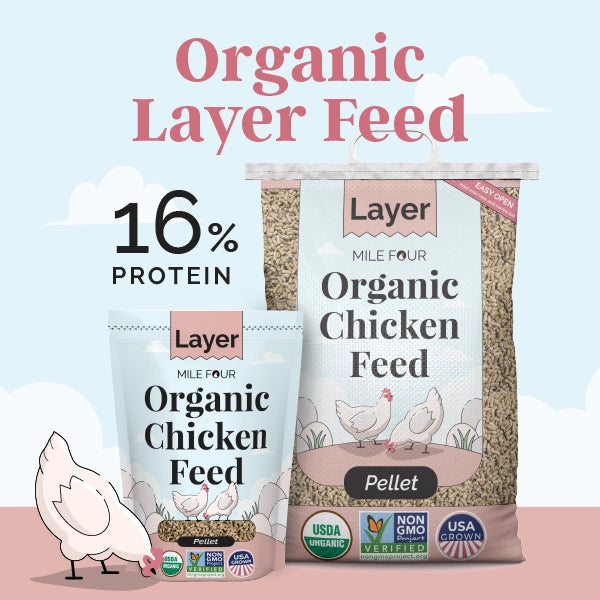
Ready to stock the feed bin with a complete ration for your flock? Explore Mile Four Organic Layer Feed, available in Mash, Pellet & Whole Grain varieties.
Sources
- U.S. Food and Drug Administration, “Proper Storage of Pet Food & Treats”: original-bag storage, lot information, container cleaning & cool, dry storage below 80°F.
- Texas A&M University, “Guidelines on Feed and Bedding Storage”: feed inspection, stock rotation, labeling, shelf-life guidance, off-floor storage & protection from moisture, pests and elevated temperatures.
- UC Davis Office of the Attending Veterinarian, “Minimum Standards for Food Storage”: tightly sealable containers, manufacturer expiration dates, temperature and humidity recommendations & container sanitation.
- Mississippi State University Extension, “Controlling Rodents on the Poultry Farm”: feed loss and contamination, sanitation, rodent-proofing, spill cleanup & continued monitoring.
This article is for general educational purposes & is not a substitute for professional veterinary advice. Follow the storage and feeding directions on your feed label & contact the manufacturer or a poultry veterinarian when feed quality or flock health is a concern.