

You open a new bag of chicken feed expecting it to look like the last one.
Instead, the color is a little darker. The peas seem larger. The mash has a slightly different texture.
It is reasonable to wonder whether something changed.
Small differences in color, grain size & texture are often a normal result of using agricultural ingredients that vary from one harvest to the next.
That does not mean every change should be ignored. The useful distinction is knowing what looks naturally different & what looks spoiled.
Chicken Feed Starts With Crops
Wheat, barley, peas, oats & other feed ingredients do not come off the field looking identical every season.
Rainfall, temperature, soil conditions, harvest timing & storage can all influence the appearance of a crop.
One batch of wheat may be slightly lighter. Peas may be larger, smaller or a different shade. A grain harvested under different growing conditions may look noticeably different without being lower quality.
The same thing happens with produce at the grocery store. Apples from two harvests may differ in size or color while still being the same variety.
Chicken feed is no different simply because it arrives in a bag.
Color Is Not a Reliable Measure of Nutrition
It is easy to make assumptions based on appearance.
Darker feed may look richer. More visible peas may look like more protein. A lighter batch may appear less nutritious.
Those impressions are not reliable.
A complete feed is formulated around nutritional targets, including protein, amino acids, fat, fiber, vitamins & minerals. It is not formulated to match one exact shade from bag to bag.
The guaranteed analysis & life-stage designation tell you far more than the color does.
For a closer look at what those numbers mean, read How to Read a Chicken Feed Label.
Whole Grain Feed Makes Variation Easier to See
For example, if it's been a wet (or dry) summer, field peas may be a different color (yellow, green, purple, etc.) or size. As there are no chemicals or GMO grains being used, there is a noticeable change in grains.
Peas

Wheat
Wheat is 21%-25% of feed and can be many colors:
Other Ingredients
There are several different varieties of wheat which we used during production. On occasion, we use emmer wheat (deep dive here) which is basically the same as all wheat varieties but it's hulled meaning it looks larger but this is due to the hull being on the wheat itself. Nutritionally it's the same but it does visually look different.

The guide to Whole Grain vs. Mash vs. Pellets vs. Crumbles explains how each form differs in texture, feeding behavior & waste.
Organic & Non-GMO Grains Can Vary Too
Natural variation is not exclusive to organic feed.
Organic, Non-GMO & conventionally grown grains are all affected by weather, soil conditions, the growing season & harvest timing.
A production standard may determine how a crop is grown or sourced. It does not make every kernel or pea visually identical.
This is why a bag made with recognizable grains may look slightly different throughout the year while still being formulated to meet the same nutritional guarantees.
The appearance may change. The purpose of the formula should not.
What About Changes in Smell or Texture?
A small difference in aroma can happen when the grain mix, harvest or freshly milled ingredients vary.
Feed may also feel slightly finer, coarser or dustier from one batch to another, especially in mash or whole grain formulas.
There is still a line between natural variation & a feed-quality problem.
A mild difference is not the same as a sour, musty or rotten smell. A small texture change is not the same as damp clumps, visible mold or feed that has become unusually compacted.
When in doubt, inspect the feed before offering it to the flock.
When a Different Bag Deserves Attention
Do not feed a bag that shows clear signs of spoilage or contamination.
Watch for:
- A sour, musty or rotten odor
- Visible mold
- Wet areas or damp clumps
- Unusual heat inside the bag
- Insects, webbing or rodent contamination
- Feed that has become compacted after exposure to moisture
If the feed looks or smells spoiled, set it aside & contact the retailer or manufacturer with the lot information from the bag.
Storage conditions after purchase matter too. Heat, humidity, pests & an unsealed container can change feed long after it leaves the mill.
The guide to storing chicken feed covers containers, moisture control, rotation & shelf life.
What Matters More Than Appearance
It is natural to notice when a new bag does not look exactly like the last one.
But appearance is only one part of the picture.
A darker color, a different-sized grain or more visible peas does not automatically mean the feed is better, worse or less nutritious. Those differences may simply reflect the harvest & the agricultural ingredients used in that batch.
The more useful questions are:
- Is it a complete feed?
- Is it appropriate for the flock's life stage?
- Does it match the guaranteed analysis on the label?
- Has it been stored properly?
- Does it smell fresh & show no signs of moisture, mold or pests?
Those answers tell you far more than one scoop's color ever will.
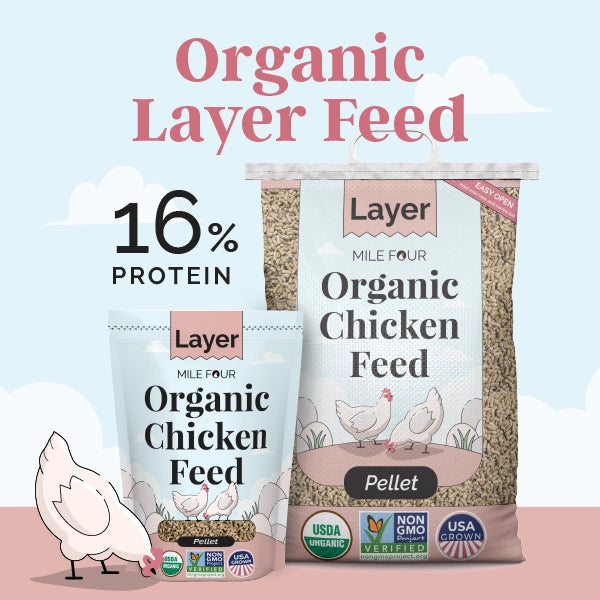
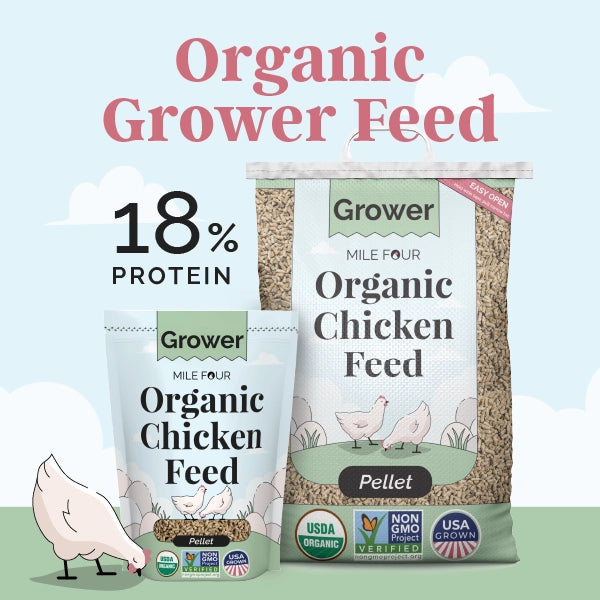
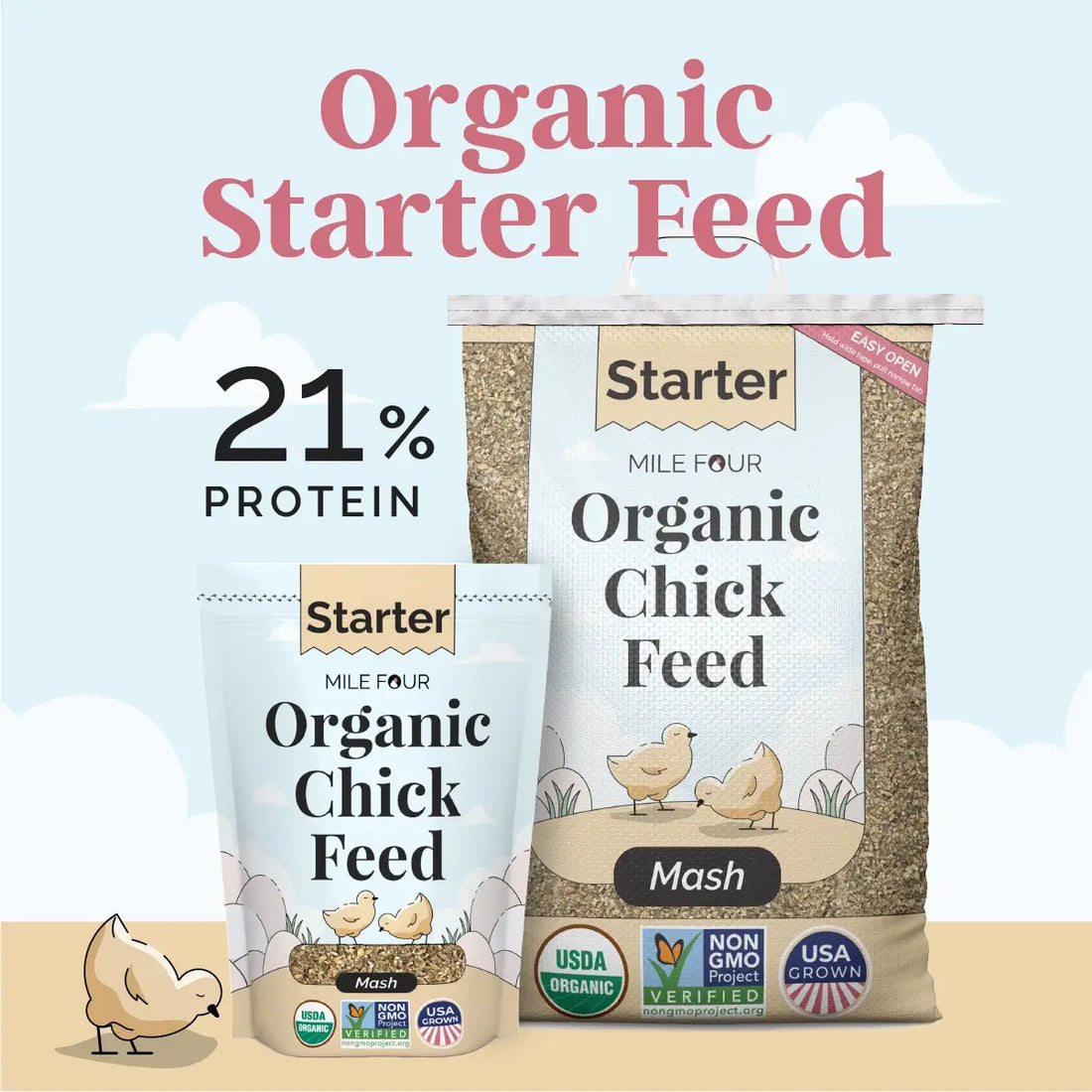
Looking for a complete ration made with clearly identified ingredients? Explore Mile Four Organic Chicken Feed, available in Starter, Grower & Layer formulas made with USDA Organic, Non-GMO ingredients & U.S.-grown grains sourced from family farms.
Sources
- U.S. Food & Drug Administration, “Animal Food & Feeds”: Animal-food safety, manufacturing oversight & contamination concerns.
-
USDA Agricultural Marketing Service, “Grades & Standards”: Grain-quality standards, grading factors & agricultural variation.
Natural variation in agricultural ingredients is normal. Feed with visible mold, moisture damage, pest contamination or a sour, musty or rotten odor should not be fed to poultry. Keep the bag label & lot information when contacting the retailer or manufacturer about a possible quality issue.