

The first backyard egg feels free.
You find it sitting neatly in the nesting box, carry it inside like a small piece of treasure & briefly forget about the coop, feeder, fencing, bedding & waterer purchased before that egg ever appeared.
Then grocery-store egg prices climb & the question starts to feel reasonable:
Are the chickens finally paying for themselves?
Usually, backyard chickens are not the cheapest way to get ordinary grocery-store eggs once the full setup is included. The comparison can become closer when the coop is already paid for & the household normally buys organic, pasture-raised or locally produced eggs.
That does not make keeping chickens a bad deal.
It simply means the eggs are only one part of what the flock is giving you.
Why Everyone Started Asking This Question
Egg prices gave backyard chicken math a rare moment of credibility in 2025.
The U.S. average price for a dozen Grade A large eggs reached about $6.23 in March 2025 as highly pathogenic avian influenza reduced commercial laying flocks & egg production.
The spike did not last forever. By June 2026, the same national average had fallen to about $2.14 per dozen. Retail egg prices were 27.9% lower than they had been in June 2025, with further declines forecast across 2026 as production recovered.
That swing is the first lesson in backyard egg economics.
Grocery prices can change within months. A backyard flock may stay with you for most of a decade.
Starting a flock only because cartons are unusually expensive can leave you feeding hens long after store prices have settled down.
The First Dozen Eggs Are Always Expensive
Before the first egg appears, most new keepers have already paid for some combination of a coop, run, feeder, waterer, brooder, fencing, nesting boxes & hardware cloth.
That makes the first dozen backyard eggs impressively expensive.
The second dozen is usually not much better.
Startup costs become easier to justify when the same equipment lasts for years. A durable coop used by several generations of hens spreads its cost across far more eggs than a setup that needs major repairs after its first winter.
The calculation also changes once suitable housing & equipment are already in place. At that point, you are mostly comparing the flock's ongoing expenses with the eggs the household would otherwise buy.
This is why two families with the same number of hens can end up with very different costs per dozen.
Feed Is Only Part of the Bill
Feed is usually the largest recurring expense, but it is not the only one.
Bedding needs replacing. Waterers eventually crack. Fencing needs attention. Predators have an unfortunate habit of finding whichever part of the setup looked perfectly secure yesterday.
A realistic yearly budget may also include oyster shell, grit, cleaning supplies, pest management, repairs & occasional health expenses.
The feed bill continues whether the hens are laying six eggs a week or taking a seasonal break from the entire concept.
Production may slow during winter, molt, broodiness, stress, extreme heat & later life. A flock producing heavily in spring may deliver far fewer eggs at another point in the year while eating breakfast with exactly the same enthusiasm.
That is why the cost per dozen changes even when the monthly feed expense stays fairly steady.
For a more detailed look at recurring expenses by flock size, read The Real Monthly Cost of Feeding Backyard Chickens.
The Math Is Simpler Than It Looks
You do not need a finance degree or a spreadsheet with seventeen tabs.
Start with the money spent during one year, then divide it by the number of dozens actually collected.
A simple backyard egg calculation
- Add yearly recurring costs. Include feed, bedding, routine supplies, maintenance & other regular flock expenses.
- Count the eggs actually collected. Use real flock production rather than the best advertised rate for the breed.
- Convert the total into dozens. Divide the number of eggs by 12.
- Divide yearly cost by yearly dozens. The result is the operating cost per dozen.
Feed is usually the largest recurring expense, so estimating that number gives you a useful place to start. Use the Chicken Feed Cost Calculator to estimate weekly or monthly feed use based on flock size & age.
For a fuller picture, add a yearly share of the original setup.
A $1,200 coop & equipment package expected to last eight years adds roughly $150 per year to the calculation. That is not perfect accounting, but it is more honest than pretending the coop appeared naturally in the yard.
Run the numbers once using recurring costs only, then again with the setup included.
The first result shows what it currently costs to keep the flock. The second shows what the complete hobby is costing over time.
The Answer Depends on Which Eggs You Buy
Backyard eggs will have a difficult time competing with the least expensive conventional eggs at the grocery store.
The comparison becomes closer when a household normally buys organic, pasture-raised or premium local eggs. Those cartons already carry a higher shelf price, so the gap between buying & raising may be smaller.
Backyard eggs are more likely to become financially competitive when:
- The coop & equipment are already paid for
- The flock size matches the household's egg use
- Most collected eggs are eaten rather than wasted
- Feed waste is controlled
- The setup remains simple, durable & easy to maintain
- Chicken care is treated as an enjoyable hobby rather than paid labor
They become less competitive when the flock grows beyond what the household needs, equipment is regularly upgraded or the calculation assumes every hen will lay heavily throughout her life.
Hens Keep Eating After Their Best Laying Years
This is one of the easiest costs to overlook.
A hen may live for years after her strongest period of egg production. Laying commonly slows as she ages, but her need for food, shelter & care does not disappear with the last dependable egg.
Keeping older hens is not a financial mistake. Plenty of people consider them permanent members of the flock.
It simply changes the math.
A cost-per-dozen estimate based only on a hen's most productive year will look much better than the same calculation spread across her full life.
Seasonal pauses matter too. Molting hens may temporarily stop laying while feathers regrow, even though daily feed costs continue. The Chicken Molting Guide explains why eggs slow down & what changes during that part of the year.
Feed Waste Quietly Raises the Cost per Dozen
Not every pound removed from the bag becomes nutrition for the flock.
Some ends up scratched onto the ground. Some gets wet. Some attracts rodents. Some sits in an open container long enough to lose freshness before the chickens reach it.
Reducing that waste will not erase the cost of keeping hens, but it can make the monthly number more predictable.
Start with a feeder that fits the flock, check for spilled feed around it & avoid leaving more exposed than the birds can reasonably eat.
The DIY Chicken Feeder Guide compares several feeder styles & ways to reduce scratching, contamination & pest access.
Once the bag is open, the guide to storing chicken feed properly covers moisture, pests, containers & rotation.
The Cheapest Feed Is Not Always the Cheapest Option
Once people calculate the cost per dozen, feed is usually the first expense they try to reduce.
Buying efficiently, preventing spills & storing feed properly are sensible ways to lower costs.
Replacing a complete ration with a collection of inexpensive grains is different.
Chickens need more than enough calories to feel full. A complete feed is formulated to provide the protein, amino acids, vitamins & minerals needed for the bird's life stage.
A less expensive bag can become a poor bargain when the flock sorts through it, wastes part of the ration or does not receive balanced nutrition.
For a broader look at life-stage feeds, supplements & how much chickens eat, visit the Chicken Feed Guide.
The Eggs Were Never the Only Thing You Were Buying
A strict cost-per-dozen calculation misses a lot of what people value about keeping chickens.
There is knowing how the hens are raised, choosing what the flock eats, collecting fresh eggs at home, adding manure & bedding to compost, teaching children where food comes from & simply enjoying the routine.
There is no honest way to assign one universal dollar value to those things.
For one household, chicken care is another daily chore. For another, it is the reason everyone wanders outside before breakfast.
Backyard chickens can be worth the money without technically saving money.
So, Are Backyard Chickens Cheaper Than Buying Eggs?
If the only goal is the lowest possible price per dozen, conventional grocery-store eggs will usually win.
If the coop is already paid for, the household normally buys higher-priced eggs & the flock stays productive without growing beyond what the family uses, backyard eggs may come much closer.
But chickens do not follow grocery prices.
They still molt. They still slow down when the days get shorter. They still grow older. They still expect breakfast every morning.
In return, you get fresh eggs, more control over how the hens are kept & a flock outside the back door.
The chickens may not pay the mortgage.
They can still earn their place.
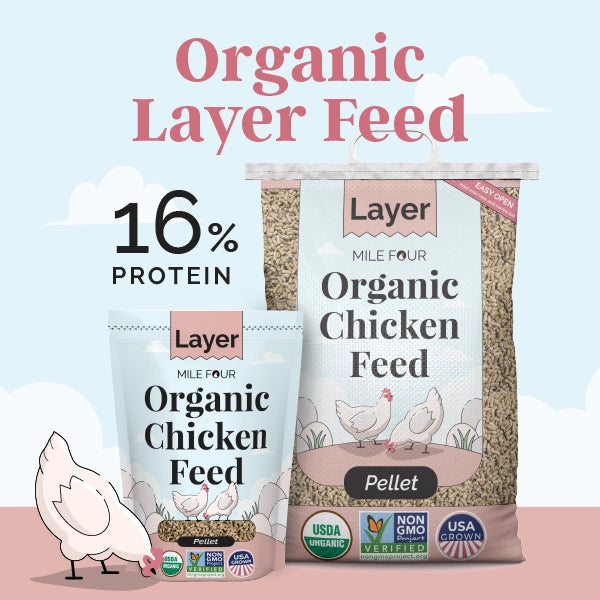
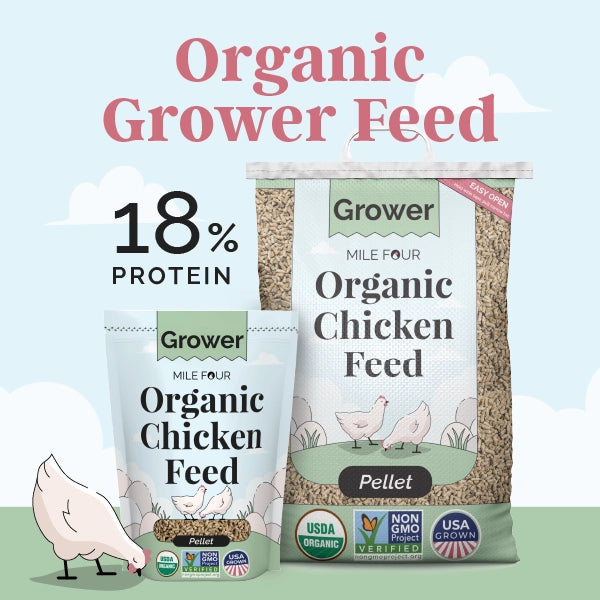
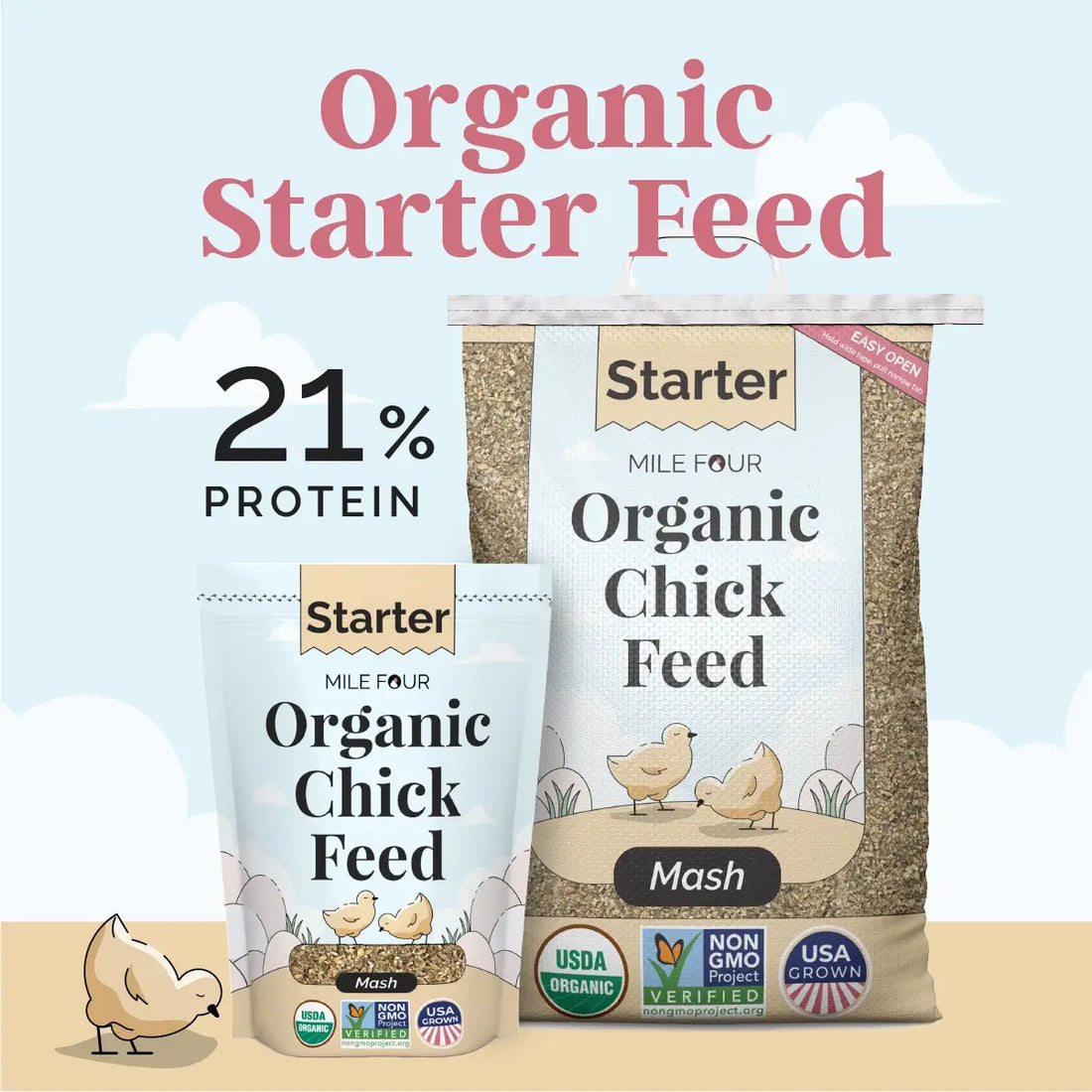
Feed is one of the few ongoing costs that can be planned for consistently. Explore Mile Four Organic Chicken Feed for chicks, growing pullets & laying hens, with complete USDA Organic, Non-GMO formulas made using U.S.-grown grains sourced from family farms.
Sources
- U.S. Bureau of Labor Statistics, “Average Price: Eggs, Grade A, Large”: Monthly U.S. city-average retail prices, including $6.227 per dozen in March 2025 & $2.141 in June 2026.
- USDA Economic Research Service, “Food Price Outlook”: Annual retail egg-price changes, HPAI-related supply pressure & the July 2026 forecast for lower egg prices as production recovers.
- USDA Economic Research Service, “Poultry & Eggs Market Outlook”: Current table-egg production, supply & market projections.
Prices, feed use & egg production vary by location, flock size, breed, age, season, housing, diet & individual bird health. The calculation in this article is intended as a planning framework rather than a guarantee of savings.